How premium product 3D motion design is made
3D motion design for a premium luminaire with a lens system: a realistic style, Blender, hand-made PBR materials, area light plus HDRI.
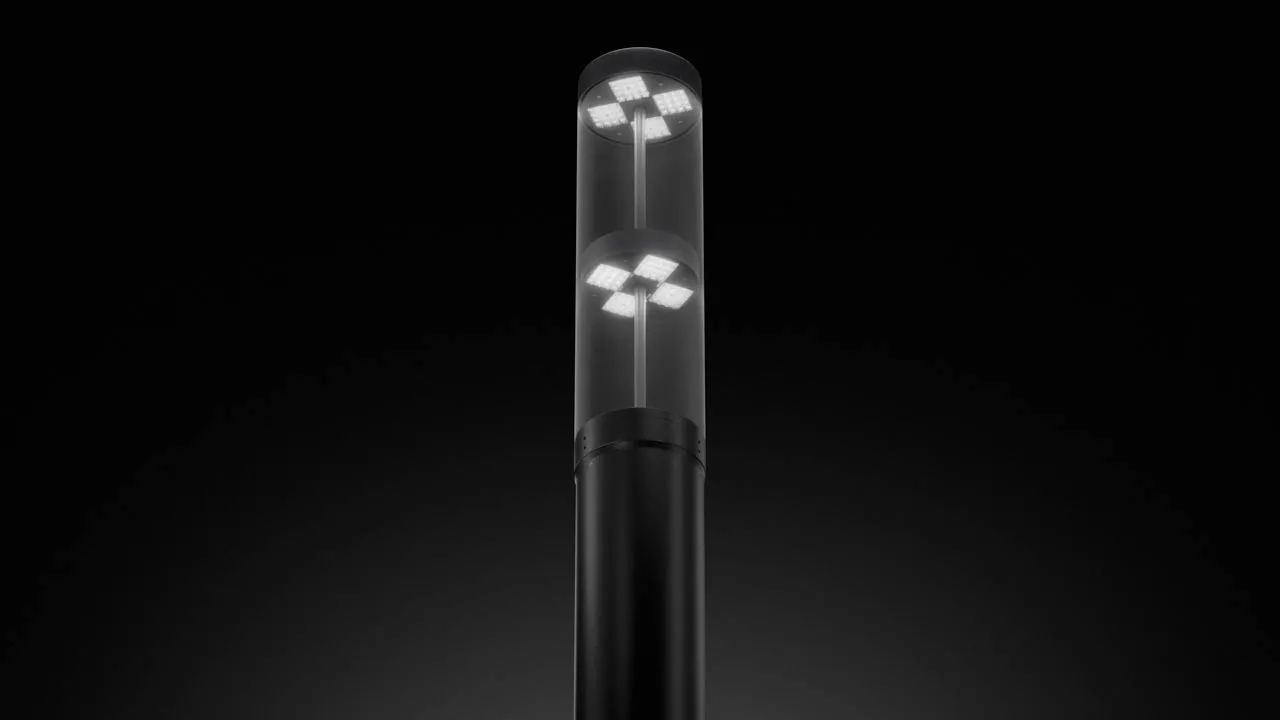
In one of my recent projects I created 3D motion design for a premium luminaire with a unique lens system. The task was not simply to show an object, but to convey a sense of engineering precision, material quality and product status.
I deliberately chose a realistic style: no unnecessary effects, no noisy transitions, only form, light and texture. In projects like this, lighting becomes the main storyteller. It reveals the geometry, emphasises the optics of the lens, shows the depth of the glass and the micro-relief of the metal.
The whole scene was built from scratch in Blender. All PBR materials were made by hand:
- correct roughness maps;
- work with micro surface;
- physically plausible IOR for the lenses;
- separate setup of reflections and refractions.
I paid special attention to energy conservation, so that materials behave honestly under different lighting angles and do not break in animation. For light I used a combination of area lights and an HDRI, balanced by hand to keep a premium contrast without blown highlights.
For me, motion design is not about movement for its own sake. It is about rhythm, pauses, the breathing of the frame and respect for the object. When a product is strong, it does not need to shout; it is enough to light it correctly.
Today the market is full of template 3D presentations: the same cameras, the same spheres, the same presets. But it is in projects like this that I become more convinced every time that a custom visual language remains the main difference of the premium segment.
Blender has long been for me not just a tool but an environment for thinking. When you work in one space from modelling to the final render, you control not only the picture but its meaning.
This project is another reminder that design lives not in spectacle but in feeling: in what the viewer senses even if they cannot explain it in words.
If this philosophy is close to you, I would be glad to talk and exchange experience.
First published in Russian on Astana Hub; translated into English.