Home / Journal / Cinematography
Advice for the Cinematographer: Craft, Discipline and the Viewer's Eye
Working principles for cinematographers: imagination and discipline, how viewers perceive images, invisible craft, preparation, pacing and tension.
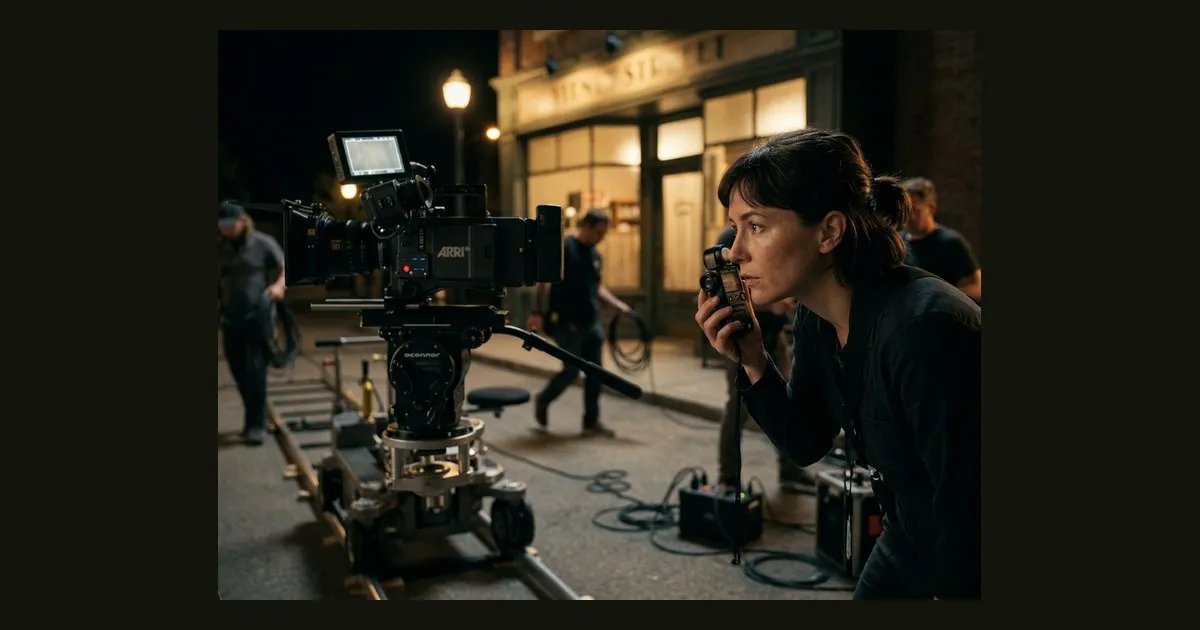
The final chapter of the handbook is not technique but attitude. This article condenses its practical advice: how to think about imagination and discipline, how the audience perceives an image, and what a cinematographer does before, during and after the shoot.
Key points
- Disciplined imagination, grounded in craft, produces art; unchecked imagination produces chaos.
- Clarify theme, story and subtext first, then choose lenses and lights.
- Cinematography is most powerful when it serves the drama without drawing attention to itself.
- Perception works on two levels: the sensory (colour, contrast, light) and the intellectual (subtext, theme, poetry).
- Prepare before the shoot, stay alert during it and review critically after it.
Imagination and discipline
Leave room for the audience’s imagination: poetic visual storytelling suggests rather than explains. A single precise visual detail can distil the emotional core of a sequence. Complex stories need an engaged viewer who meets the filmmakers halfway. Deliver unconventional ideas with care and technical discipline, so that collaborators trust them. Draw inspiration from primary sources, nature, human life and classical art, not from copying current trends, since trends pass and the principles of form, light and composition remain. Master deliberate craft before chasing speed on set. The true master solves problems that others on set did not anticipate. Study ergonomics and the mechanics of human vision, so that camera, lighting and stage work as an extension of the eye.
Time, space and character
Cinematic motion is not merely moving a camera; it is organizing visual energy over time and space. The two are bound together, and space cannot be revealed on screen without movement. We read character through movement, posture and physical rhythm. Stylized or fantastic stories must be grounded in believable textures and props. A visual storyteller should know the traditions that came before and study the links between cinema, painting, graphic art and sculpture. Portraiture, at its best, captures psychological truth, whether of someone known well or met for the first time that day.
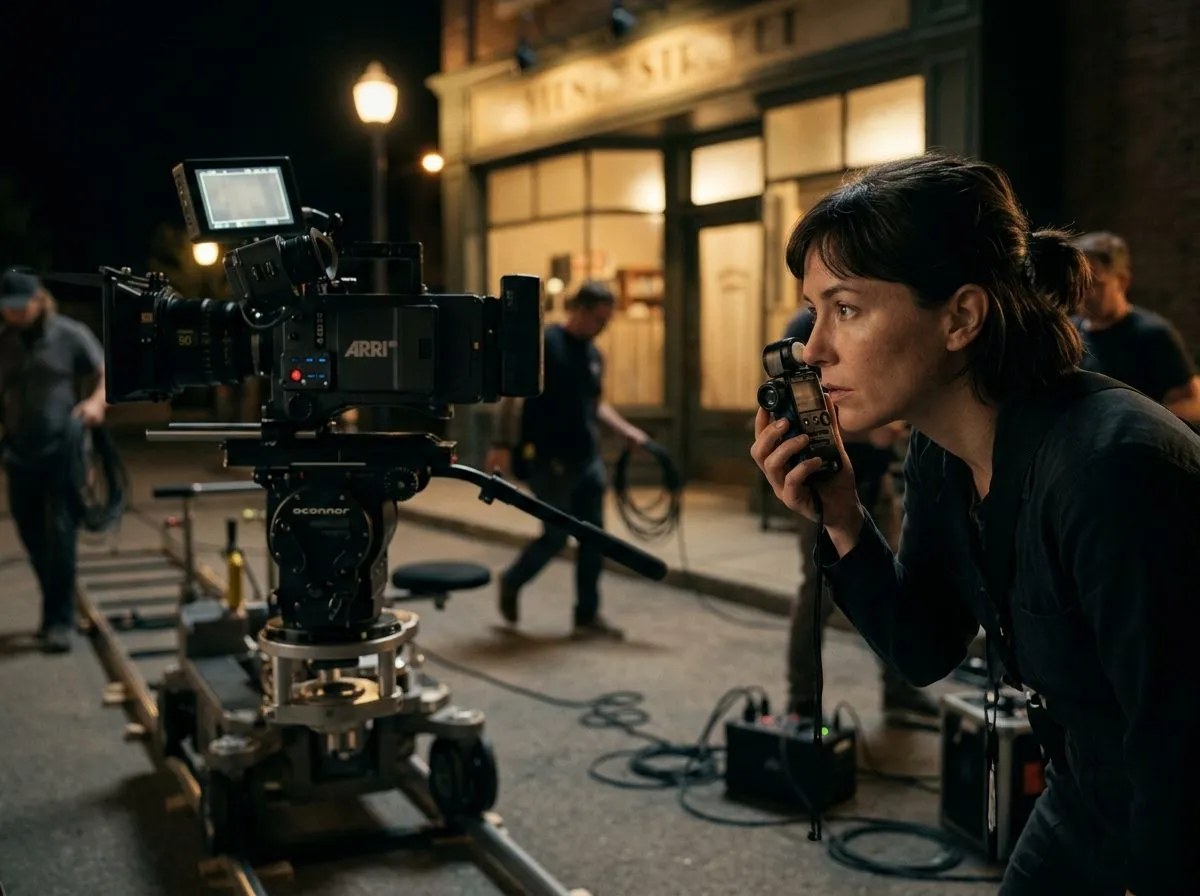
The cinematographer at work
Perception and the viewer
Emotion is the audience’s instinctive response to the screen. Aesthetic perception works at two levels: the sensory, an immediate response to colour, contrast and light, and the intellectual or spiritual, engagement with subtext and theme. Perception starts with broad relationships of mass and space before it resolves details. The cinematic reality lives not on the screen but in the mind of the viewer. The cinematographer’s voice emerges from the subjects they choose and how they interpret them in light and framing. First clarify theme, story and subtext, then pick the optical and lighting tools. An image that feels entirely finished leaves nothing to explore, so photography’s power often lies in the fleeting and the incomplete.
Practical working advice
- Dig beneath the script to reveal character through posture, expression, costume and light.
- Keep eyes well lit and expressive: eyes in dead shadow weaken a performance.
- Use thoughtful, textured backgrounds for cinematic portraiture.
- Break up long static dialogue with purposeful moves or cutaways.
- Diagonal movement across the frame conveys depth, and lateral tracking conveys speed and tempo.
- Remember that inexperienced actors with no real scene partner let their eyes dart around.
- Begin dialogue scenes mid-conversation to keep energy up, and build action steadily to its climax.
- Vary rhythm: monotony deadens attention.
- Guard against complacency by setting yourself difficult lighting set-ups, unfamiliar lenses and complex staging.
- Use a deliberate, striking visual element, what Eisenstein called an “attraction”, when you need a precise emotional effect.
The pleasure principle
Dramatic narrative builds tension to create emotional release. Structure light, camera moves and cuts to mirror that rhythm of build-up and release. Art brings order, form and discipline to raw emotion, and the cinematographer, an artist in continuous physical motion, relies above all on self-discipline, preparation and focus. A photograph is more than a record of what stood before the lens: it is a permanent document of the act of looking, and the difference between a good frame and a mediocre one is often small, a matter of millimetres of position.
Quick answers
What should I decide first on a new scene? Theme, story and subtext. Lenses and lighting follow from them.
What makes a frame feel alive? Purposeful rhythm, expressive eyes, textured backgrounds and a clear point of view.
How do I avoid creative complacency? Deliberately take on a hard lighting set-up, an unfamiliar lens or complex staging.
Read next
- Grammar of the Frame: Coverage, Eyelines, the 180° Rule and Camera Movement
- Art Movements, Genre and Narrative: Visual Culture for Cinematographers
- Composition in Film: Rules, Visual Weight, Shapes, Lines and Camera Angle
Related on this site
This article is part of the free handbook Technical Foundation. Filmmaking: The Cinematographer’s Handbook by Semen Klenov, an independent researcher of light and visual perception. Cite the handbook as: Klenov, S. (2026). Technical Foundation. Filmmaking: The Cinematographer’s Handbook. Zenodo. https://doi.org/10.5281/zenodo.24326083.