Home / Journal / Cinematography
Art Movements, Genre and Narrative: Visual Culture for Cinematographers
Plastic versus painterly form, how art movements map onto photography and cinema, documentary genres, dramatic structure and levels of craft.
A cinematographer’s eye is trained by painting, sculpture and photography long before it meets a camera. This article maps the main art movements and photographic genres onto film language, then adds the narrative vocabulary used to turn story into images.
Key points
- Two basic modes of form: plastic (clear contour, sculptural modelling, sharp edges) and painterly (soft contours, colour and value relationships, soft focus).
- Style reflects the worldview of its era. Understanding movements gives a cinematographer a visual vocabulary to quote, adapt or reject.
- In photography and cinema, impressionism favours mood and atmosphere, constructivism graphic clarity and angles, expressionism psychological tension and stark contrast, monumentalism heroic archetypes.
- Dramatic structure runs from exposition through inciting incident, rising action and climax to resolution; mise-en-scène carries the subtext.
- Craft has levels: imitation, personal style, and mastery as a synthesis of form, content and thought.
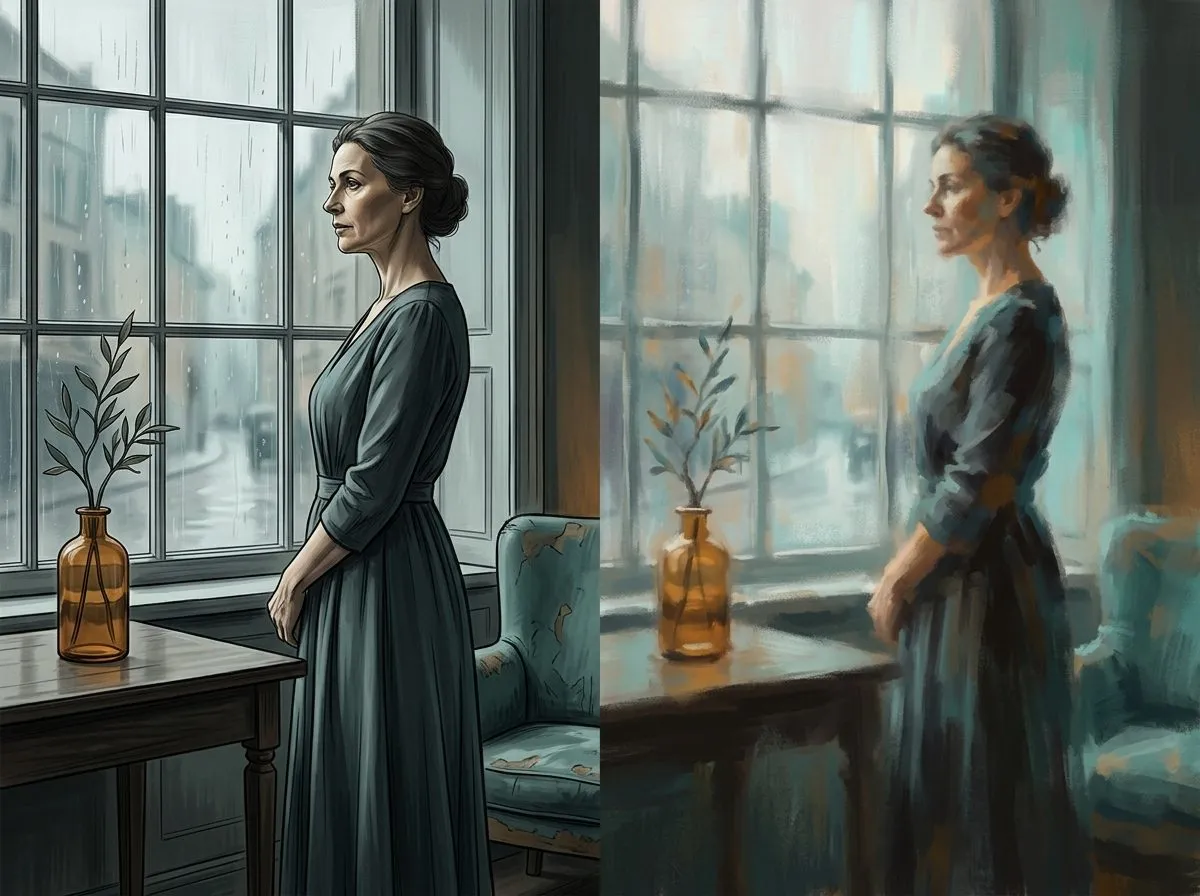
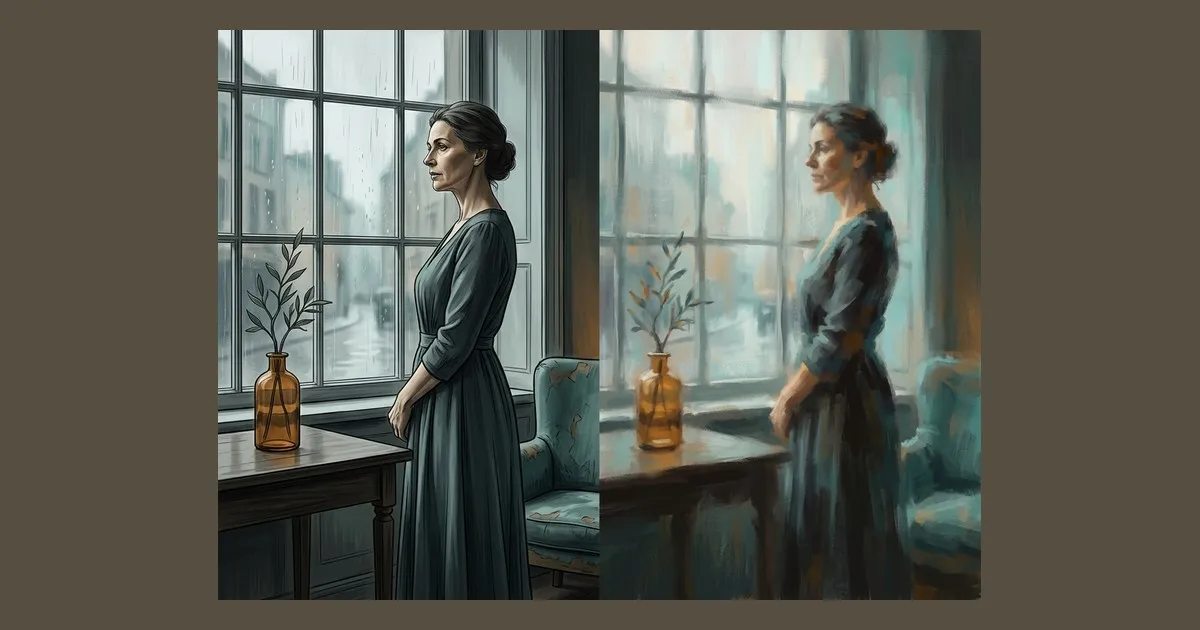
Plastic vs. painterly form
Plastic and painterly form
Plastic (classical) form has defined contours, clean linear perspective, sculptural modelling, clear volume and sharp edge transitions, with architectural and sculptural clarity. Painterly (impressionistic) form has soft, dissolved contours, atmospheric textures, a dominance of colour and value relations, flattened planes, soft focus and diffused edges, and an evocative, lyrical, almost musical quality. Most images sit somewhere between the two, and lenses, diffusion, lighting contrast and grading move a shot along that line.
Art movements and what they offer
| Movement | Examples | What a cinematographer can take from it |
|---|---|---|
| Classical antiquity | Phidias, Polyclitus | Ideal proportion, sculptural clarity |
| Renaissance | Leonardo da Vinci, Raphael, Titian | Perspective, balanced composition, modelling light |
| Baroque | Rembrandt, Velázquez, Rubens | Dramatic chiaroscuro, strong diagonals |
| Rococo | Watteau, Boucher, Fragonard | Light, ornate, intimate colour |
| Romanticism | Géricault, Delacroix | Emotion, storm, turbulent movement |
| Realism and naturalism | Courbet, Menzel, Repin | Everyday truth, honest light |
| Impressionism | Monet, Manet, Renoir, Degas | Atmosphere, broken light, fleeting moments |
| Post-Impressionism | Seurat, Gauguin, Cézanne, van Gogh, Matisse | Colour as structure and emotion |
| Avant-garde | Picasso, Braque, Malevich | Geometry and abstraction |
| Expressionism | Marc, Klee, Kandinsky, Chagall | Distortion and colour for inner states |
Movements in photography and cinema
- Impressionism prioritizes mood, atmosphere and fleeting impression over documentation: soft-focus lenses, diffused light, mist, rain, frost and open, asymmetric compositions, with landscape and atmosphere as favourite subjects.
- Constructivism emphasizes functional geometry, graphic clarity and industrial forms: razor-sharp focus, dynamic diagonals and bold low or high angles, as in Rodchenko’s photography.
- Expressionism rejects decorative softness for psychological tension, sharp characterization and stark contrast: hard sculptural light, harsh shadow edges, cold textures, disciplined framing. It is common in dramatic portraiture, film noir and psychological drama.
- Monumentalism looks for authentic human action rather than stiff posing, and raises everyday gestures into universal archetypes through framing, heroic angles and scale.
Genre and documentary photography
Photojournalism documents timely social and political events and requires sharp observation and immediate, authentic capture. Photo sequences build rhythm and narrative across a series of frames. Candid photography captures life unstaged. Documentary photography is defined by what it shows, fine-art photography by how it shows it. Genre scenes turn daily routine into lasting visual stories with psychological depth, humour or empathy.
Narrative structure and staging
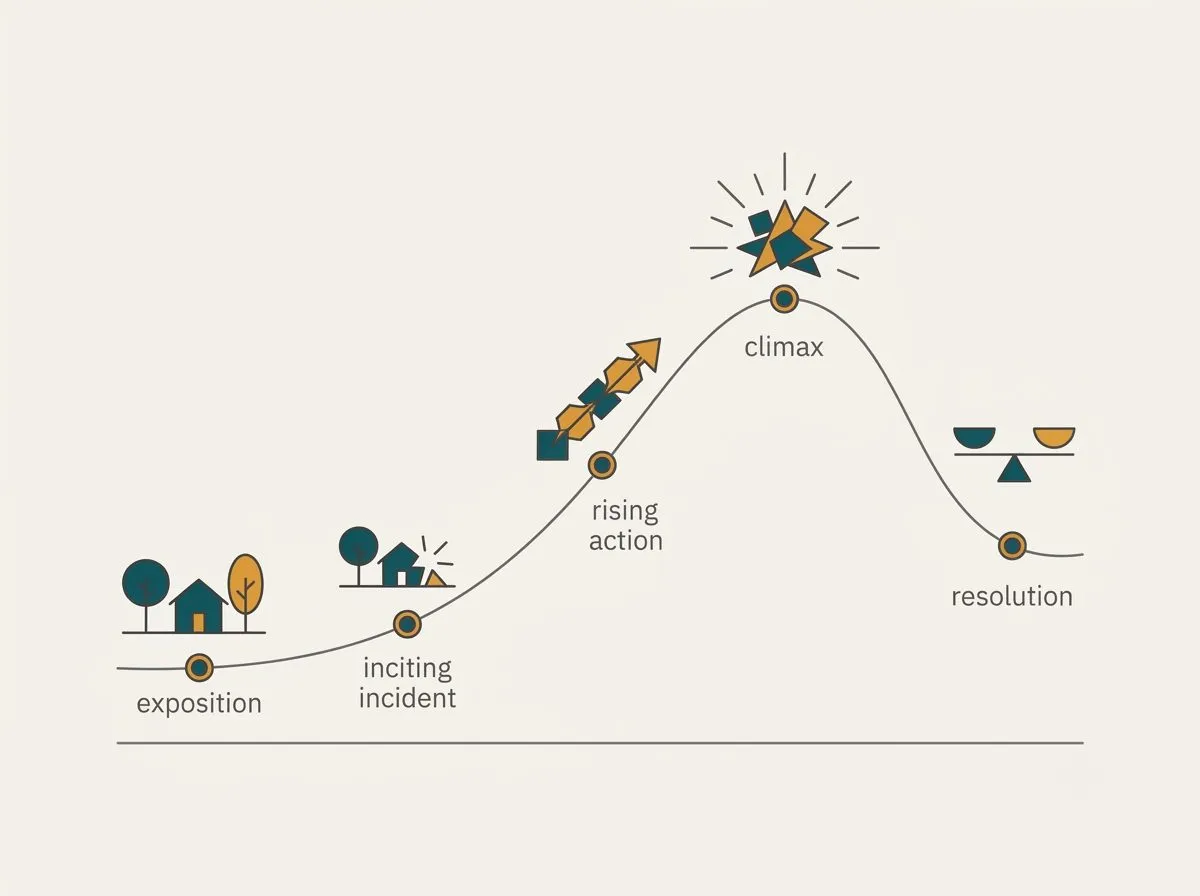
Dramatic structure
Dramatic structure has five stages. Exposition introduces characters, setting and tone. The inciting incident disrupts the status quo. Rising action escalates obstacles and confrontation. The climax is peak confrontation. Resolution settles the arc. Cinematic storytelling starts from literal descriptions of action, which are shaped into visual beats, sequences and shot lists. Mise-en-scène is the expressive arrangement of actors, props, light and movement in space to communicate psychological states and subtext, and the cinematographer’s job is to translate emotional subtext into composition.
Levels of craft
- Imitation: literal replication, surface realism without interpretation.
- Personal style (manner): a distinctive voice that transforms the subject to express a point of view.
- Mastery: a synthesis of form, content and philosophical thought into one expression, an idea attributed to Goethe.
Three paths of growth: critical reflection, study of the masters and personal practice. On screen, character is built from the script (dialogue and action), performance and subtext, and visual styling through light, framing, hair, make-up and wardrobe. Over-analysis can dilute the spontaneity of viewing art, so study without letting it replace looking.
Quick answers
Which movement suits film noir? Expressionism: hard sculptural light, stark contrast and harsh shadow edges.
Is painterly just soft focus? No. It is a whole approach in which colour and value relations dominate over contour.
What is mise-en-scène? Everything arranged in front of the camera: actors, props, light and movement.
Read next
- Composition in Film: Rules, Visual Weight, Shapes, Lines and Camera Angle
- Colour, Geometry, Symmetry and Movement in the Film Frame
- Advice for the Cinematographer: Craft, Discipline and the Viewer’s Eye
Related on this site
This article is part of the free handbook Technical Foundation. Filmmaking: The Cinematographer’s Handbook by Semen Klenov, an independent researcher of light and visual perception. Cite the handbook as: Klenov, S. (2026). Technical Foundation. Filmmaking: The Cinematographer’s Handbook. Zenodo. https://doi.org/10.5281/zenodo.24326083.