Home / Journal / Cinematography
How a Film Camera Works: Pulldown Claw, Rotary Shutter and Film Gate
How a cine camera moves film frame by frame: intermittent movement, claw and registration pins, the mirrored rotary shutter, shutter angle and exposure time.
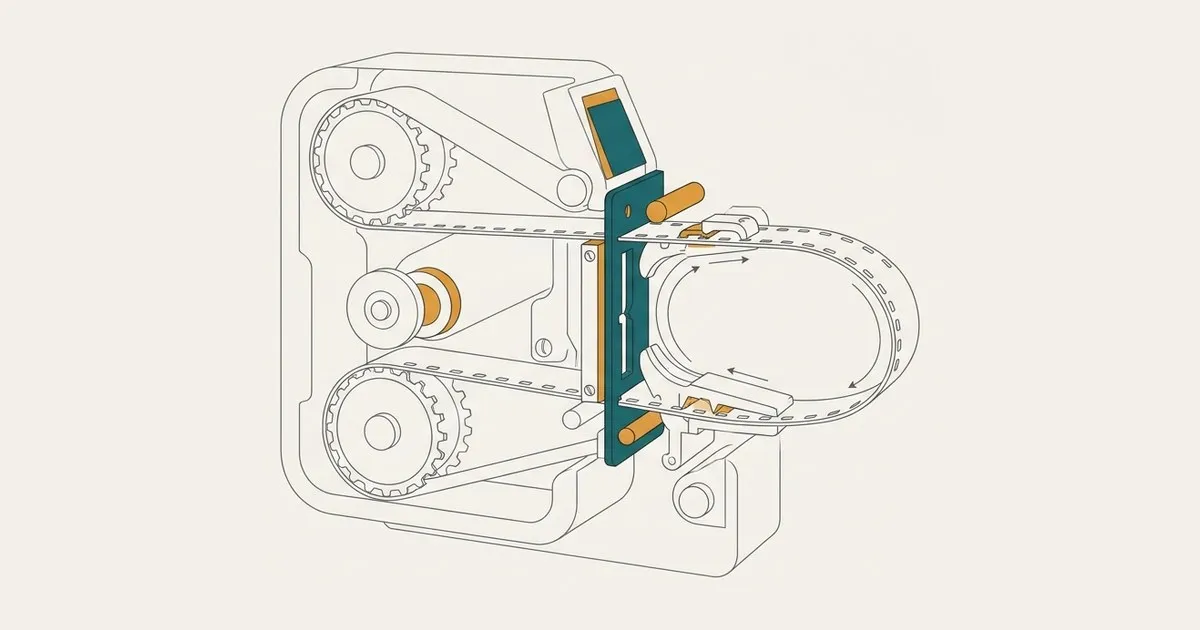
A motion picture camera is a still camera that takes 24 photographs every second and moves the film between each of them. The mechanism that does it, and the rotating mirror that lets the operator watch the scene, is one of the most elegant machines in cinema. This article follows the film through the camera.
Key points
- Film moves intermittently: it is pulled down one frame, held perfectly still for exposure, then pulled down again.
- A claw advances the film by one frame pitch; registration pins lock it in place during exposure.
- The rotary shutter is a mirrored disc at 45°: closed, it sends light to the viewfinder; open, it exposes the film.
- Exposure time = shutter angle / (360° × frame rate). At 24 fps with a 180° shutter, that is 1/48 s.
- Crystal-controlled motors hold the frame rate exactly, for example 24.000 or 25.000 fps.
Intermittent movement
Film cannot be exposed while it moves, so the camera advances it one frame at a time. The pulldown claw is an oscillating metal tooth that enters the perforations, pulls the film down by one frame pitch and withdraws during the exposure. It traces an orbit: engage, pull, withdraw, return upward outside the film plane. The instant the claw lets go, registration pins enter neighbouring perforations and lock the film rock-steady for the exposure, which removes jitter from the picture. Continuous-rotation sprockets feed fresh film from the magazine and take the exposed film away. The pulldown angle is the part of the 360° drive cycle used for moving the film; the rest is the longest possible open-shutter interval.
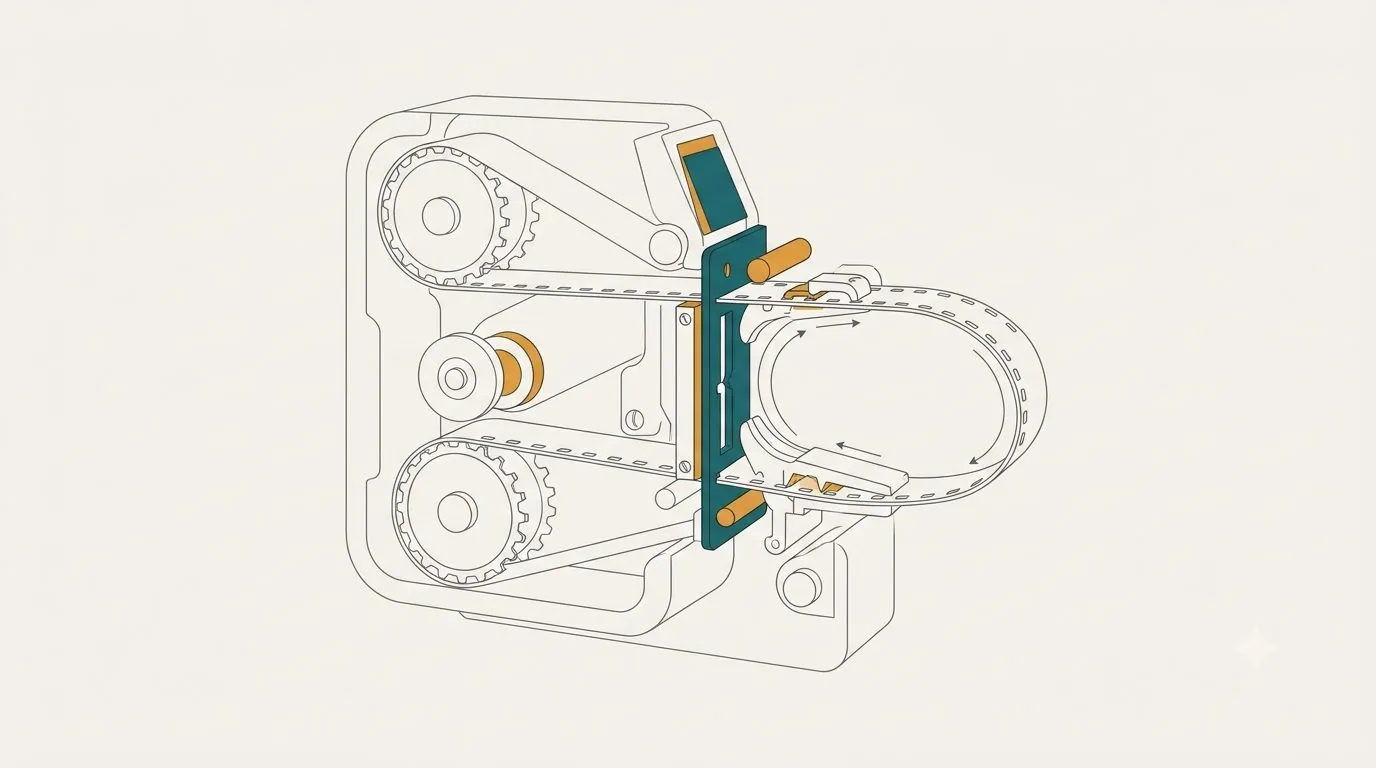
Intermittent movement of a cine camera
The rotary shutter
The shutter is a spinning, mirrored disc set at 45° between lens and gate. When its mirrored face is in the path, it reflects light up to the ground glass of the viewfinder so the operator can frame the shot. When the cut-out sector passes the lens, light reaches the stationary frame. The shutter angle is the size of the open sector, normally 180°.
At 24 fps and 180°, exposure is 180 / (360 × 24) = 1/48 s. Narrowing the angle shortens the exposure: 90° gives 1/96 s and 45° gives 1/192 s, with crisp motion and little blur, the staccato “combat shutter” look.
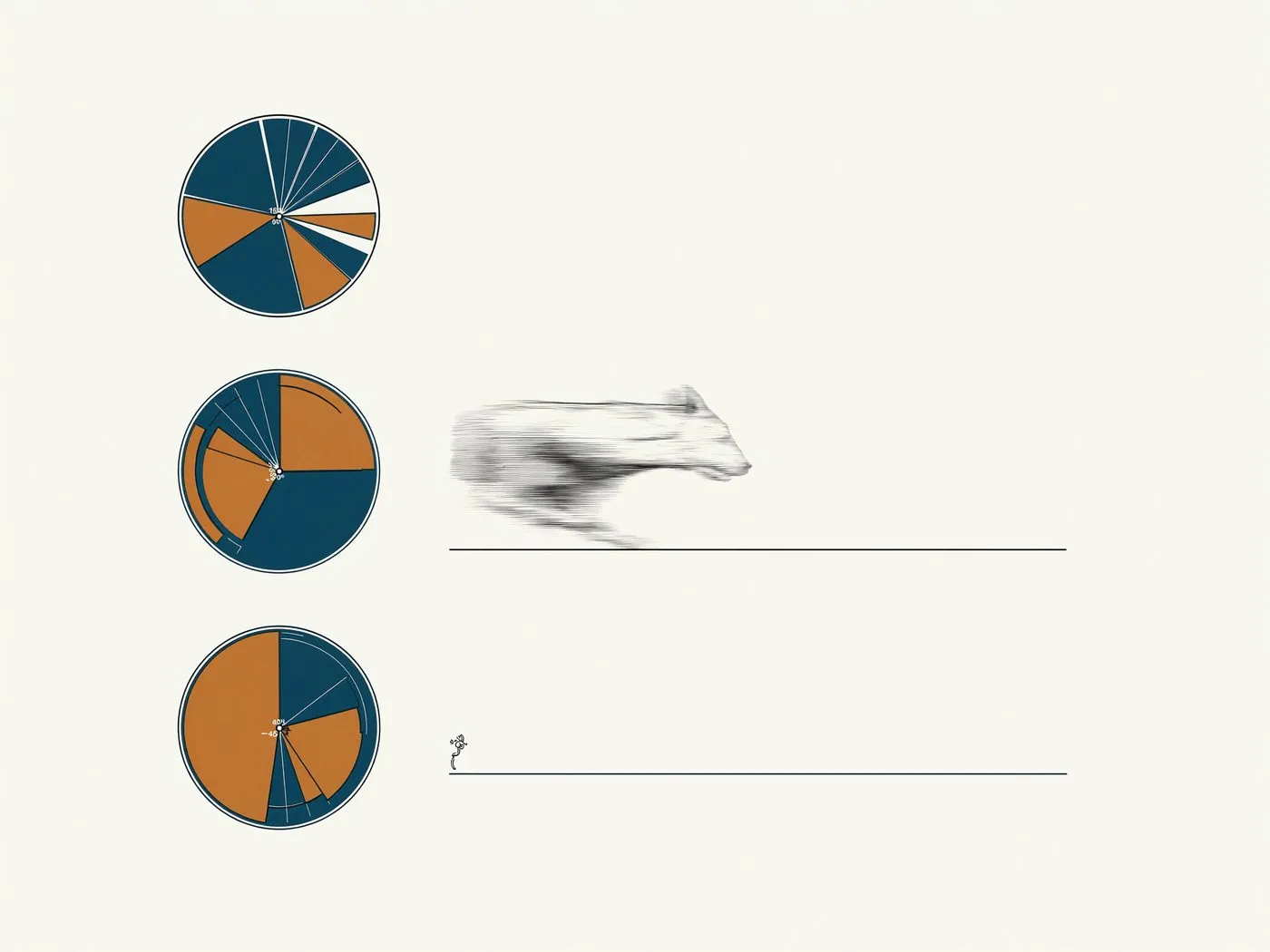
Shutter angle and motion blur
Gate and transport
The gate is a polished steel channel that holds the film flat and square at exactly the flange focal distance of the lens. The aperture plate has the cut-out that defines the frame. The pressure plate is spring-loaded and presses the film against the aperture rails, which prevents focus breathing and gives even sharpness across the frame. Above and below the gate, loops of slack film separate the jerky gate movement from the smooth rotation of the sprockets. The ground glass in the viewfinder is scribed with frame lines for the aspect ratio.
Magazines
Magazines are light-tight containers for the feed and take-up rolls, so that stock can be loaded quickly in daylight. Velvet or labyrinth light traps let film pass without scratching the emulsion or leaking light. Magazines are single-chamber or double-compartment. In a coaxial magazine the rolls sit side by side on the same axis and give a compact footprint; in a displacement magazine they share a plane and the take-up roll grows into the space the feed roll empties.
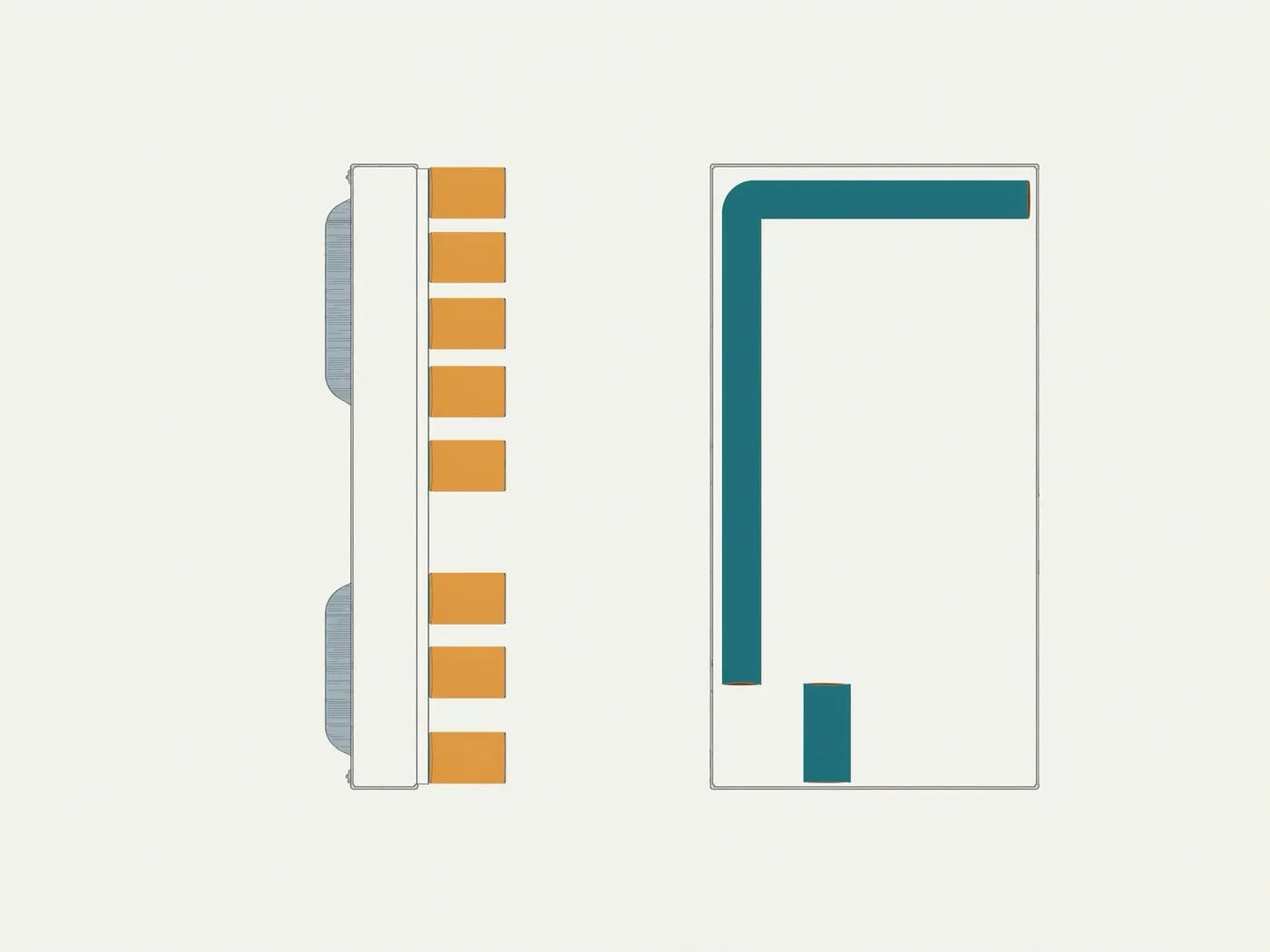
Coaxial and displacement magazines
Quick answers
Why does the film need pins as well as a claw? The claw moves the film but cannot hold it with enough precision; pins lock it still.
What does a narrow shutter angle do? It shortens exposure and reduces motion blur, so movement looks sharper and more staccato.
Why is the shutter mirrored? So the operator sees the scene through the lens while the shutter is closed.
Read next
- How a Still Camera Works: Shutters, Lens Mounts, Meters and Viewfinders
- Photographic Film: Structure, the Characteristic Curve and Processing
- Ballasts, Flicker and Camera Sync for Film Lights
Related on this site
This article is part of the free handbook Technical Foundation. Filmmaking: The Cinematographer’s Handbook by Semen Klenov, an independent researcher of light and visual perception. Cite the handbook as: Klenov, S. (2026). Technical Foundation. Filmmaking: The Cinematographer’s Handbook. Zenodo. https://doi.org/10.5281/zenodo.24326083.