Home / Journal / Cinematography
Portrait and Still-Life Lighting: Posing, Lenses, Wardrobe and Glassware
How to light and frame a portrait: lenses, angles, posing, wardrobe and background, plus still life with matte, glossy and glass objects.
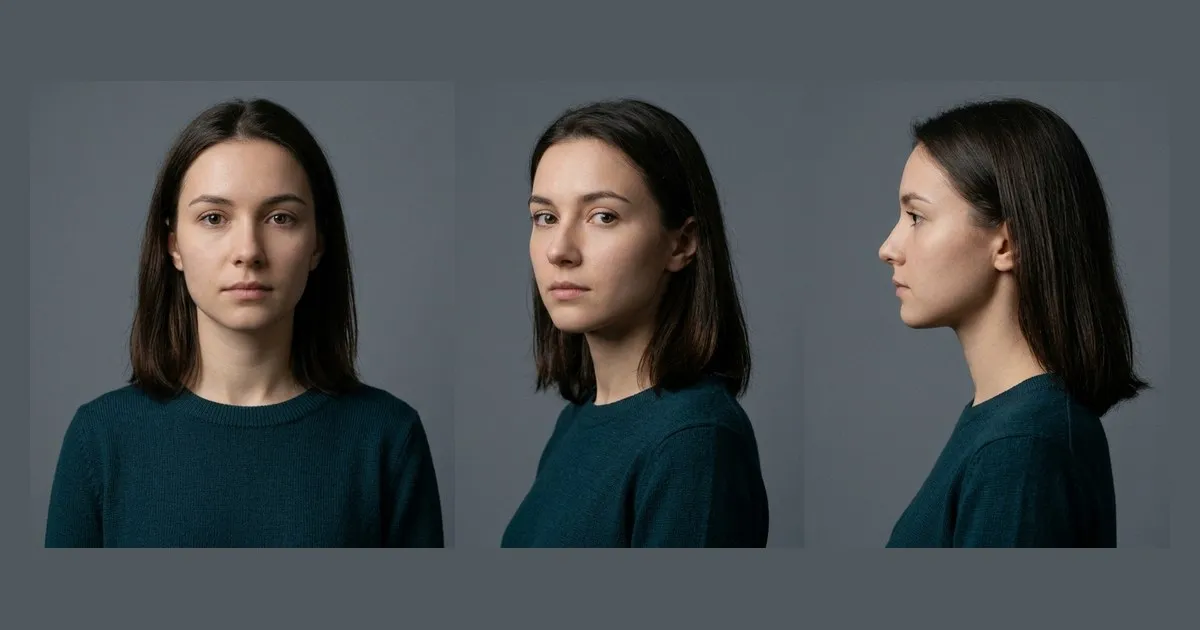
A portrait is the shot where light, lens, pose and background all meet in one face. The same craft applies to still life, where the subject is an object and the light has to do what the form cannot. This article gathers the working rules of both.
Key points
- Medium telephoto lenses, 1.5 to 2 times the format diagonal (85–135 mm on full frame), flatter perspective and compress facial features naturally.
- A three-quarter turn shows both eyes but thins the profile and sculpts the cheekbones. A profile shows exactly half the face.
- The contrast between highlight and shadow sides of a flattering portrait should rarely exceed 2:1 or 3:1.
- Keep at least 1.5 m between talent and the background wall, so form shadows stay off the set and shallow depth of field can separate them.
- Glass cannot be sculpted with form shadows. Shape it with backlight and edge reflections.
Light for the shape of the face
Tailor the angle of light to the bone structure of each face. Keep the eyes clear and the skin smooth, and lift the shadows enough to hold accurate skin tones without muddiness. For a full or broad face, use two fixtures: a key to the side that models across the cheek, and a soft frontal fill that keeps detail on the shadow side. Side-diagonal light thins a broad face by casting a deep, slimming shadow across the far cheek. For an angular or thin face, soft and broader light fills hollows and softens angles, and a frontal key near the lens axis widens it. A key behind the cheekbone deepens lines and sharpens the nose profile. An elevated three-quarter key is the most natural and pleasing for general use.
Lens, angle and composition
Portrait composition begins with where the face sits in the frame. Keep the frame clean, group background shapes into balanced masses, and remember that elements gain weight as they approach the edges. Doorways, windows and arches focus attention. Eyes carry character and emotion, so the light must put a clear catchlight in both pupils. Neutral backgrounds, beige, slate, muted brown or soft blue, keep the face dominant, and loud patterns or clashing colours pull focus.
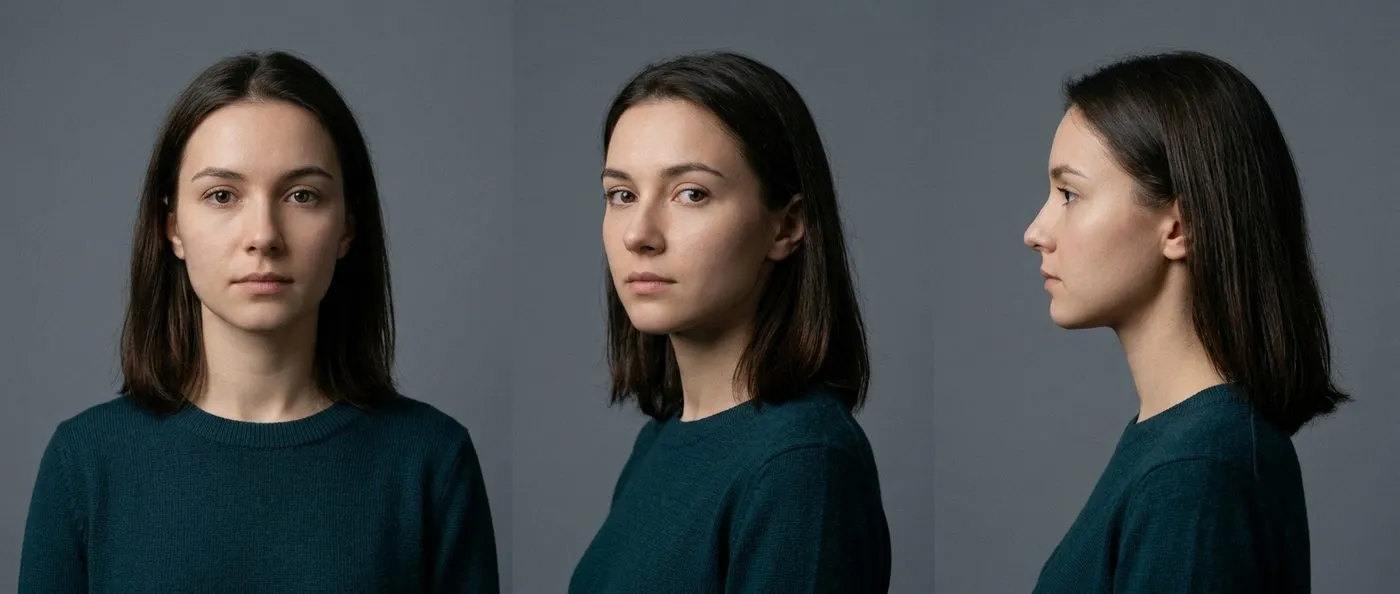
Full face, three-quarter and profile
The three framing angles each have a role: full face for direct, symmetrical eye contact, three-quarter for sculpted cheekbones and a thinner profile, profile with the camera slightly lowered to separate jaw and shoulder. Shoot from the actor’s best side, balancing asymmetries of the nose or eyes.
Posing
Place the key so that catchlights fall in both eyes and the nose shadow falls away from the lens. For a classical male pose, align torso and head on one axis, square the shoulders slightly, tilt the head toward the lower shoulder, turn the face to the key and angle the body about 45° to the camera. For a classical female pose, tilt the head gently toward the higher shoulder, lean slightly toward the lens and turn the body 30°–45° off-camera with the face turned back. Keep the chin slightly raised to avoid shadow under it and the pupils centred in the eyes. In three-quarter poses, light from the side the face turns toward (short lighting) to slim the profile. Medium close-ups work best with the camera at or just above eye level.
Wardrobe, fill and background
Detailed clothing, logos and bare arms pull the eye from the face. V-necks and structured jackets lengthen the neck and frame the jaw. Fine stripes and clashing patterns cause moiré. Place a bounce card slightly in front of the face to lift shadows without making a false backlight. Keep the background a little darker than the key highlight, so the face is the brightest element, and keep the hair light on the key side so the source direction stays unified. Do not allow bright poles, trunks or architectural lines to seem to grow out of the head. Lighting a face from below gives unnatural, sinister shadows, and lighting only one side leaves the subject feeling distant or conflicted.
Still life
Still life needs tight, closed composition. Plan the frame edges to lead the eye to the hero objects, and use backdrops that either match the style of the objects or act as a clean neutral foil. Build around a balance of positive shapes and negative space, with one or two dominant elements and supporting props that balance their weight without stealing focus. Textures such as wood grain, polished metal, dew and woven fabric raise production value.
- Matte surfaces scatter light in all directions. Direct light gives soft even finishes, but over-lighting washes out texture and flattens volume.
- Glossy surfaces reflect both diffusely and specularly, with highlights along curved edges.
- Polished or mirrored surfaces give clean reflections of the source and the surroundings.
- Polished silver and gold need large, diffused tent sources to prevent harsh pin-point highlights.
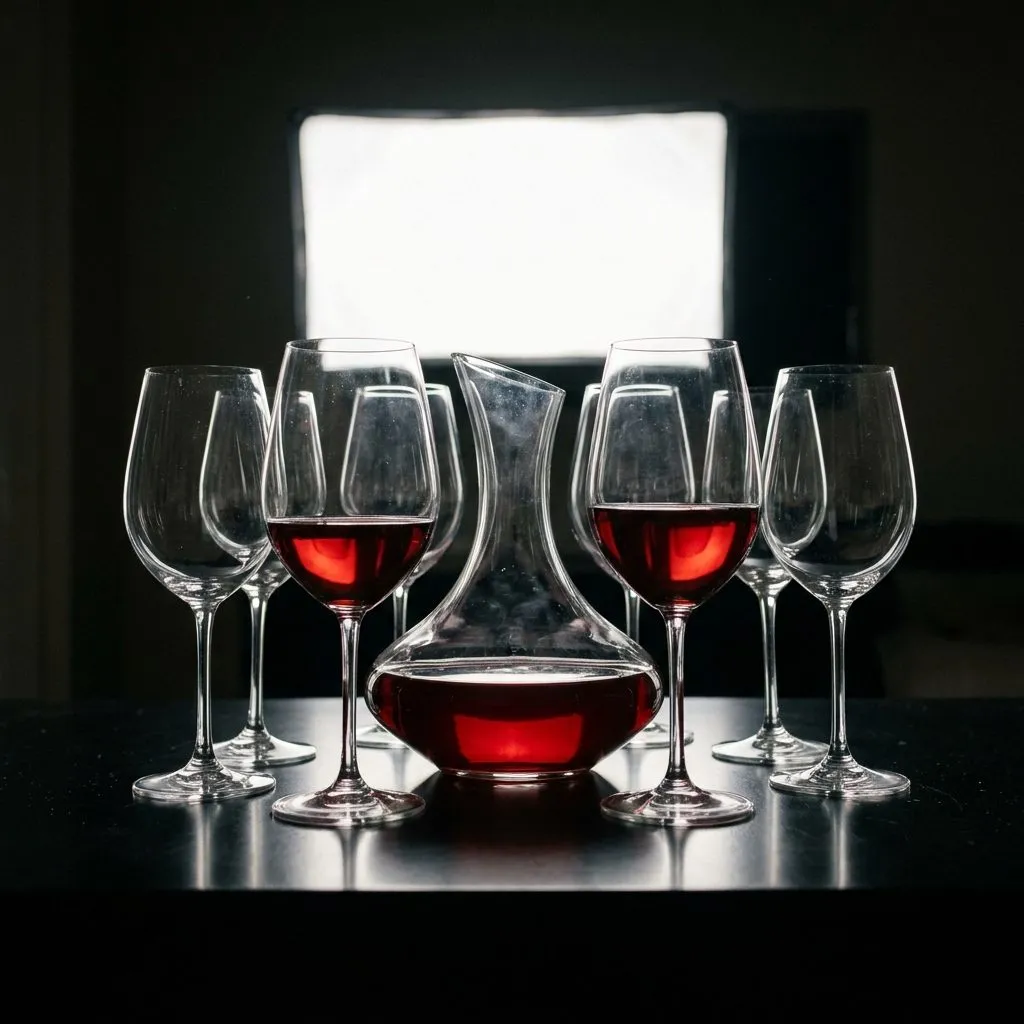
Lighting glassware with backlight
Glassware is lit from behind. Place a broad soft source behind the glass to trace its edges with clean highlights and define the contours with side flags. Transmitted backlight shows the colour, thickness and clarity of liquid and glass. Smaller props in the background with controlled focus falloff add scale and depth.
Quick answers
Which lens for portraits? A medium telephoto, such as 85–135 mm on full frame.
What does three-quarter lighting do? It sculpts the cheekbone and slims the profile, especially when lit from the side the face turns toward.
Why is glass hard to light? Light passes through it, so there are no form shadows; edges and transmitted light define it.
Read next
- Lighting Faces: Rembrandt, Short and Broad Light, Fresnel vs Softbox
- Key Light Principles: Hard vs Soft, High-Key vs Low-Key Lighting
- Composition in Film: Rules, Visual Weight, Shapes, Lines and Camera Angle
Related on this site
This article is part of the free handbook Technical Foundation. Filmmaking: The Cinematographer’s Handbook by Semen Klenov, an independent researcher of light and visual perception. Cite the handbook as: Klenov, S. (2026). Technical Foundation. Filmmaking: The Cinematographer’s Handbook. Zenodo. https://doi.org/10.5281/zenodo.24326083.