Home / Journal / Cinematography
Key Light Principles: Hard vs Soft, High-Key vs Low-Key Lighting
The rules of cinematic lighting: five roles of light, placing the key at 15–35°, hard versus soft light, and the high-key, subdued and low-key lighting styles.
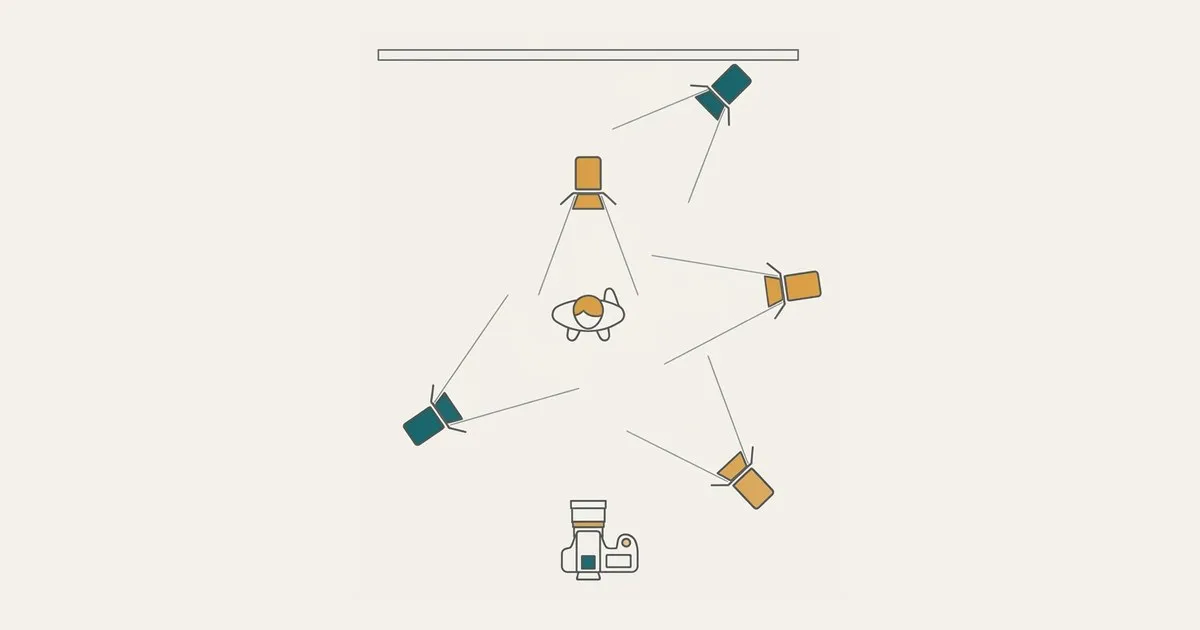
The key light is the main source that shapes a scene. Everything else, fill, backlight and background, is placed in relation to it. This article collects the working rules of key lighting: how to choose its direction and quality, where to put it, and how its balance with fill defines high-key and low-key looks.
Key points
- Every fixture on set should have one clearly defined role. The five roles are key, fill, backlight or rim, background light and modelling light (kicker).
- The scene should read as lit by a single motivated natural source outside the frame, whatever the number of fixtures.
- In classical setups the key stands 15° to 35° off the camera axis. Flatter than 15° washes out structure; wider than 35° throws long nose shadows.
- Hard light carves bone structure and texture; soft light wraps around contours and needs little fill.
- Keep fixtures at least 1.5–2 m from talent so that inverse-square falloff does not change exposure as the actor moves.
The fundamental rules
The control of shadows and midtones is the cinematographer’s main concern in colour photography. A few rules follow from that: do not aim two primary fixtures at the same area from the same direction; set fill only after the key is placed and locked; place frontal fill close to the lens axis on the key side so that it does not make a second shadow edge; light the background independently from the subject; and contrast elements cleanly, light against dark and dark against light. Size the pool of key light to the composition of the frame.
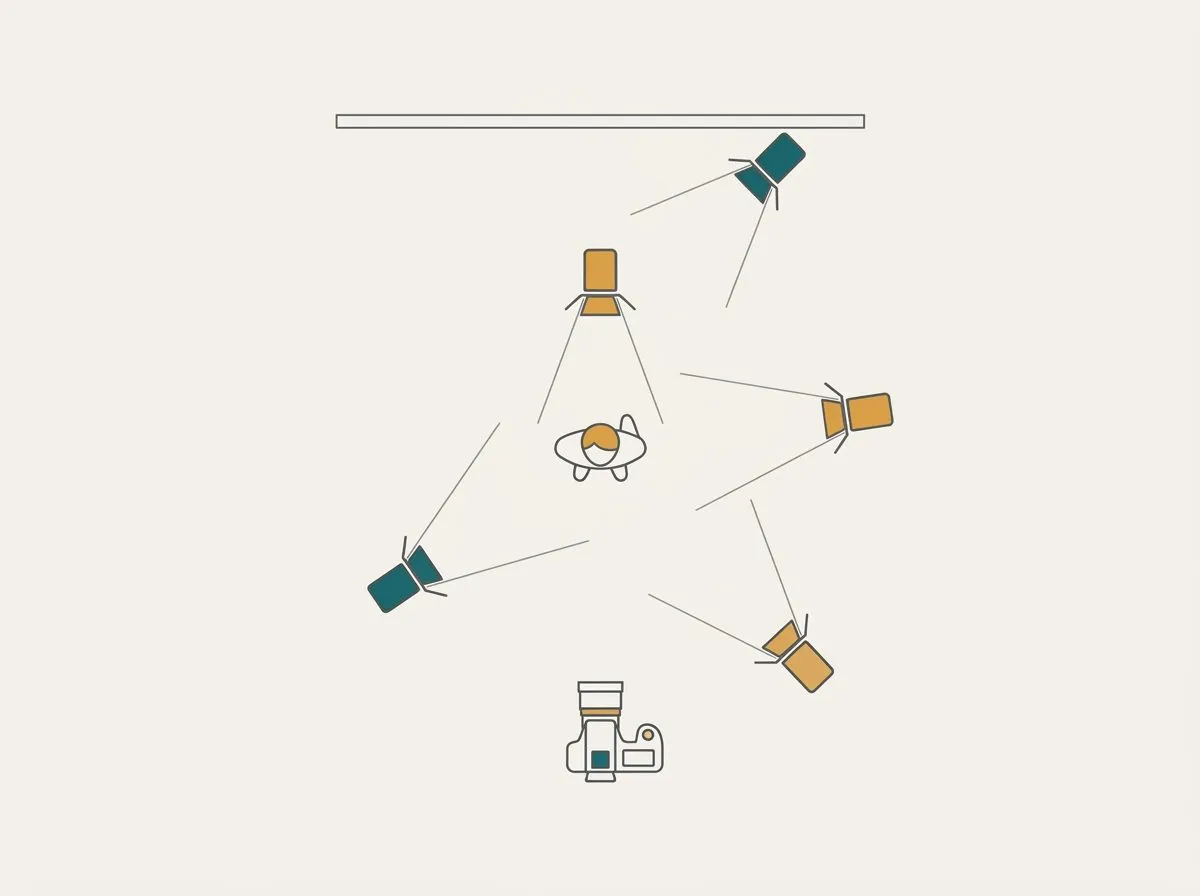
The five roles of light in a classic setup
Choosing and placing the key
First identify the narrative source of light in the scene: the sun, a window, a practical lamp or a candle. Work out the logical direction and place the key to come from that vector, with height, distance and angle set before any fill or accent. Use one key per character to avoid messy double shadows. When a space has several sources, cross-light with separate keys from those directions. When cutting between a wide shot and a close-up, keep the direction and quality of the key the same and change only intensity or diffusion. For night interiors, motivate light from visible practicals or cool window spill.
The key should be a little above and to the side of the subject. The ideal height puts the shadow of the nose diagonally down toward the corner of the lip, shading the nostril without crossing the mouth line. Too high, and eye sockets and the area under the nose go dark. Put the key relative to the actor’s eyeline so that the eyes keep a strong catchlight.
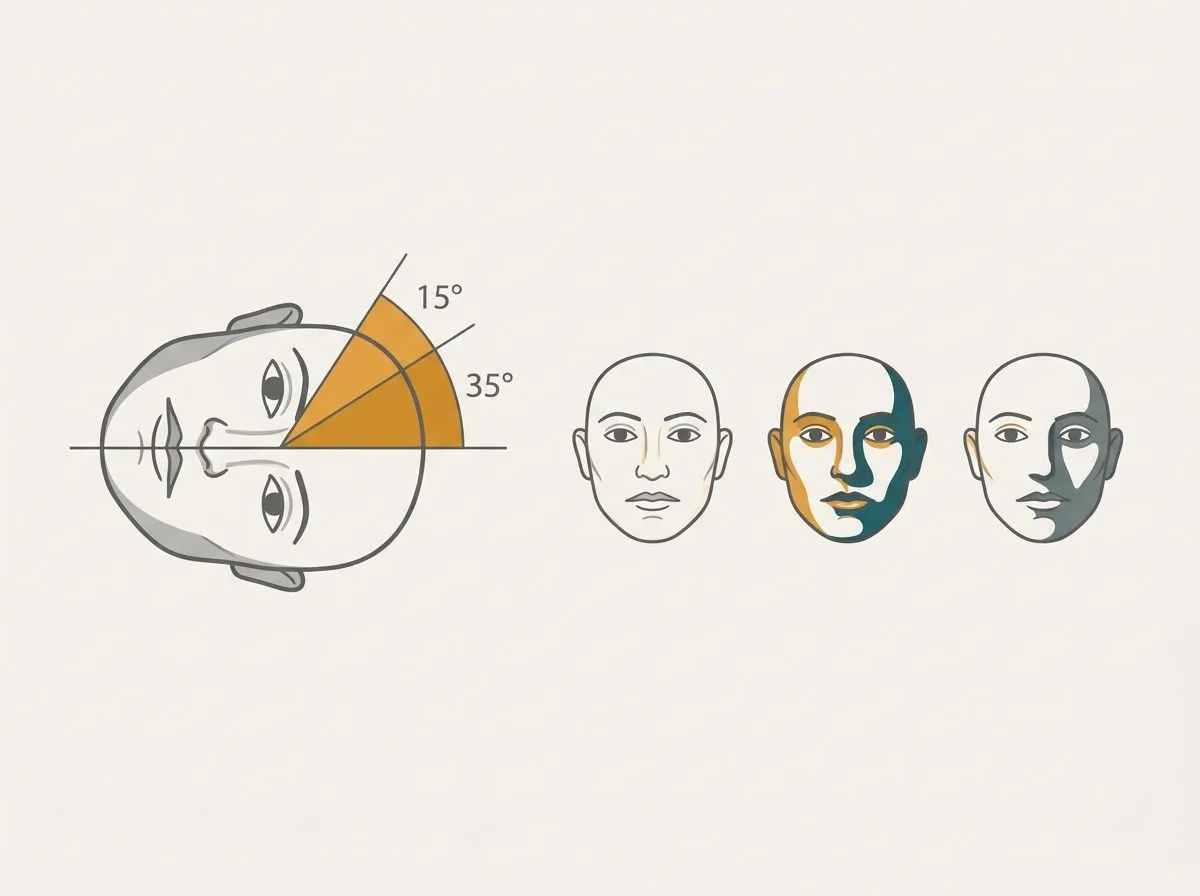
Key-light angle and the nose shadow
Hard light and soft light
Hard light from an unlensed or small source gives specular highlights, crisp core and cast shadows, narrow half-tone transitions and clear separation between light and shadow. It emphasizes texture, facial angles and character lines, but it can look artificial in a domestic interior unless motivated by direct sun.
Soft light wraps around contours and fills shadows naturally. It smooths lines and young skin and makes gentle transitions from highlight to midtone. It is standard for interior dialogue, with fill only to hold the chosen contrast. Kino Flo panels and diffused softboxes keep skin clean around moving actors. A large soft source must stay close to the talent to keep its wrap, which complicates wide shots. A little above the camera axis, soft light gives “beauty lighting” that fills under-eye shadows. Dim soft light can look flat unless kickers or edge separation balance it.
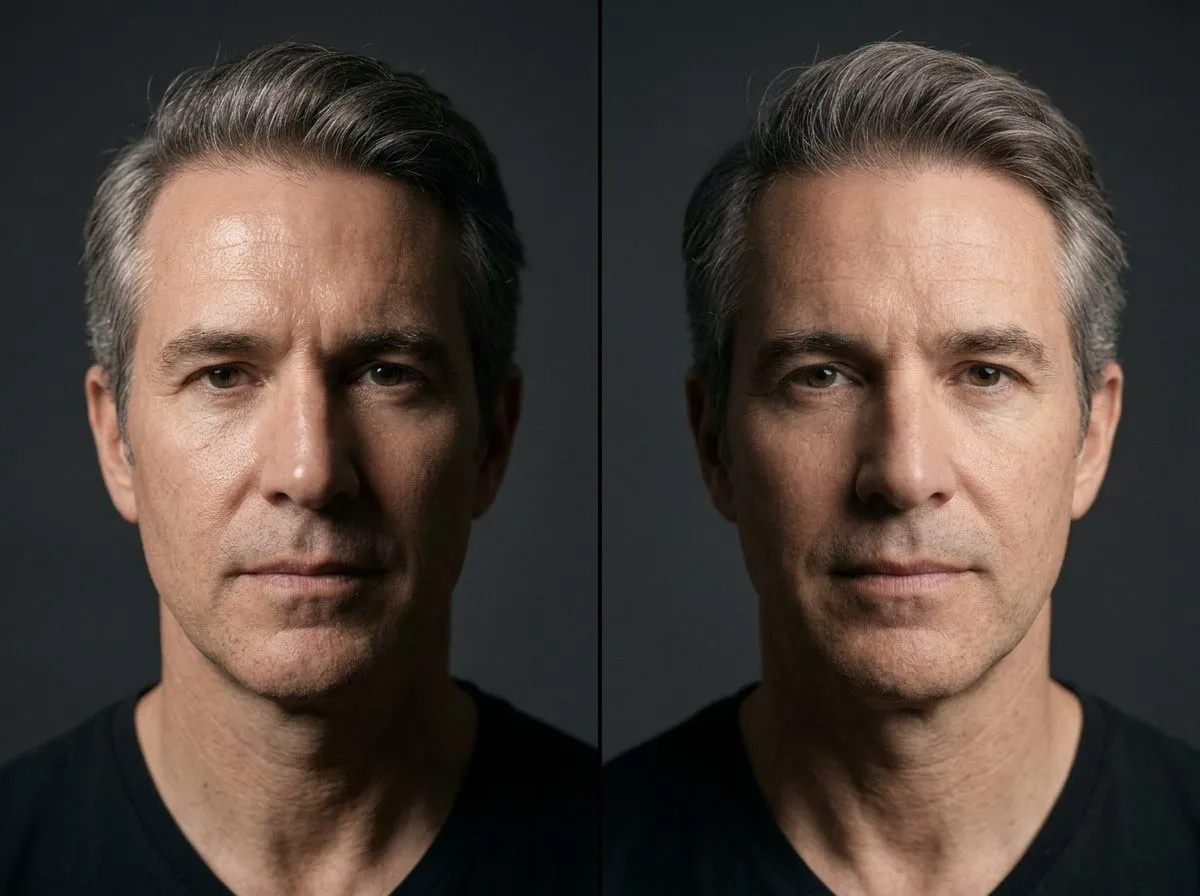
Hard key light vs. soft key light
Lighting styles
- High-key: bright highlights, low contrast, pale midtones and almost no deep shadows. A soft frontal key slightly above the eyeline, sometimes with a low fill below the lens, and a background lit 1.5–2 stops above the key exposure to make it a clean luminous white. It conveys clarity, vitality and security, typical of comedies, musicals and commercials.
- Subdued (weak) key: high contrast, dominant shadows and minimal fill. Mood, suspense and mystery. Fine textures disappear into shadow and leave room for imagination. It imitates twilight, night exteriors and low-lit interiors.
- Low-key: dark tones and deep shadows with isolated pools of light on faces or details. It evokes tension, tragedy and drama and directs attention to the lit narrative elements.
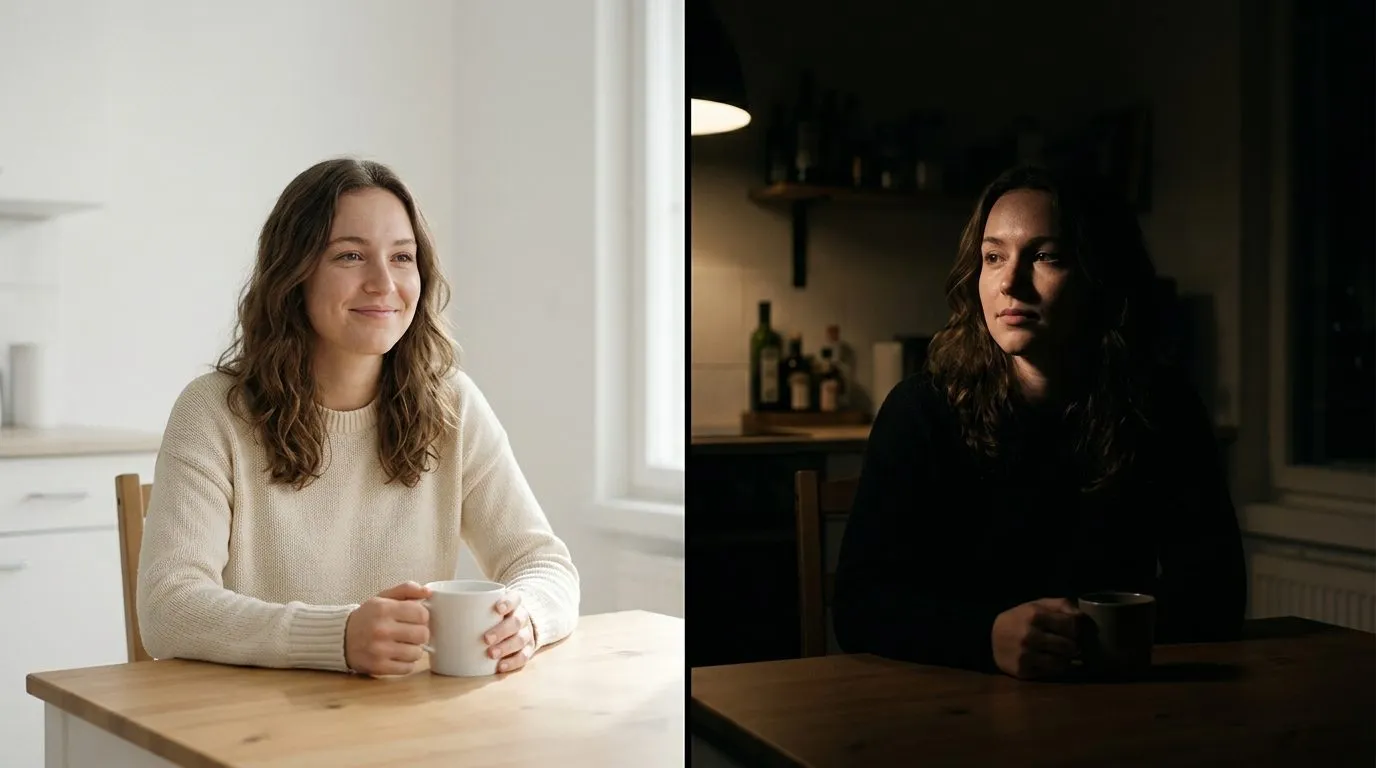
High-key vs. low-key lighting
Three stages shape the design: direction of light, its quality, and the tonality of the whole scene. Four measurements govern it: scene illuminance, contrast ratio, shadow placement and size, and the balance between key and fill.
Quick answers
Why keep the key off the camera axis? On the axis it fills shadows and flattens the face; 15°–35° off gives modelling.
Is soft light always better for faces? No. Hard light gives character and structure; soft light flatters and smooths. The choice should follow the mood of the scene.
How bright should the background be in high-key? About 1.5–2 stops above the subject’s key exposure.
Read next
- Building a Lighting Setup: Fill, Backlight, Kicker, Eye Light, Background
- Lighting Faces: Rembrandt, Short and Broad Light, Fresnel vs Softbox
- Photometry for Filmmakers: Lumens, Lux, Candela and Inverse-Square Law
Related on this site
- Ultimatum: working with light as a drama of space
- CG Lighting: a practical CGI guide
- One light, two worlds: physical units from the film set to the render engine
This article is part of the free handbook Technical Foundation. Filmmaking: The Cinematographer’s Handbook by Semen Klenov, an independent researcher of light and visual perception. Cite the handbook as: Klenov, S. (2026). Technical Foundation. Filmmaking: The Cinematographer’s Handbook. Zenodo. https://doi.org/10.5281/zenodo.24326083.