Home / Journal / Cinematography
Lighting Rain, Fog, Smoke, Snow, Lightning and Sunsets on Set
How to light and rig weather effects: backlit rain and fog, thermal fog and smoke, artificial snow, lightning, water reflections, sunrise and sunset looks.
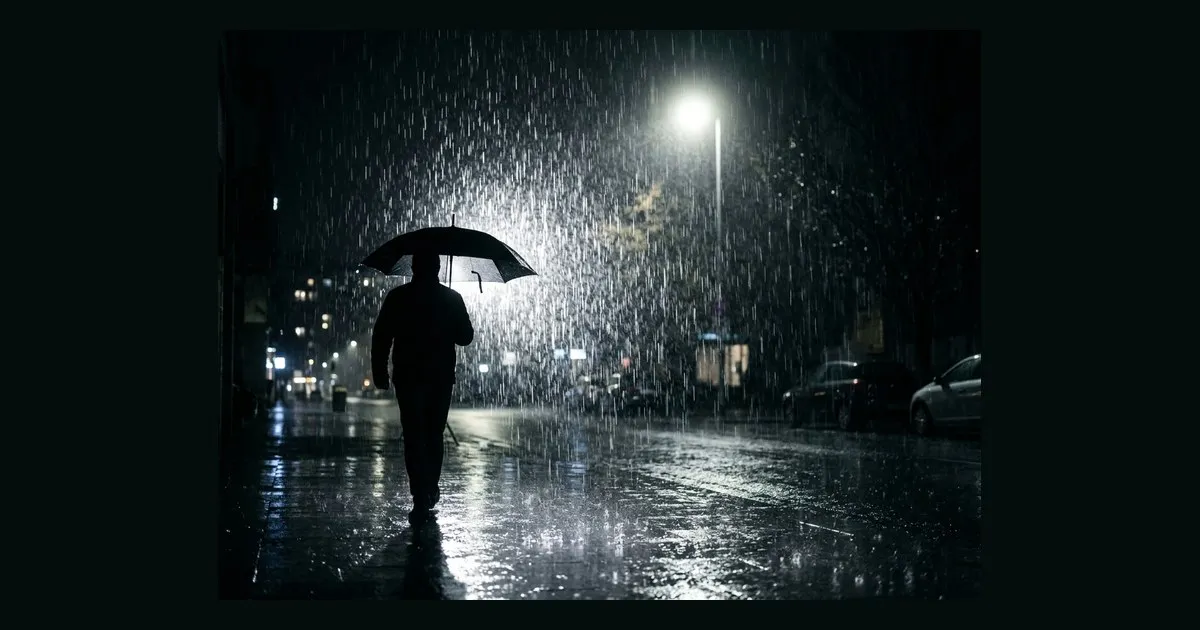
Weather effects are made, not found. Rain is invisible without the right light, fog needs a backlight to exist, and snow can be ruined by one hard lamp. This article explains how each effect is lit and rigged.
Key points
- Falling rain is almost invisible on camera unless it is backlit by strong directional sources against a dark background. Frontal light turns it into a muddy haze.
- Fog needs directional backlights to catch the suspended particles; hard frontal light flattens it.
- Never backlight artificial snow with hard point sources: flakes become harsh white streaks.
- Lightning should strike as a side kicker or three-quarter backlight, with ½ CTB or pale blue for a cool electric edge.
- A low sun can be simulated at any hour by knocking down the direct sun with large double or triple net frames.
Water reflections and lightning
For water reflections, fill a shallow waterproof tray just out of frame and aim a hard focusable spot into it so that the reflection bounces onto the set. Broken mirror or crinkled mylar in the basin breaks the beam into dancing highlights. Gentle ripples evoke calm and romance and fast agitation tension and danger. Time of day sets the colour: pale blue or cyan for night, deep amber and red for dawn and dusk, clean white for day.
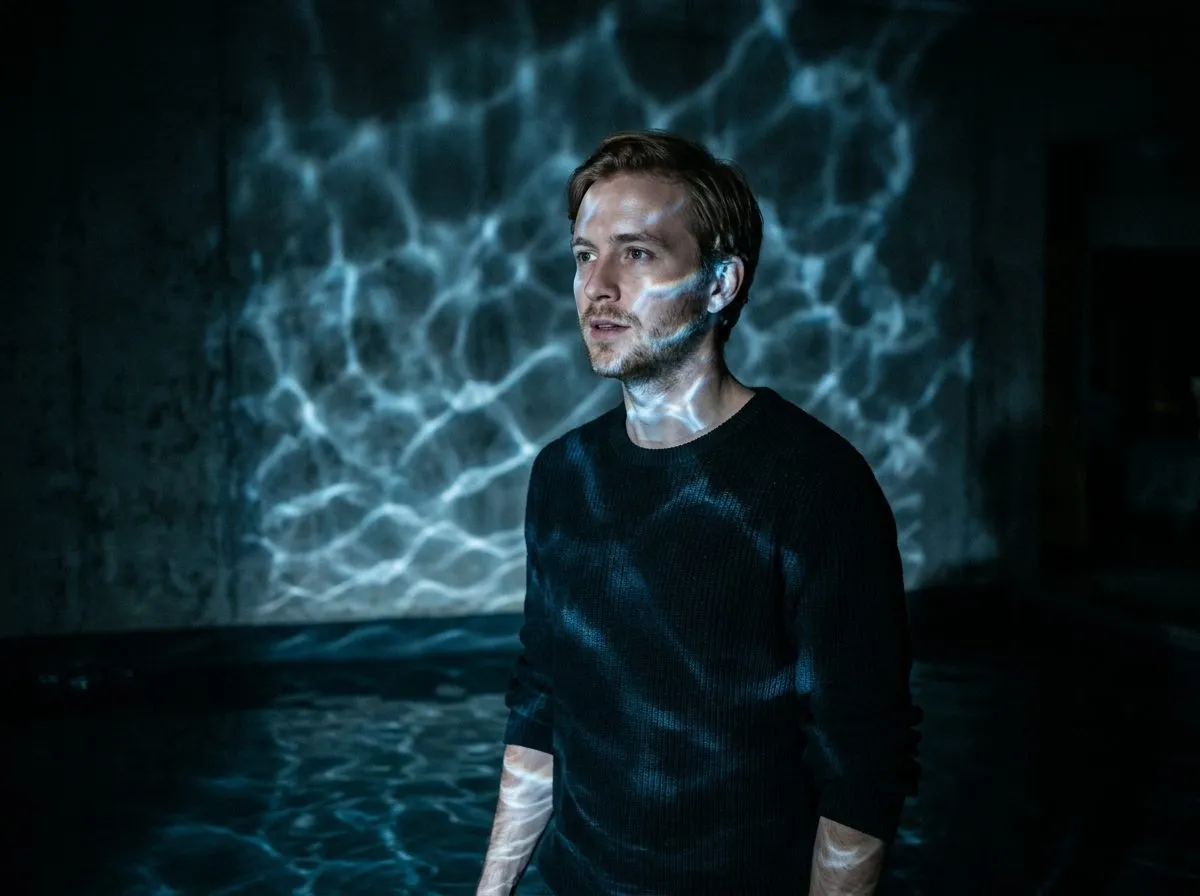
Water reflection effect
For lightning, the vintage method strikes two carbon arc rods together. Shutter arrays put banks of high-output lamps behind mechanical louvers that snap open and shut. Shutter-equipped arcs or high-output automated discharge fixtures give fast rise times. Fire several fixtures from different angles to suggest branching flashes.
Rain
Rain needs strong backlight, in series on a dolly move so the rim stays constant as the camera travels. Add light blue filters for a chilly, wet mood. Spray water upward through spreader nozzles so it breaks apart and falls by gravity, and rig rain towers high above the frame line. Avoid direct unshaded sun, which destroys the storm illusion. Everything visible has to be wet, so frame out dry areas. Wind machines blow rain at a believable angle, and a mist or fog filter on the lens softens the hard edges of artificial rain. Keep frontal light soft and minimal so that it does not wash out the backlit drops.
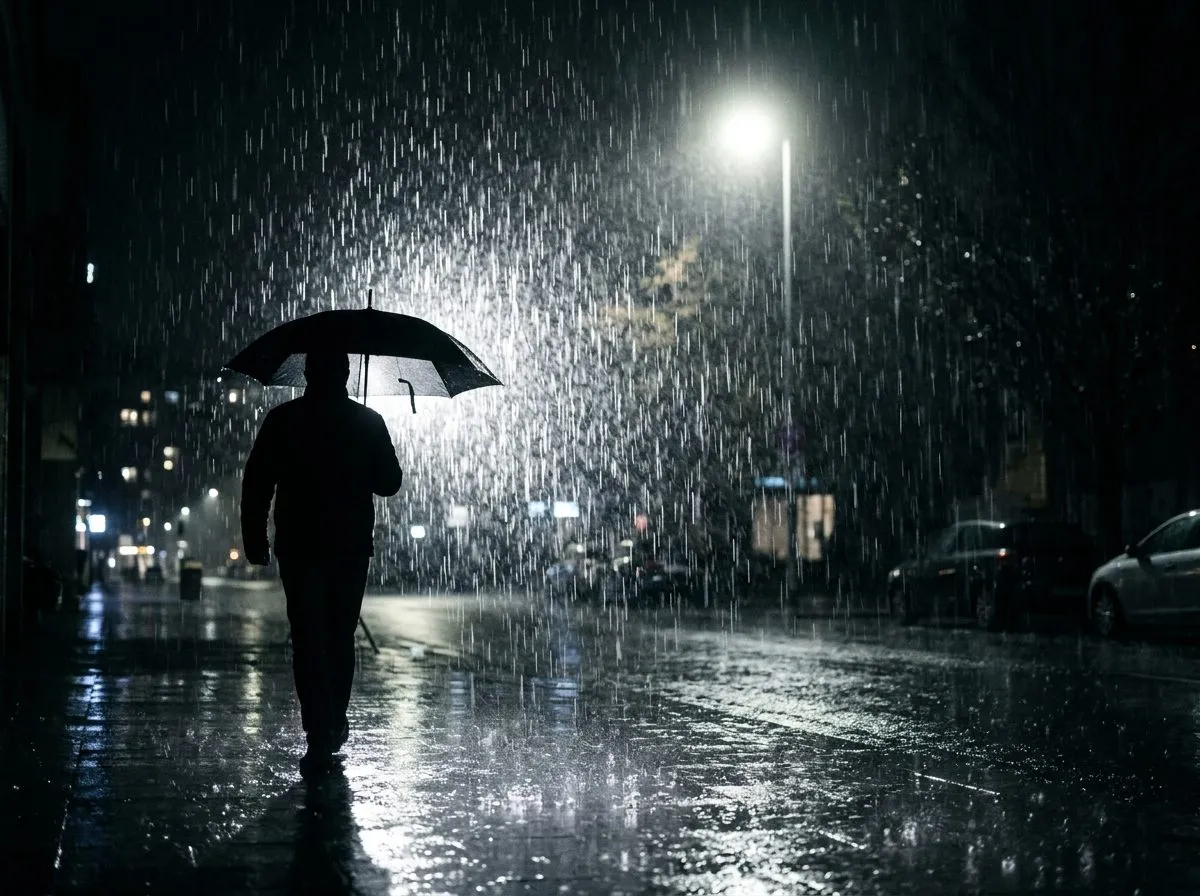
Backlit rain
Fog, smoke and haze
Wet down ground, roads and walls to sell a humid scene. Combine cool backlit fog with warm tungsten practicals spilling from windows and doors for separation and depth. Fog and diffusion filters help blend artificial smoke with real moisture. Keep frontal light soft: hard frontal light flattens fog and shows individual smoke layers.
Thermal fog machines vaporize a special fluid in a heated block, and it condenses into a dense white cloud in contact with air. Passed through a chiller box with dry ice, it cools and hugs the ground. Smoke is made by vaporizing pharmaceutical-grade mineral oil or water-glycol mixtures. Real combustion smoke has a dense warm grey-brown hue, which you simulate with straw and orange gels on backlights aimed through drifting layers. In hazy interiors such as clubs, run smoke evenly through the space and light it with soft ungelled backlights for atmospheric perspective. Avoid hot isolated shafts of light in unmotivated places.
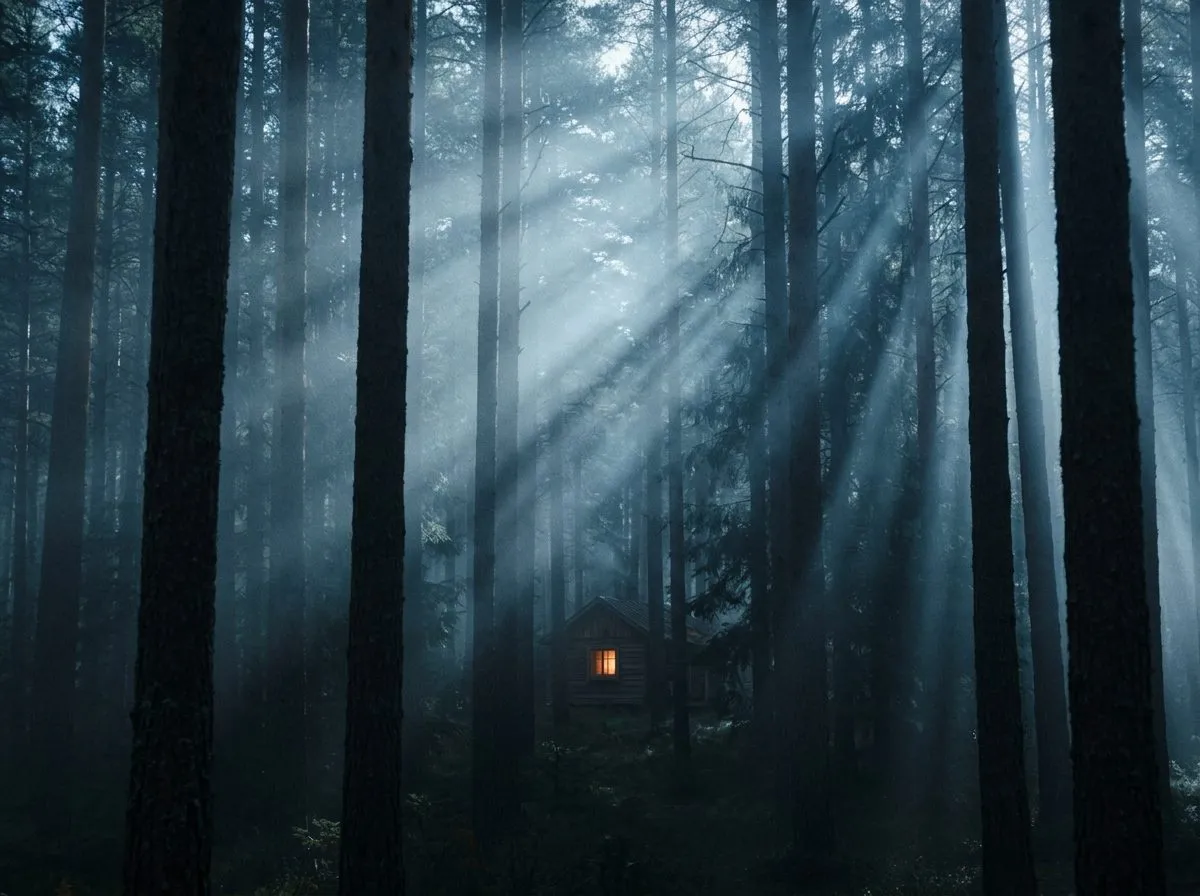
Backlit fog and smoke
Snow
Modern productions use non-toxic water-soluble starch or paper flakes. Drop them into the airstream of slow wind fans above the frame so they drift down naturally. Dress every visible horizontal surface, branch and roof with snow blankets, add reflective sparkle flakes on wet surfaces, use water-soluble blankets and foam for the foreground and white plastic sheeting and batting for distant backgrounds. Icicles can be clear acrylic or cast sugar glass, backlit with cool blue-green. Sunlight on real snow picks up a blue cast in the shadows from open sky, so for exterior snow use a crisp hard daylight key balanced with cool blue-tinted fill bounced into the shadow side. On flat overcast winter days use broad diffuse frontal bounce and no hard backlight, and a low-angle cross-light gives texture to footsteps and snowbanks.
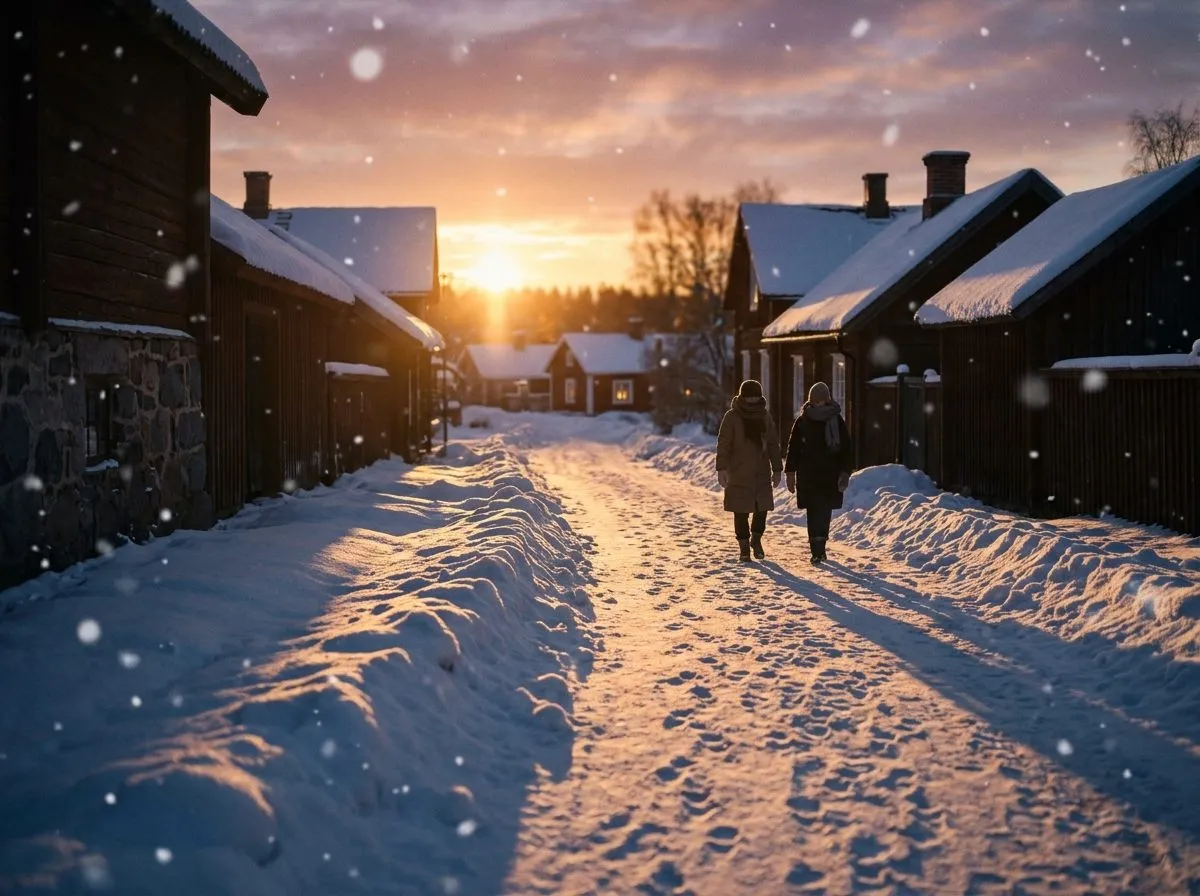
Snow and low winter sun
Sunrise and sunset
Early morning has low sun, long shadows and gentle levels. To imitate it at other times, knock down the direct sun with large double or triple net frames, warm key reflections on the talent with gold and warm silver reflectors or 85A/85B gels, and mount reflectors at eye level to copy the horizontal path of a setting sun. Graduated colour filters, for example Sunset 85A grads in the matte box, warm the sky while the lower landscape stays balanced.
Quick answers
Why can’t I see my rain? It is lit from the front. Move the light behind the rain, against a dark background.
Why does fog need a backlight? Light has to scatter toward the lens from the particles; backlight does that, frontal light does not.
How do I make artificial snow look natural? Let it fall slowly from fans above the frame and light it softly, not with hard point backlight.
Read next
- Day for Night, Moonlight, Firelight and Candlelight: Lighting Night Scenes
- Lighting Exteriors and Interiors: Daylight, Windows, Shadows and Texture
- Flags, Nets, Diffusion and Gels: Shaping and Controlling Light on Set
Related on this site
This article is part of the free handbook Technical Foundation. Filmmaking: The Cinematographer’s Handbook by Semen Klenov, an independent researcher of light and visual perception. Cite the handbook as: Klenov, S. (2026). Technical Foundation. Filmmaking: The Cinematographer’s Handbook. Zenodo. https://doi.org/10.5281/zenodo.24326083.