Home / Journal / Cinematography
Day for Night, Moonlight, Firelight and Candlelight: Lighting Night Scenes
How to shoot day-for-night, simulate moonlight, campfires, candles, sconces, flashlights and lanterns, with gel choices, flicker methods and rigs.
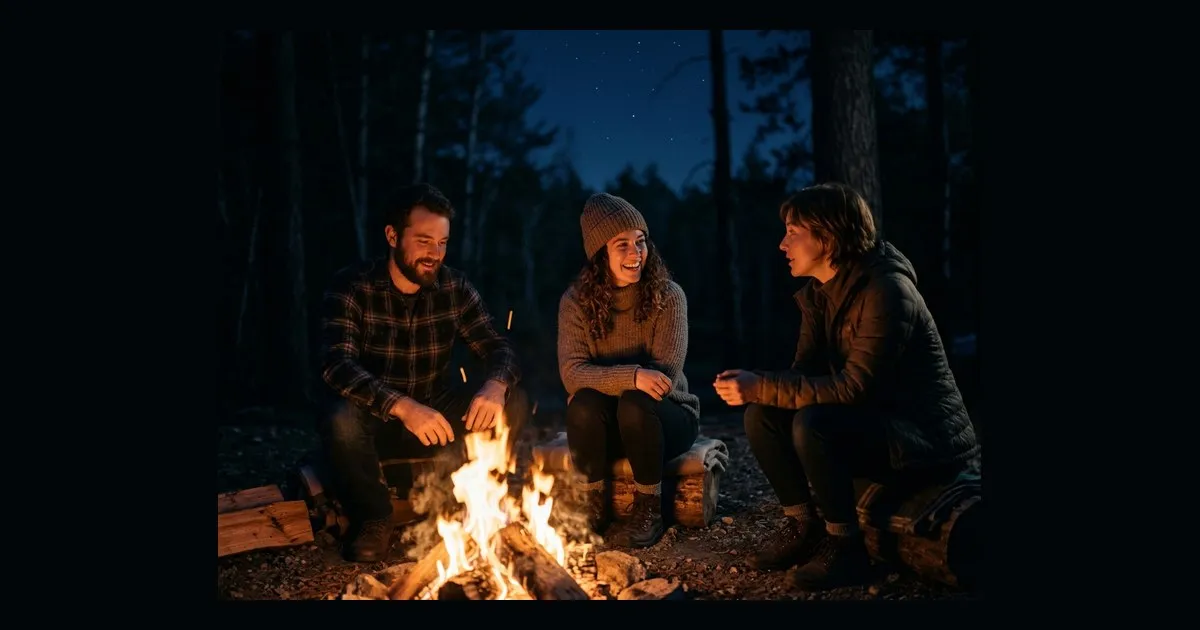
Night scenes are rarely shot in real darkness. They are built from sunlight underexposed, blue-green gels, hidden fixtures and flickering warm light. This article covers the main techniques: day-for-night, night-for-night, moonlight, fire and candle effects, and the tricks for lamps that move.
Key points
- Day-for-night treats direct sun as moonlight and underexposes by 2–3 stops, often with stacked ND, so that shadows go deep black.
- Moonlight is simulated with cool blue-green filtration; pure deep blue looks artificial and turns foliage unnaturally black.
- Real flames give little usable light. Firelight is made with warm gels on small fixtures on flicker dimmers.
- A real candle burns at about 1900 K. Simulate it with tungsten warmed with Double CTO or dark amber, bounced from foamcore or muslin.
- At peak, simulated firelight can rise 1–2 stops above the ambient base.
Day-for-night
Shoot under clear skies with strong backlight or high three-quarter rim light, and frame out the sky so no daytime clouds or blue show. Flat frontal light ruins the illusion. Keep actors in rim-lit profile, with the unlit side to the camera, and point the camera away from open sky. Motivated practicals (lamps, windows, fires) are lit to punch through the underexposure. Stack ND filters to pull the base exposure down 2–3 stops, and an 85 or pale yellow filter can hold skin tones while the grade pushes the scene cool blue. UV reflections on skin can add an unnatural sheen if not controlled with polarizing or UV filters.
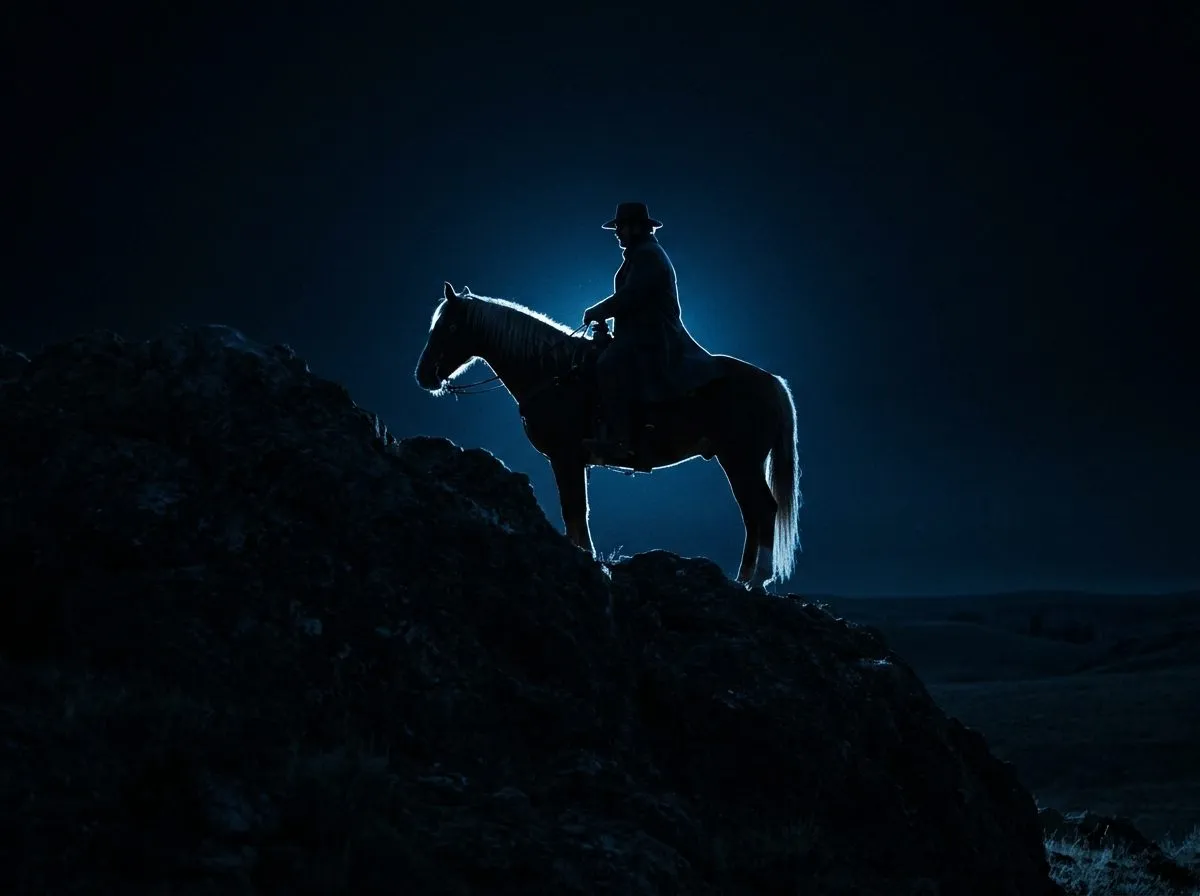
Day-for-night
Night-for-night uses cross-backlights and edge lights on both sides of the camera axis to define forms against the dark. Omit frontal fill so form shadows can fall into true black, and keep frontal key for tight close-ups where expression matters. Interior rooms seen through windows look best in warm tungsten against the cool blue exterior.
Moonlight
Use cool blue-green filtration, for example Pale Navy, Steel Blue or cyan combinations. A touch of green keeps skin natural and preserves shadow detail. Light from behind and to the side to keep mystery and texture.
Fire and campfires
Because open flames add little exposure, motivated firelight must be boosted with production lamps. Gel small tungsten fixtures amber, straw or light red on flicker dimmer channels. Deeper reds suggest embers, straw and amber an active flame, and a combination of straw and red the core of a forest fire. Aim lamps at props dressed with charcoal and ash and diffuse them so several warm units merge into one flickering source.
For a campfire, hide miniature fixtures (Dedolights, batten strips) behind logs and rocks in the pit, aimed up at the faces, and dress the foreground to cover cables. The fire is the key, so the light on faces must pulse in sync with the flames. Flicker can come from an electronic random generator, torn strips of amber and red gel fluttered on a stick before the fixture, or a silk or flag waved through the beam.
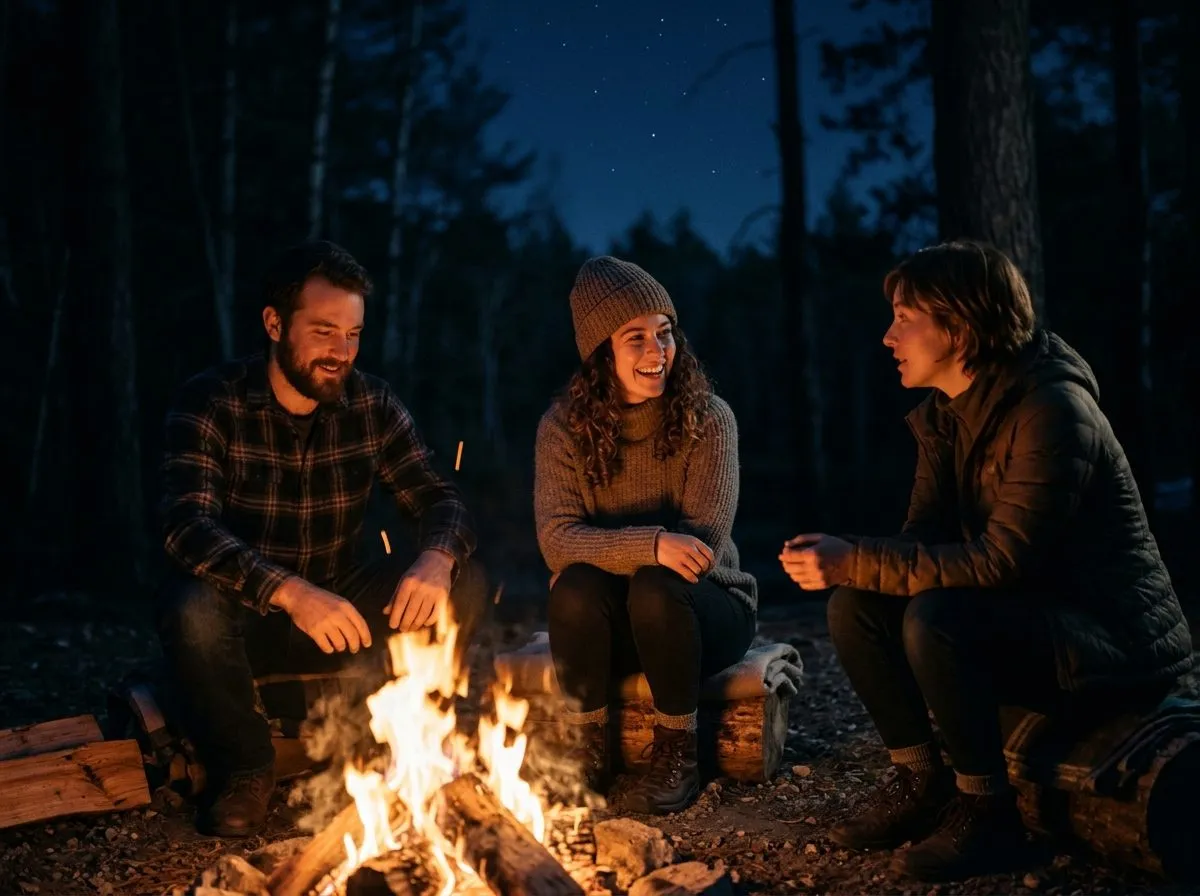
Campfire and firelight
For an off-screen fire, check geography, action and weather first. Mount strips of amber, straw, orange and red gel on a thin rod, a flicker stick, and flutter it through the beam of a spot. A mylar drum, silver mylar over an open frame tapped from behind, gives liquid, shifting reflections. Variable rheostats or flicker dimmers move levels organically. For a spreading fire, start low and dial up the flicker channels. Fire looks warmer and more saturated against cool unlit shadows.
Candlelight and moving lights
Bounce deeply warmed tungsten off foamcore or muslin, add tough frost or opal to keep the light soft and wrapping, and shoot at wide apertures so the room falls off softly as it does in a candle-lit space.
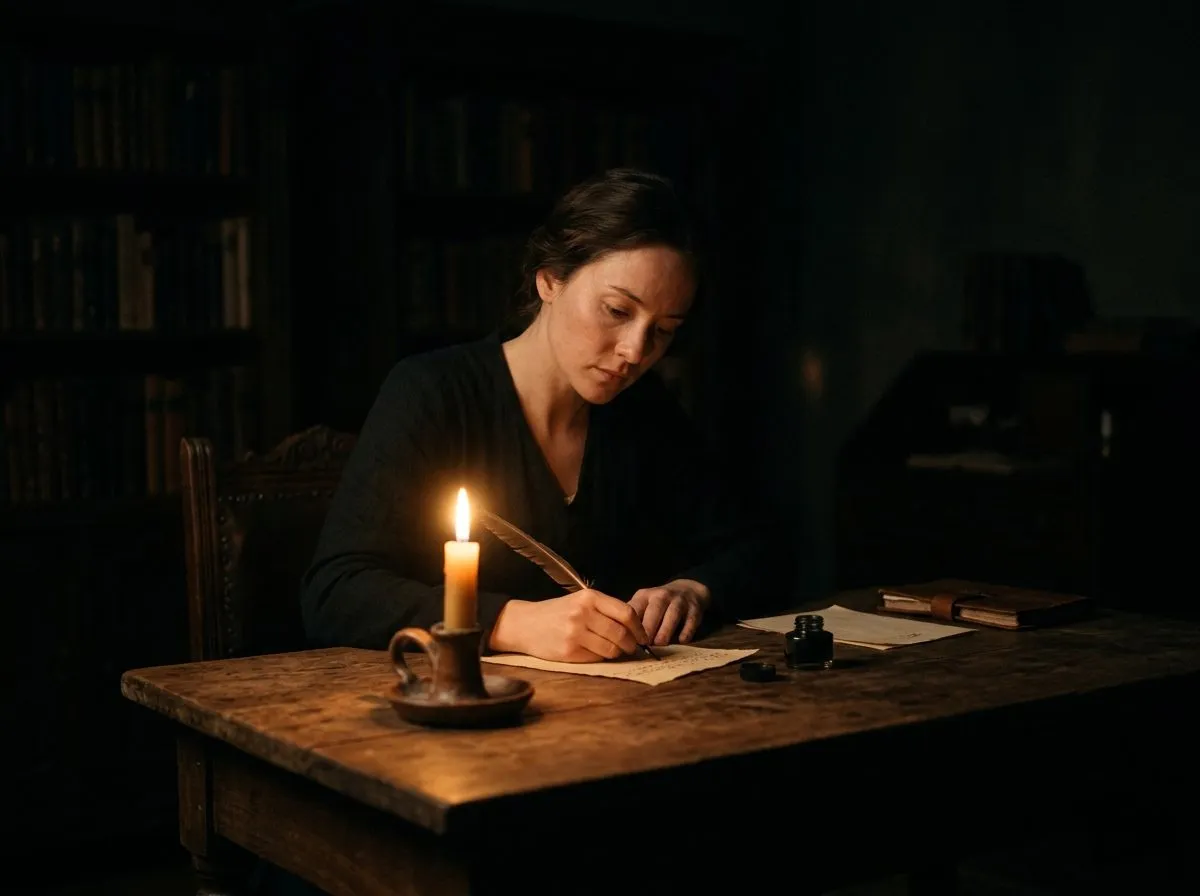
Candlelight
- Sconces: create a soft halo on the wall above and behind the fitting, with a small snooted spot overhead aimed down through it so the shadow falls on the floor. Warm fill from above the walls and soft, filtered frontal fill match the glow.
- A moving candle: use relay lighting, fixtures on dimmers along the path that fade up ahead of the actor and down behind, or a small battery warm fixture on the dolly that tracks with the actor. A miniature LED or halogen bulb hidden in the candle base behind a heat shield also works.
- Flashlights and lanterns: a flashlight is a hard, narrow beam, not a glow. Flag fixtures so spill stays off walls and ceiling, and bring up a tight tracking spot when the actor switches it on. Old lanterns burn warm amber, modern LED torches are crisp cool white at 5600 K.
Quick answers
Why not shoot night in real darkness? There is not enough light to record texture, so night is built with controlled sources.
How do I keep a campfire believable? Make it the key, hide the fixtures among the fuel and flicker the light in sync with the flames.
What gel makes candlelight? Double CTO or dark amber on tungsten, bounced and diffused.
Read next
- Lighting Rain, Fog, Smoke, Snow, Lightning and Sunsets on Set
- Building a Lighting Setup: Fill, Backlight, Kicker, Eye Light, Background
- Color Temperature, Mireds and CRI Explained for Cinematographers
Related on this site
This article is part of the free handbook Technical Foundation. Filmmaking: The Cinematographer’s Handbook by Semen Klenov, an independent researcher of light and visual perception. Cite the handbook as: Klenov, S. (2026). Technical Foundation. Filmmaking: The Cinematographer’s Handbook. Zenodo. https://doi.org/10.5281/zenodo.24326083.