Home / Journal / Cinematography
Color Temperature, Mireds and CRI Explained for Cinematographers
Kelvin, correlated color temperature, mired shifts for gels and filters, the visible spectrum and the Color Rendering Index, with worked examples.
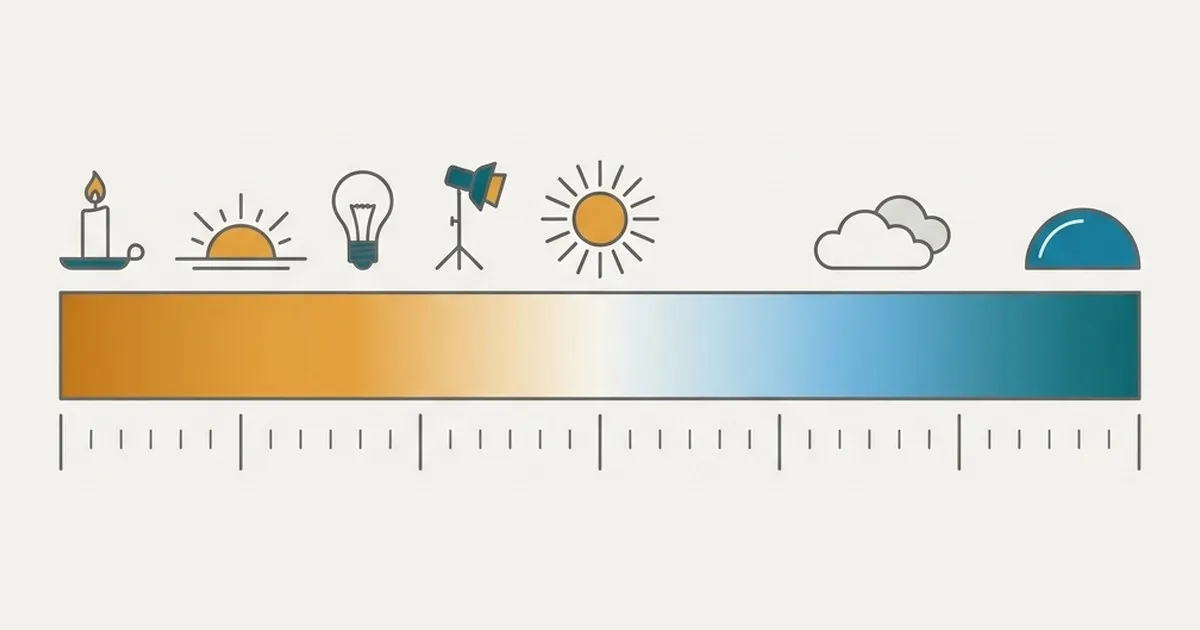
Warm tungsten, blue skylight and a green-tinted fluorescent tube are all “white” to the eye and very different to a camera. Color temperature, mireds and the Color Rendering Index give numbers to that difference. This article explains what they mean and how to use them when balancing lights, gels and filters.
Key points
- Color temperature is the absolute temperature, in kelvin, of an ideal blackbody radiator whose colour matches the source. Discharge and LED sources use correlated color temperature (CCT).
- As a blackbody gets hotter its colour moves from dull red through yellow and white to blue.
- Mired value = 1,000,000 / color temperature in kelvin. A gel or filter has a constant mired shift, which makes calculations simple.
- Visible light spans about 400–750 nm. Ultraviolet lies below it and infrared above.
- The Color Rendering Index (CRI, 0–100) shows how faithfully a source renders object colours compared with a reference source of the same colour temperature.
What color temperature measures
A thermal source such as the sun or a tungsten filament emits a spectrum that depends only on its temperature. Kelvin is the absolute scale: 0 K = −273.15 °C, and T(K) = T(°C) + 273.15. Strictly the term applies to thermal radiators. For discharge lamps and LEDs, whose spectra are not smooth, the correlated color temperature is used instead.
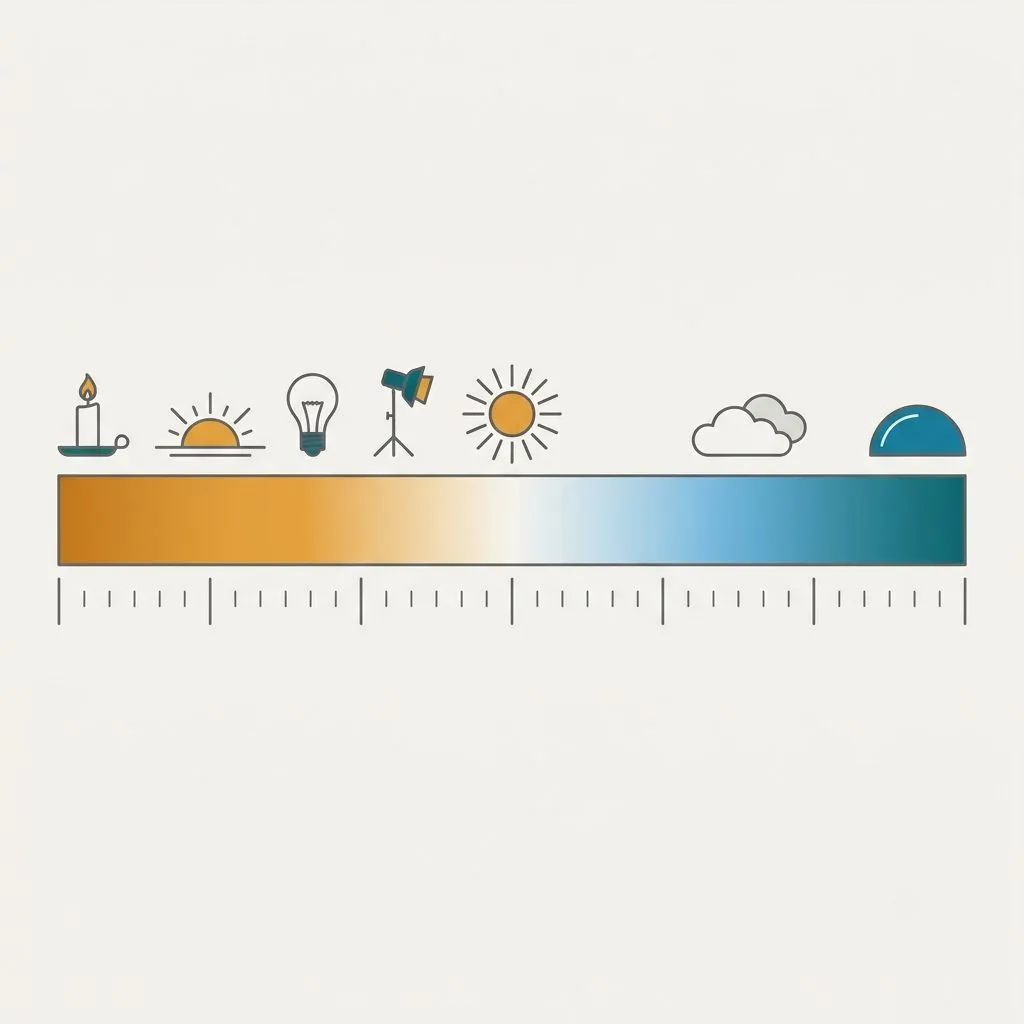
Color temperature scale in Kelvin
The spectrum and the mired scale
A source is characterised by its spectral power distribution (SPD), a curve of radiant energy against wavelength. The visible bands run approximately from violet at 390–440 nm through blue, cyan, green, yellow and orange to red at the long end near 770 nm. Monochromatic light has a single wavelength and cannot be split further by a prism.
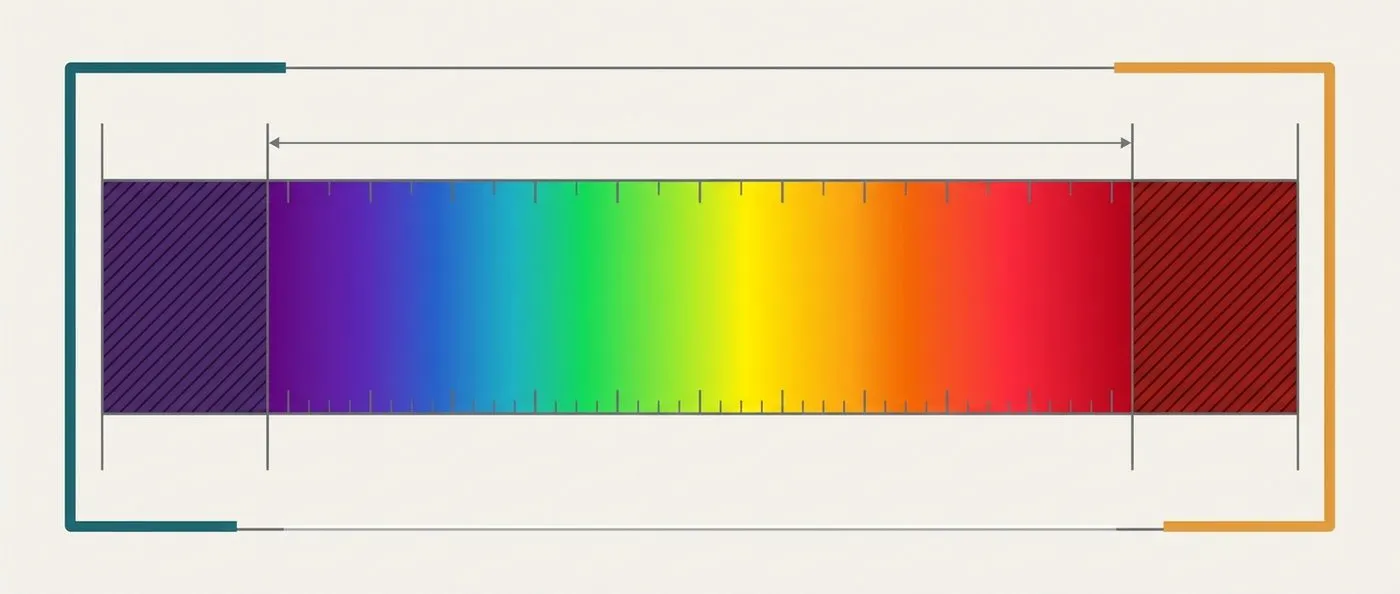
The visible spectrum and adjacent UV and IR regions
Because the eye and the camera respond to ratios of colour, the mired scale is more useful than kelvin for correcting it. A mired is a micro reciprocal degree:
Mired = 1,000,000 / K
The shift needed to change one colour temperature T₁ into another T₂ is ΔM = (1 / T₂ − 1 / T₁) × 10⁶. Two examples:
- 5500 K = 182 mireds and 3200 K = 312 mireds. Converting daylight to tungsten balance needs a shift of +130 mireds, a full CTO (85) filter. Going from 3200 K to 5500 K needs −130 mireds, a full CTB.
- Moving 6500 K to 3200 K: 312.5 − 153.8 = about +159 mireds.
Why daylight changes colour
Average noon daylight is a mixture of two components: direct sunlight, warm and directional, and diffuse skylight, cool and soft. The atmosphere scatters blue light and passes yellow and red. With the sun high, its light crosses little air and stays blue-white, and the sky is a deep blue through Rayleigh scattering. With the sun low, the path is long, blue is scattered out of the beam, and what reaches the camera is dominated by red and orange.
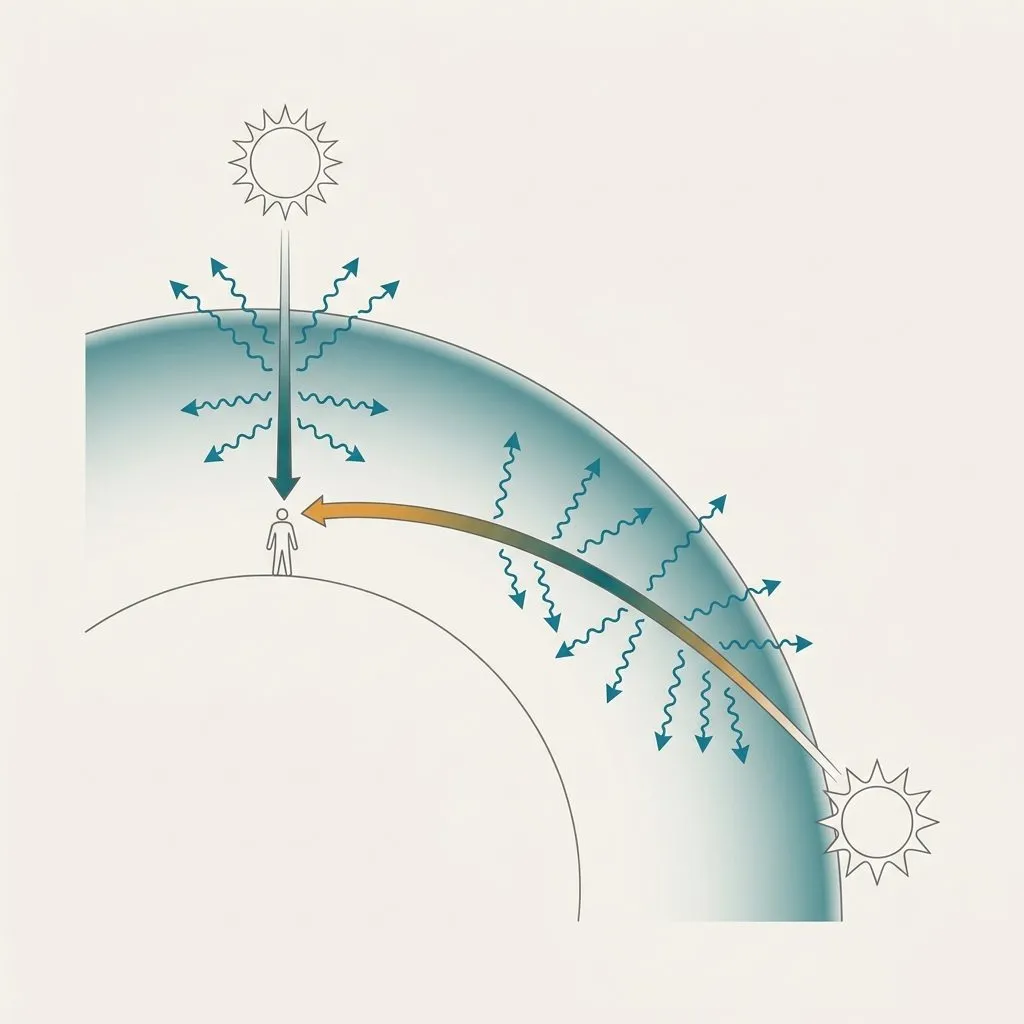
Why noon light is blue-white and sunset light is warm
Suspended dust and moisture scatter short wavelengths and add a blue haze in the distance. Below 380 nm, ultraviolet can focus at a different plane than visible light in an uncorrected lens, which causes fringing and loss of detail.
Color rendering
Two sources can share the same colour temperature and still render colour differently if one of them has a discontinuous spectrum. The Color Rendering Index was developed for this: on a scale of 0 to 100 it shows how accurately a source reveals the colours of objects, compared with daylight or a blackbody of the same temperature. Behind it is a basic fact of colour work: objects have no intrinsic colour. What we see is decided by the spectrum of the light that falls on them.
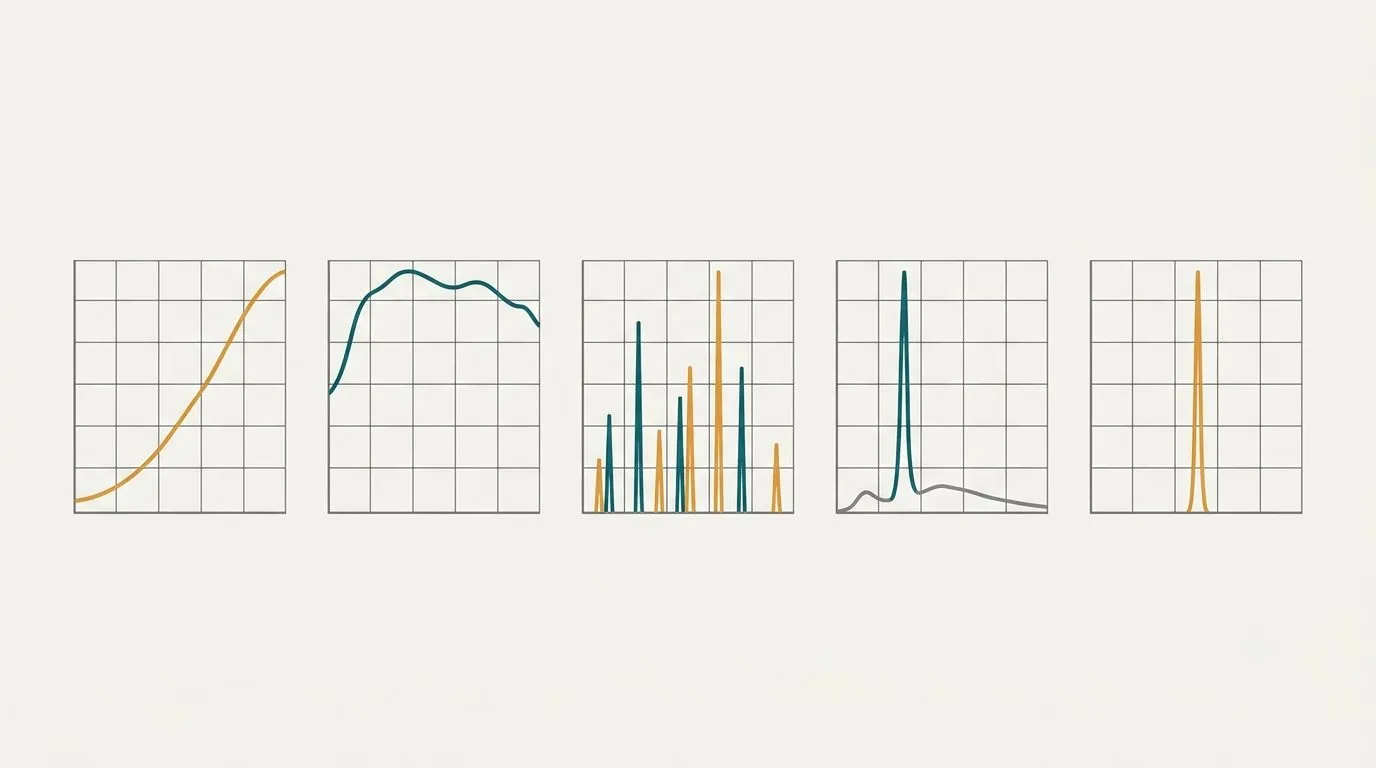
Spectral power distribution of different light sources
Quick answers
What does a mired shift of +130 mean? It warms the light by 130 mireds, the correction between 5500 K and 3200 K (a CTO, or 85, filter).
Why use mireds instead of kelvin for gels? A given filter changes the mired value by the same amount whatever the starting temperature, but changes kelvin by different amounts.
Is high CCT the same as good colour? No. Matching CCT does not guarantee good rendering, which is why CRI exists.
Read next
- Photometry for Filmmakers: Lumens, Lux, Candela and Inverse-Square Law
- Camera Filters: ND, Diffusion, Polarizing and Colour-Conversion Filters
- Flags, Nets, Diffusion and Gels: Shaping and Controlling Light on Set
Related on this site
- Colour for beginners: why pixel values are not amounts of light
- Color in the Image: a practical CGI guide
- Color as a Number: a practical CGI guide
This article is part of the free handbook Technical Foundation. Filmmaking: The Cinematographer’s Handbook by Semen Klenov, an independent researcher of light and visual perception. Cite the handbook as: Klenov, S. (2026). Technical Foundation. Filmmaking: The Cinematographer’s Handbook. Zenodo. https://doi.org/10.5281/zenodo.24326083.