Home / Journal / Cinematography
Flags, Nets, Diffusion and Gels: Shaping and Controlling Light on Set
Grip tools that cut, reduce, soften and colour light: barn doors, flags, dots, scrims, nets, diffusion, cookies and gels, with sizes and stop values.
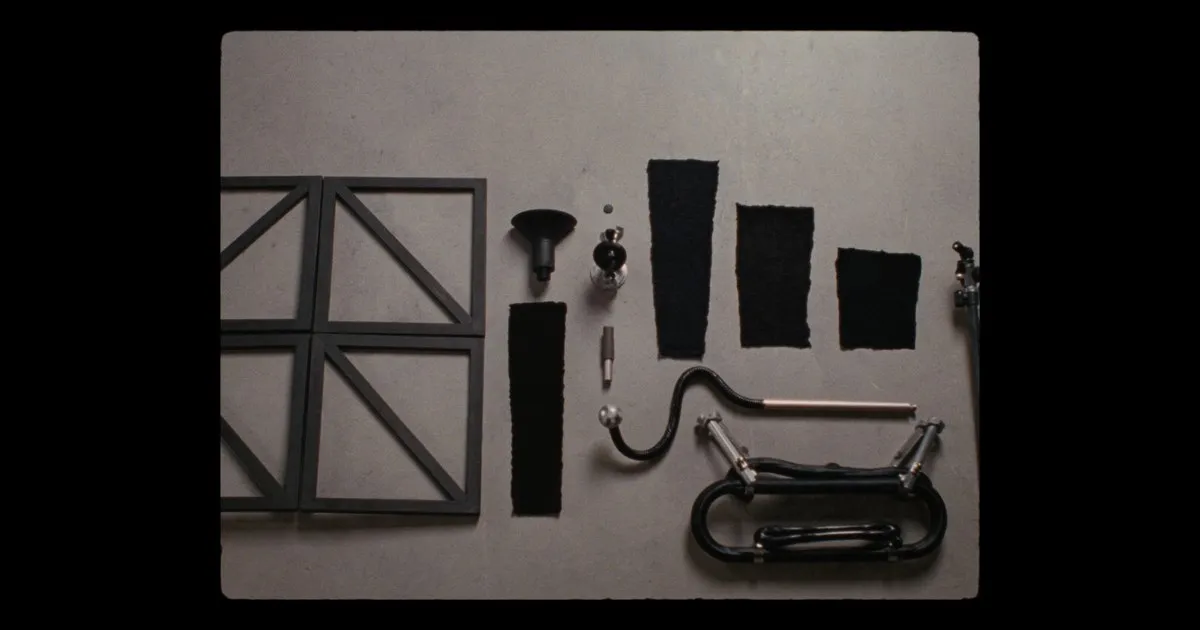
Lighting a scene is half adding light and half taking it away. Flags, nets and diffusion decide where light falls, how strong it is and how soft its shadows are. This article lists the main tools and what each one does.
Key points
- Flags block light and cut hard edges; nets and scrims reduce intensity; diffusion enlarges the source and softens shadows; gels change colour.
- A wire scrim reduces output without changing colour temperature.
- The shadow pattern of a cookie is soft near the lamp and crisp far from it.
- Polyester (PET) gel is the standard for HMI and tungsten, because it resists heat.
Cutting light
Barn doors are two- or four-leaf folding metal doors on the front ring of a fixture. The top leaf flags light off the lens to prevent flares, and the bottom leaf trims light off the floor to prevent distracting bounce. With backlight or rim light, closing the front doors keeps stray light from hitting the lens. A snoot (top hat) narrows the beam into a tight circle without changing intensity, for local accents and hair light. Venetian blinds trim spread or simulate light slicing through blinds.
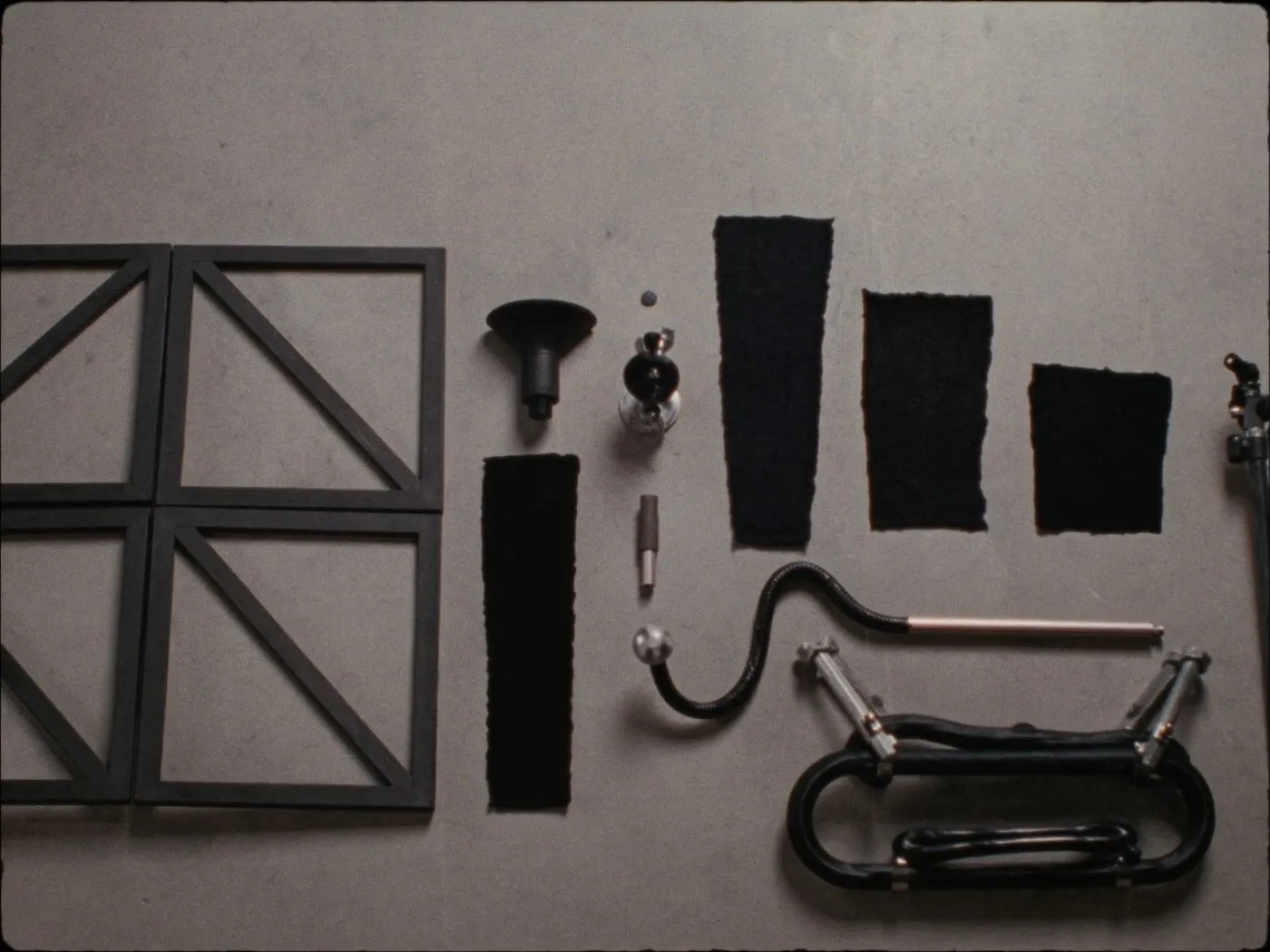
Grip tools for shaping light
Larger tools stand on a C-stand, a heavy stand with staggered folding legs, a grip head and an extension arm. A gooseneck holds small flags in tight places. The usual flag is a wire frame covered with black Commando cloth or duvetyne, in sizes such as 12×18, 18×24, 24×36 and 30×36 inches. A meat axe is a long narrow cutter for tight architectural spaces, fingers are small elongated flags, and dots (3–10 inches) shade local hot spots such as a shiny forehead or a button. A gobo is anything opaque placed in front of a light to cast a shadow pattern on the set.
Reducing intensity
Wire scrims of stainless mesh drop into the front of a fixture and reduce output without altering colour temperature. They come full, half and graduated. Nets are black open-weave bobbinet stretched over a frame. The reduction depends on weave density, thread thickness and the number of layers. Hexagonal weave is the industry standard because it refracts smoothly and avoids moiré. The colour of the frame border codes the strength: green is a single net (about half a stop), red a double (one stop). Open-ended frames let shadow edges blend without a visible border line. Large black overhead solids, up to 20×20 feet, remove unwanted skylight from exterior sets.
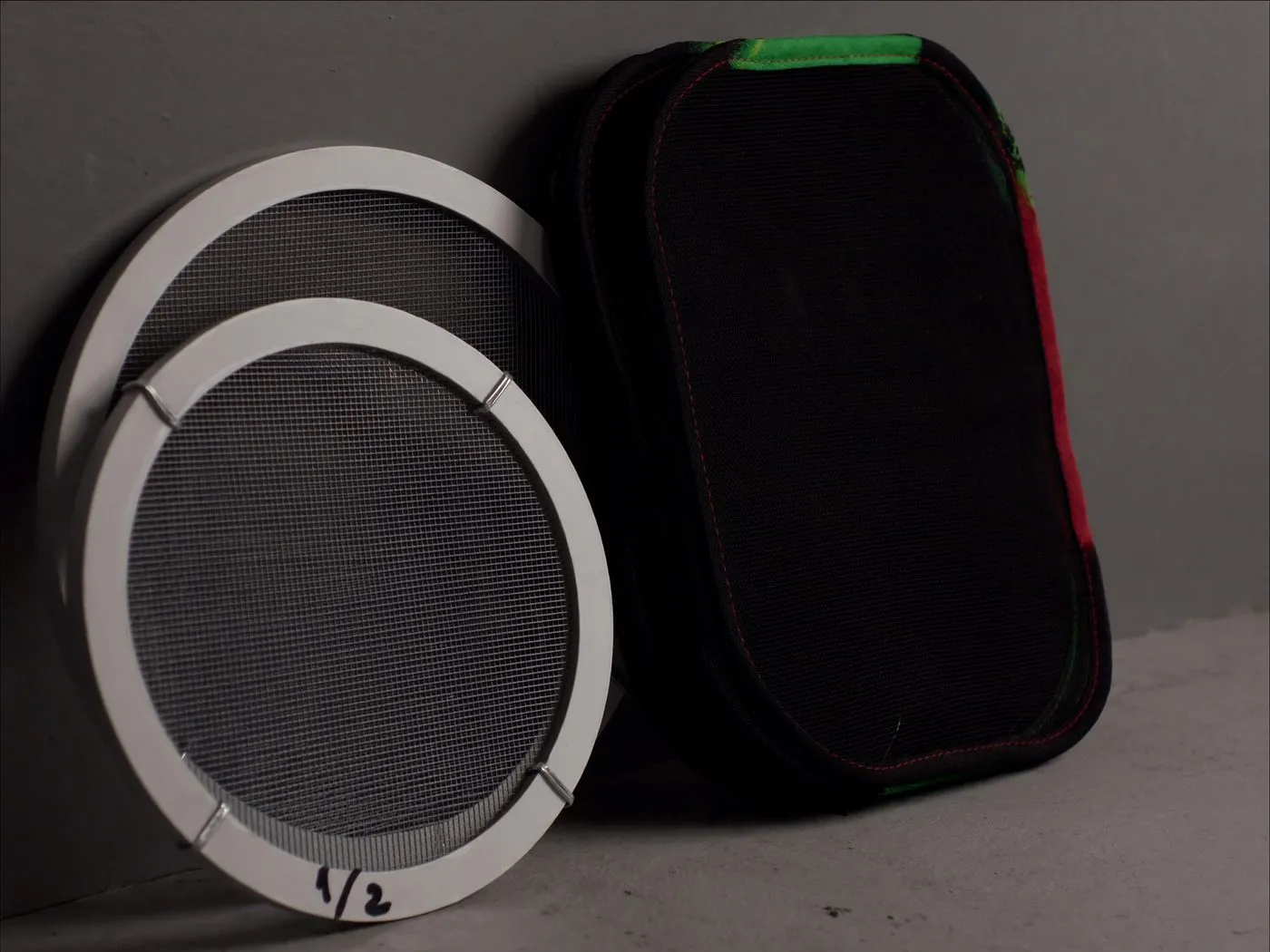
Wire scrims and fabric nets
Softening and texturing
A diffuser is a translucent textile or plastic in the beam that scatters rays, enlarges the source and softens the transition between light and shadow, at the cost of peak intensity. Common materials are silk, grid cloth, bleached muslin, spun glass, tough frost, Hampshire frost and opal frost.
A cucoloris (cookie) is a panel with irregular cut-outs, made of wood, plastic or mesh. It casts broken, organic patterns such as leaves or window mullions. Close to the lamp the pattern is soft and subtle; farther away it is crisper. A breakup frame (celo or branchaloris) does the same with lacquered wire screen or real foliage.
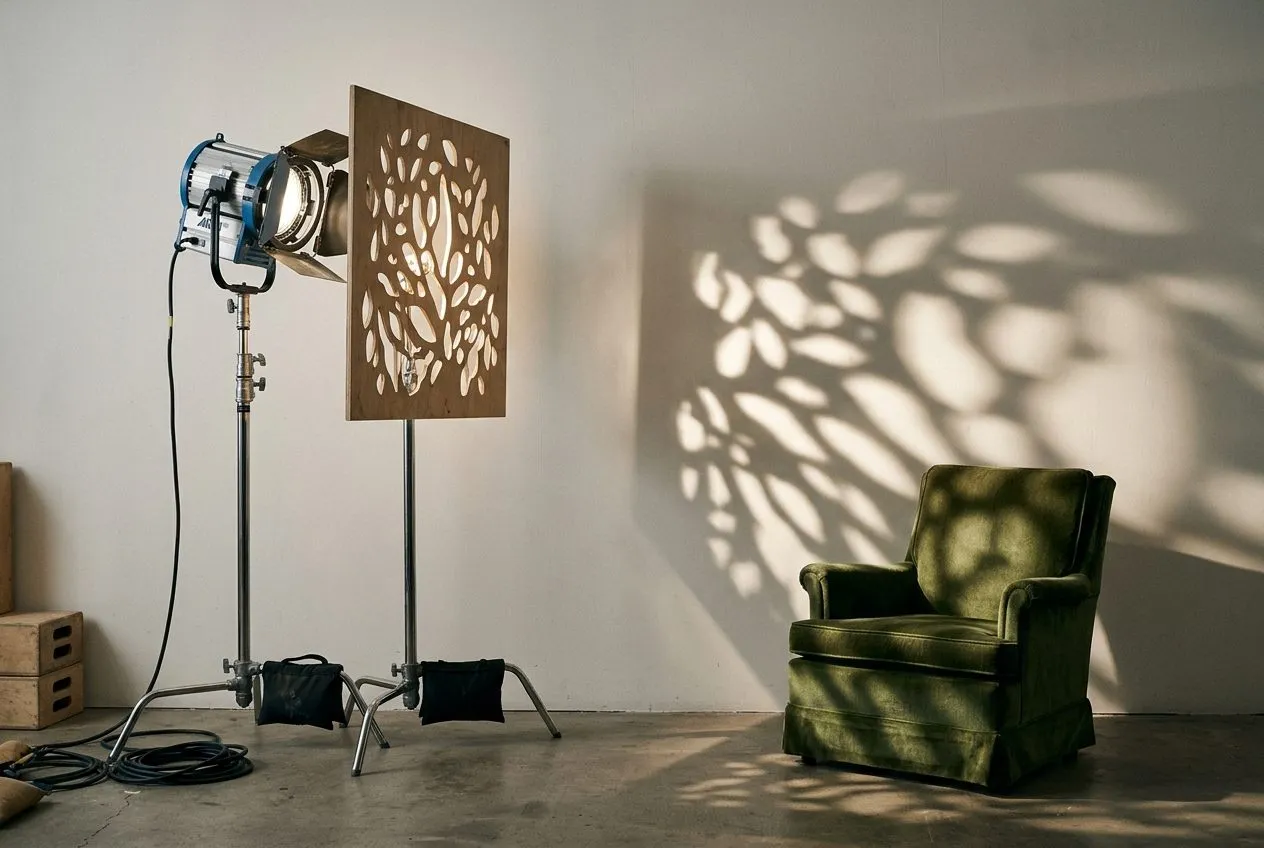
A cucoloris breaking light into a dappled pattern
Colour gels
Colour-correction gels (CTO, CTB, CTS) convert the colour temperature of a source. Effect gels are saturated colours for dramatic styling. Thin vinyl or polycarbonate gels are light but warp near hot fixtures. Polyester (PET) has a high melting point and is the standard for HMI and tungsten. Quality gels are dyed from optical-grade resin, which gives repeatable spectral transmission without quick fading.
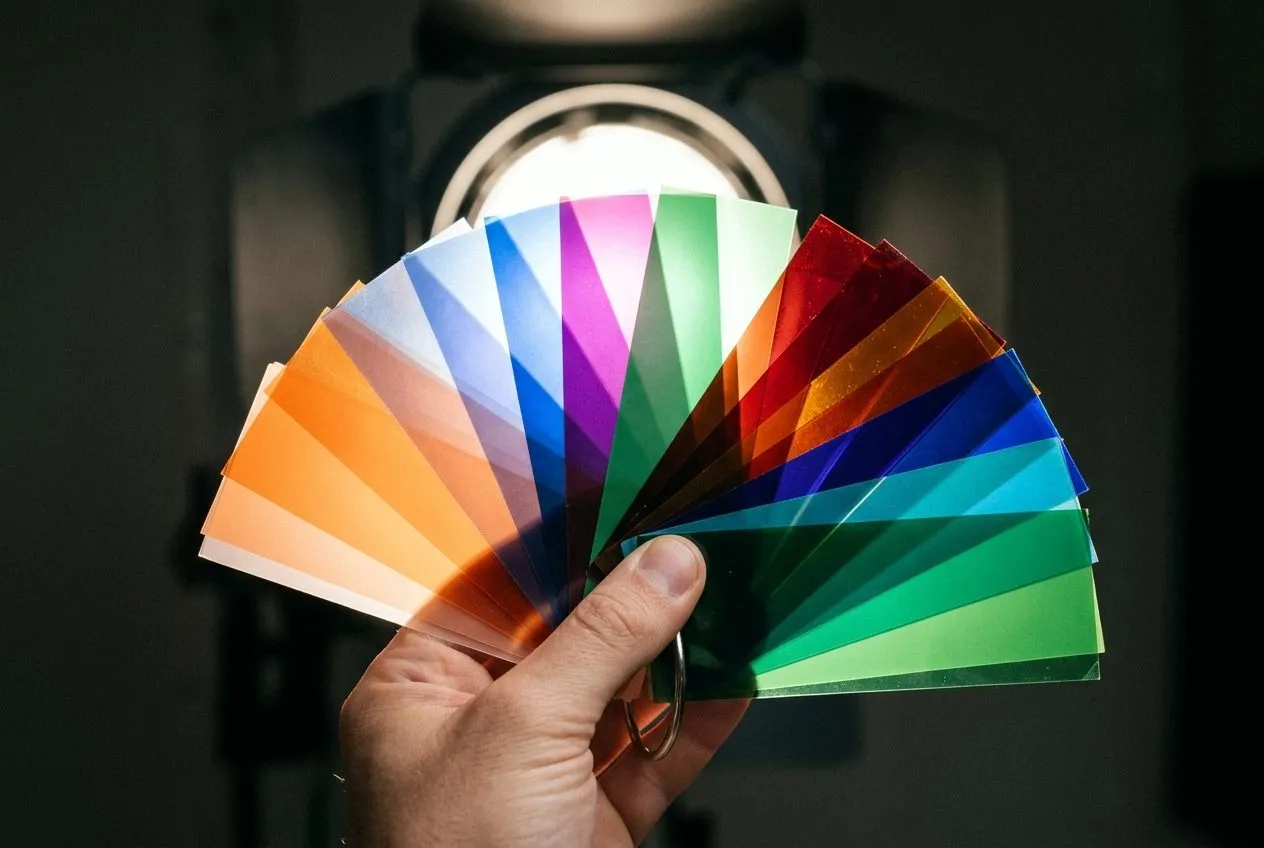
Color correction and effect gels
Rigging
On a soundstage, fixtures hang from overhead catwalks and pipe grids that keep the floor free for camera and actors. They connect to patch bays and dimmer consoles. Whatever the rig, each fixture has a job: key, fill, eye light (catchlight), backlight or rim, background, or effect and practical light.
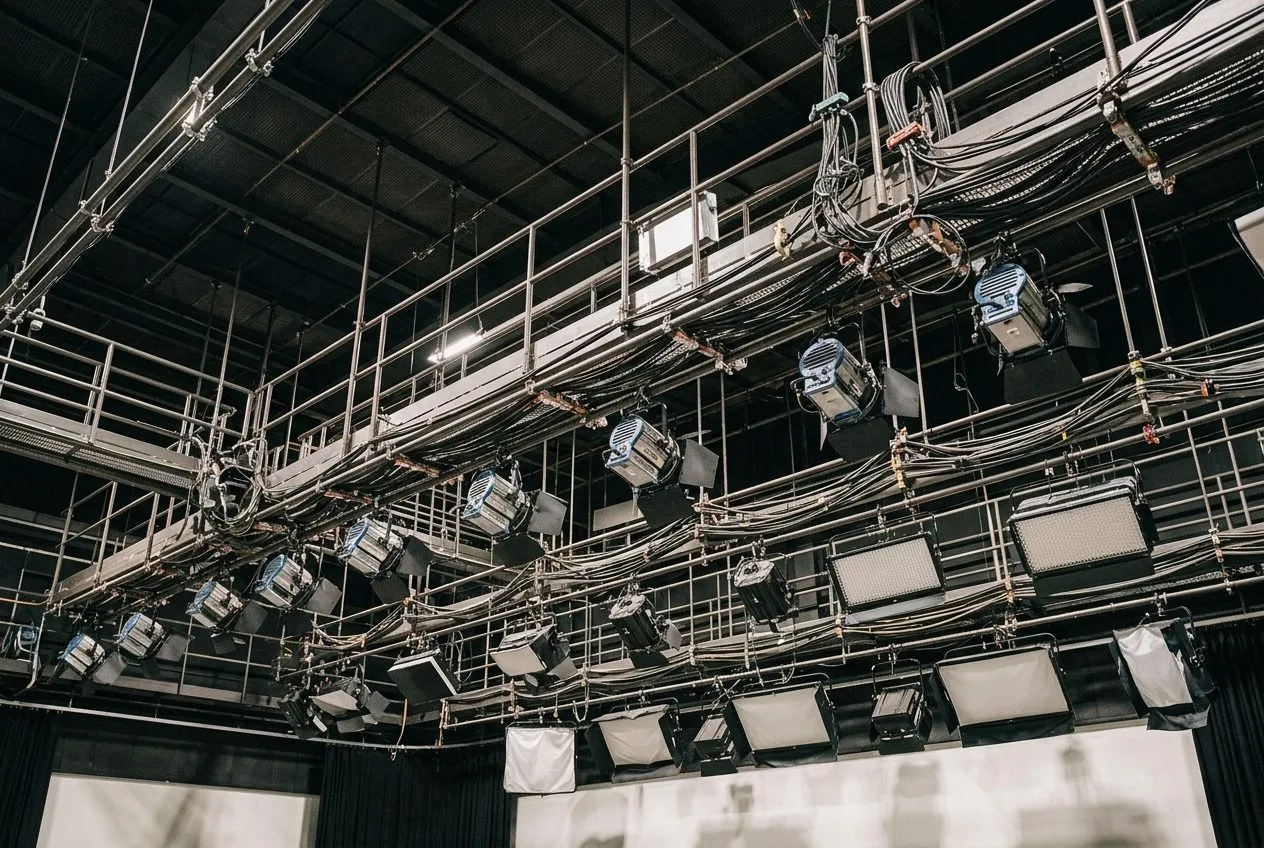
Overhead lighting grid on a soundstage
Quick answers
Does a scrim change colour? A wire scrim does not; a gel does.
How do I make cookie shadows softer? Move the cookie closer to the light.
What is the difference between a net and a flag? A flag blocks light completely, a net only reduces it.
Read next
- Film Lighting Fixtures: Fresnels, Open-Face, Ellipsoidals and Soft Lights
- Color Temperature, Mireds and CRI Explained for Cinematographers
- Key Light Principles: Hard vs Soft, High-Key vs Low-Key Lighting
Related on this site
This article is part of the free handbook Technical Foundation. Filmmaking: The Cinematographer’s Handbook by Semen Klenov, an independent researcher of light and visual perception. Cite the handbook as: Klenov, S. (2026). Technical Foundation. Filmmaking: The Cinematographer’s Handbook. Zenodo. https://doi.org/10.5281/zenodo.24326083.