Home / Journal / Cinematography
Camera Filters: ND, Diffusion, Polarizing and Colour-Conversion Filters
What each camera filter does: ND values in stops, diffusion and star filters, 85 and 80 colour conversion, polarizers, contrast filters and split diopters.
A filter changes the light before it reaches the film or sensor: its amount, its colour or its texture. This article walks through the filters a cinematographer uses and what each one costs in exposure.
Key points
- A filter factor is the multiplier by which exposure must be increased to compensate for the light a filter absorbs.
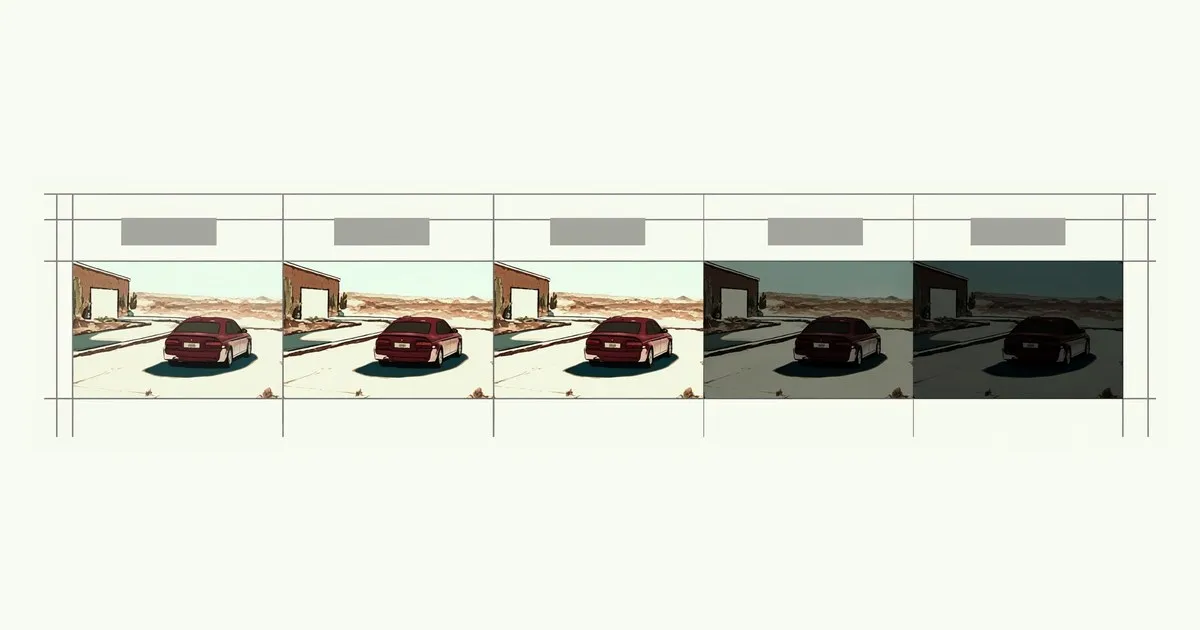
- Neutral density filters cut all wavelengths evenly: ND 0.3 = 1 stop (50% transmission), 0.6 = 2 stops (25%), 0.9 = 3 stops (12.5%), 1.2 = 4 stops (6.25%).
- Colour conversion: Full CTO or the 85 series converts daylight to tungsten balance; Full CTB or the 80 series converts tungsten to daylight.
- A polarizer cuts reflections on non-metallic surfaces and darkens blue sky when turned perpendicular to the sun. Autofocus cameras need circular polarizers.
- A split-field diopter keeps a close subject and a distant one sharp together, but its seam must be hidden.
The main families
Filters are made of polished optical glass, dyed resin or gelatin. Lighting gels, by contrast, sit over lamps. Camera filters mount in front of the taking lens to control contrast, exposure or colour. The main types are colour-correction and conversion, black-and-white contrast filters, UV and skylight filters, neutral density, polarizing, diffusion and fog filters, graduated filters, and effect filters such as star and streak.
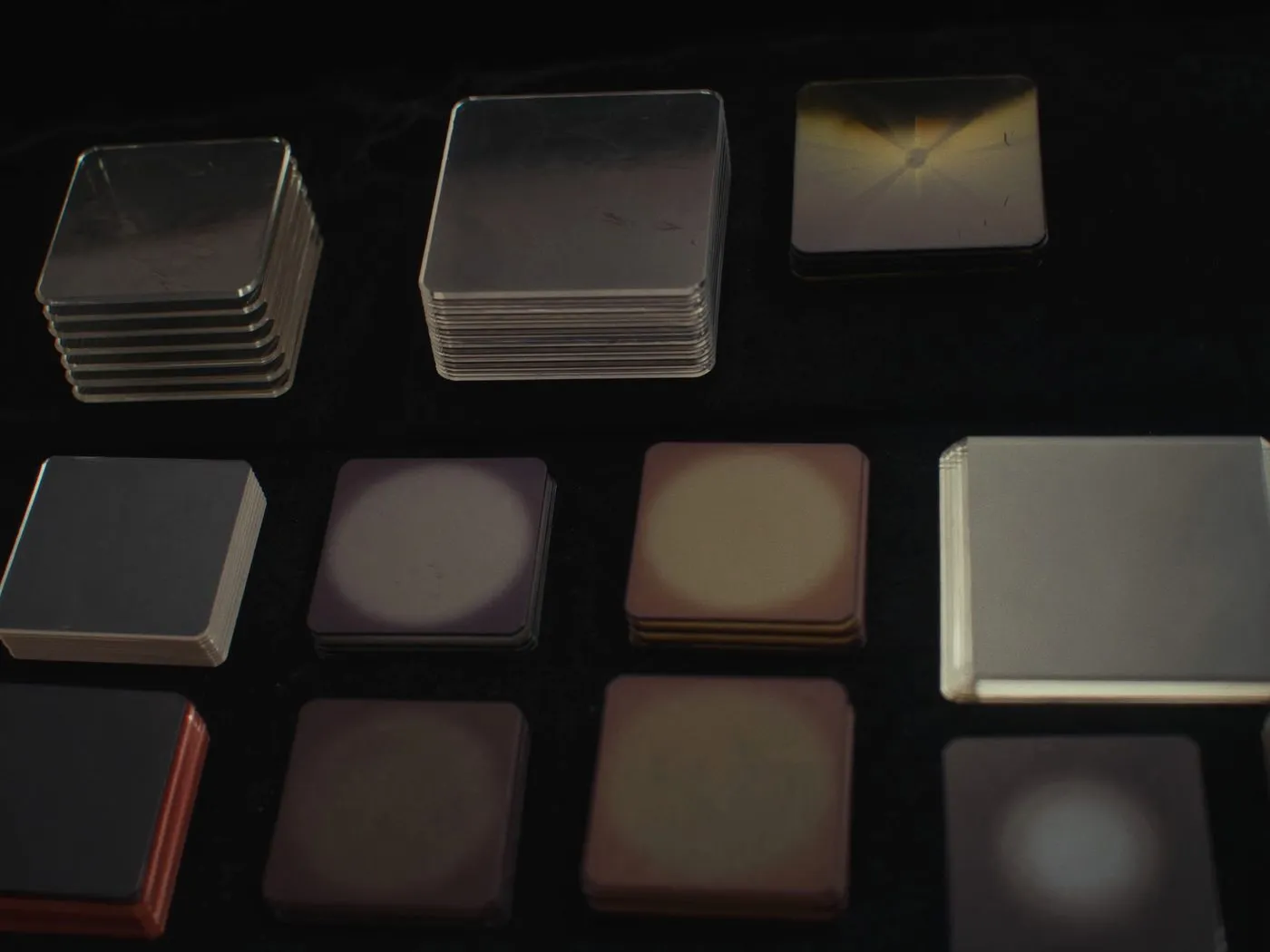
Camera filters
Diffusion, fog and star filters
Diffusion filters are etched with fine lines or stippling, or carry embedded particles that scatter part of the light while the core image passes undisturbed. The image stays sharp, highlights bloom and the texture of skin softens. A gentle glow appears around light sources and harsh contrast softens. Similar effects have been made with fine nets, stockings or a thin layer of petroleum jelly on clear glass. Fog filters spread light into the shadows to imitate atmospheric fog, lowering contrast and blooming practical lamps.
Star filters are etched with fine grids that turn bright point sources into stars of four, six or eight points, the length depending on the brightness and size of the highlight. Diffraction filters use fine gratings to split highlights into rainbow flares.
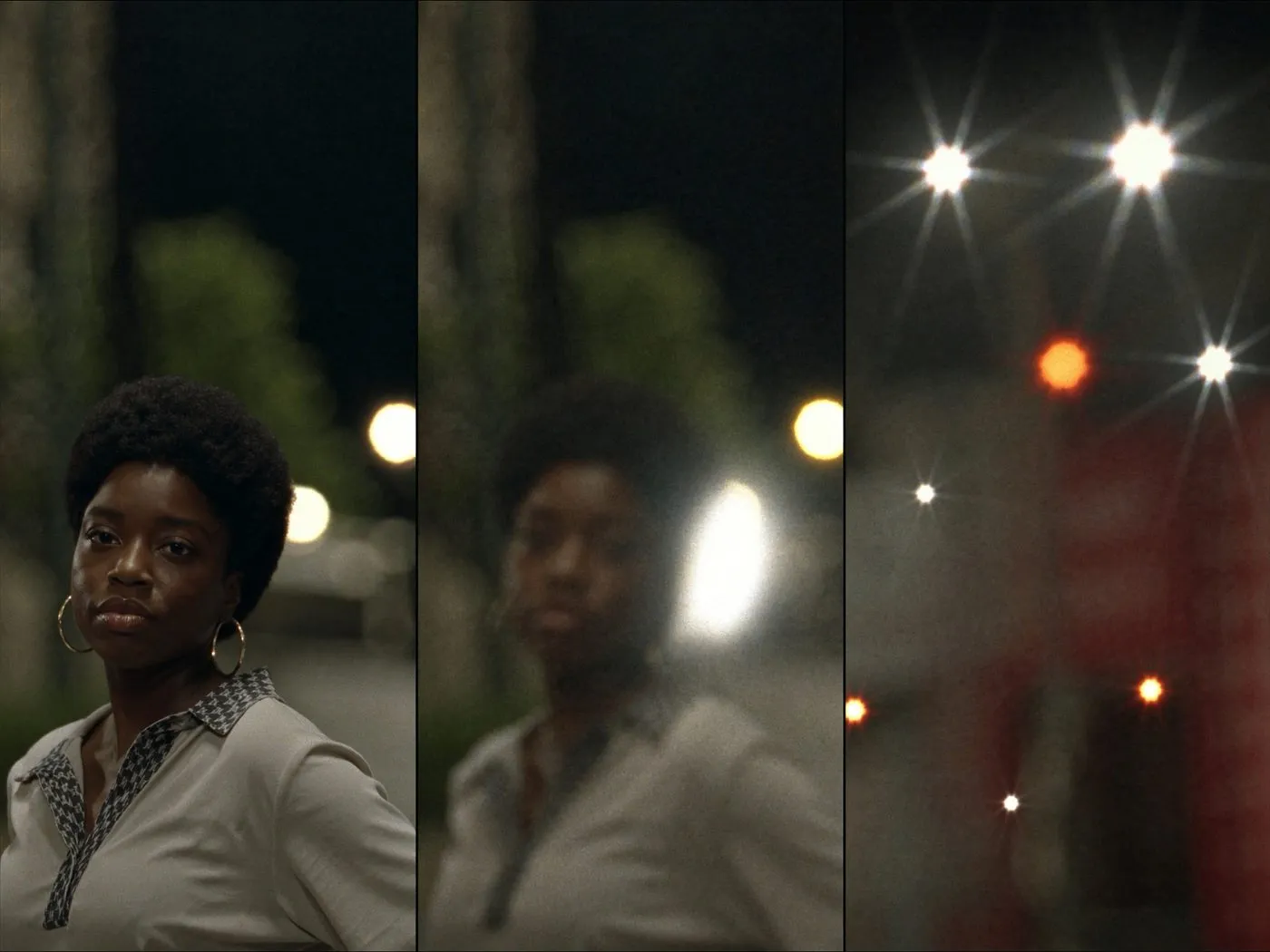
Effect of diffusion, mist and star filters
Interference (dichroic) filters are made from alternating transparent layers a quarter-wavelength thick. They reflect unwanted wavelengths by destructive interference instead of absorbing them, so they have sharp cut-offs and do not fade or absorb heat. Hot mirrors, cold mirrors and the prism blocks of three-chip cameras use them.
Colour and neutral density
Conversion filters shift the colour temperature of the incoming light to match the white balance of the camera. Colour-compensating (CC) filters make smaller shifts along the magenta-green axis, for example to clean up fluorescent spikes. ND filters let you work at a wide aperture in bright sun and keep a shallow depth of field; because density is logarithmic, every 0.3 adds one stop.
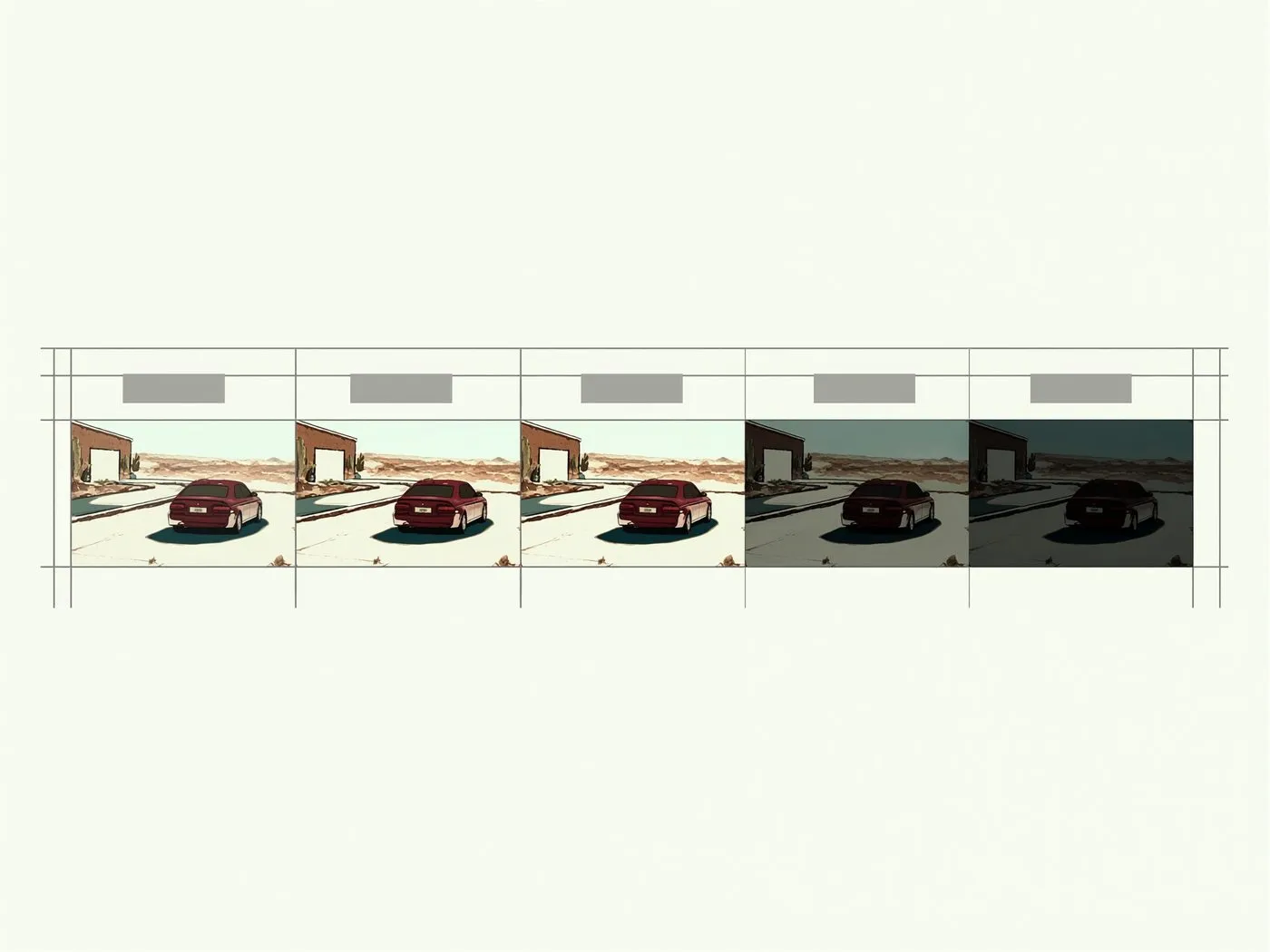
Neutral density steps
Polarizers, prisms and viewing filters
A polarizer cuts reflections from water, glass, foliage and lacquer and is essential when shooting through a windscreen or across a water surface. Rotating it controls the amount of reflection. Digital cameras with beam splitters, and autofocus systems in general, need circular polarizers to avoid metering and focus errors. Faceted multi-prisms repeat the subject across the frame. High-density monochrome viewing filters let a cinematographer judge contrast in a scene without dazzling the eye.
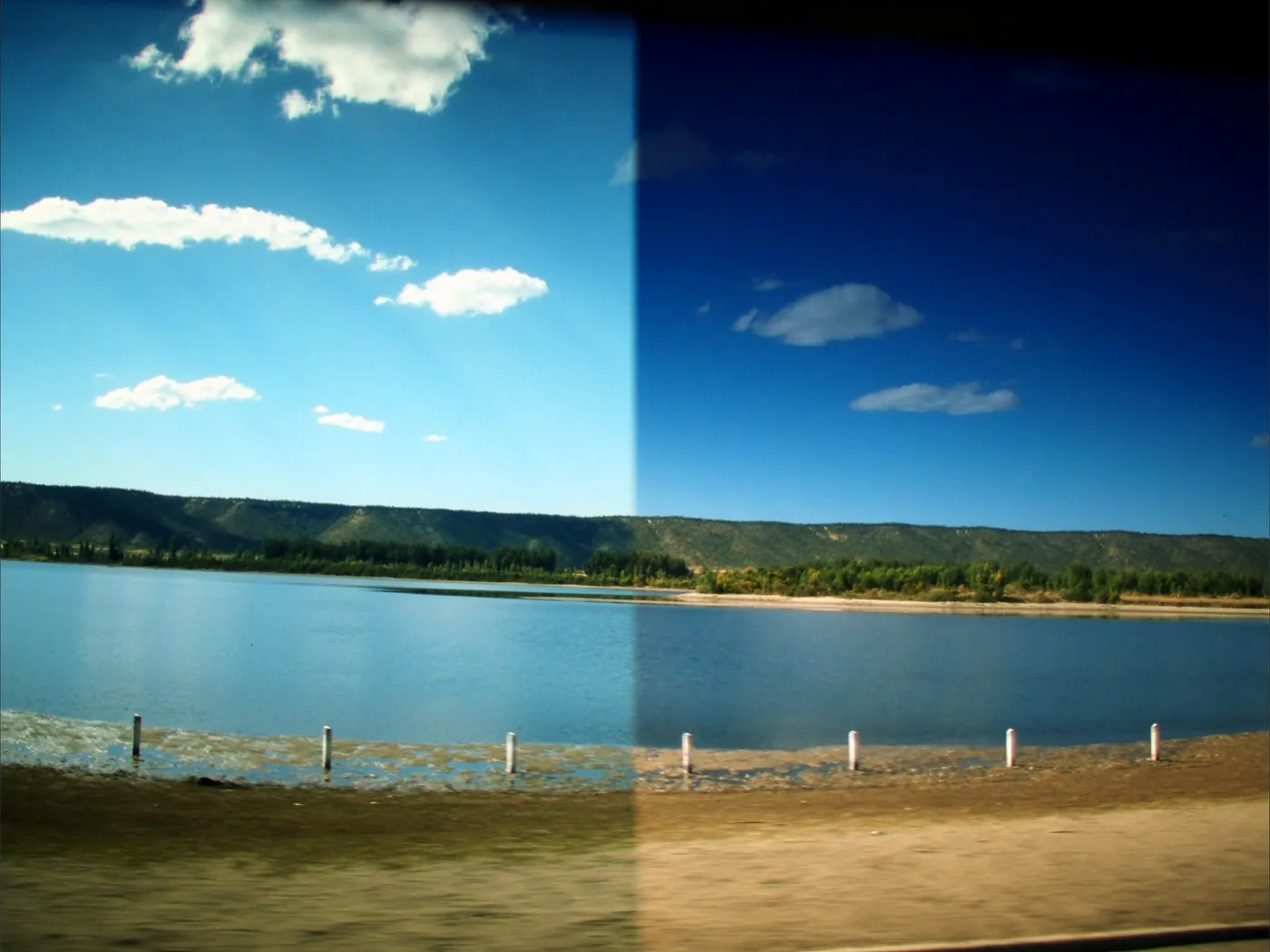
Polarizer: cutting reflections and darkening the sky
Contrast filters for black-and-white
In monochrome, a filter lightens its own colour and darkens complementary ones:
- Yellow darkens blue sky so that clouds stand out and keeps skin tones natural.
- Orange darkens the sky strongly, cuts haze and raises landscape contrast.
- Red darkens the sky almost to black and gives stark architectural contrast.
- Green lightens foliage and flatters outdoor portraits.
Split-field diopters
A split diopter is a close-up lens cut in half and covering only one half of the lens. It allows a foreground subject and a distant one to be sharp at the same time. The edge between the diopter half and the clear half must be hidden along a doorframe, a shadow or another straight edge in the set. A pan or tilt would show the fixed seam.

Split-field diopter
Quick answers
How many stops is ND 0.9? Three stops, which leaves 12.5% of the light.
Why does a polarizer reduce reflections? Light reflected from non-metallic surfaces is polarized, so the filter can block it.
Does a diffusion filter lower sharpness? It keeps the underlying image sharp and adds glow and softer contrast around highlights.
Read next
- Polarization of Light and the Polarizing Filter in Cinematography
- Color Temperature, Mireds and CRI Explained for Cinematographers
- Lenses, Focal Length, Aperture and Depth of Field Explained for Filmmakers
Related on this site
- Colour for beginners: why pixel values are not amounts of light
- Color Grading and Finishing: a practical CGI guide
This article is part of the free handbook Technical Foundation. Filmmaking: The Cinematographer’s Handbook by Semen Klenov, an independent researcher of light and visual perception. Cite the handbook as: Klenov, S. (2026). Technical Foundation. Filmmaking: The Cinematographer’s Handbook. Zenodo. https://doi.org/10.5281/zenodo.24326083.