Journal / 3D & CGI
3D & CGI
Notes from CGI production: how a product film is lit and built, how materials read as real, and how a model travels from blueprints to Unreal Engine.
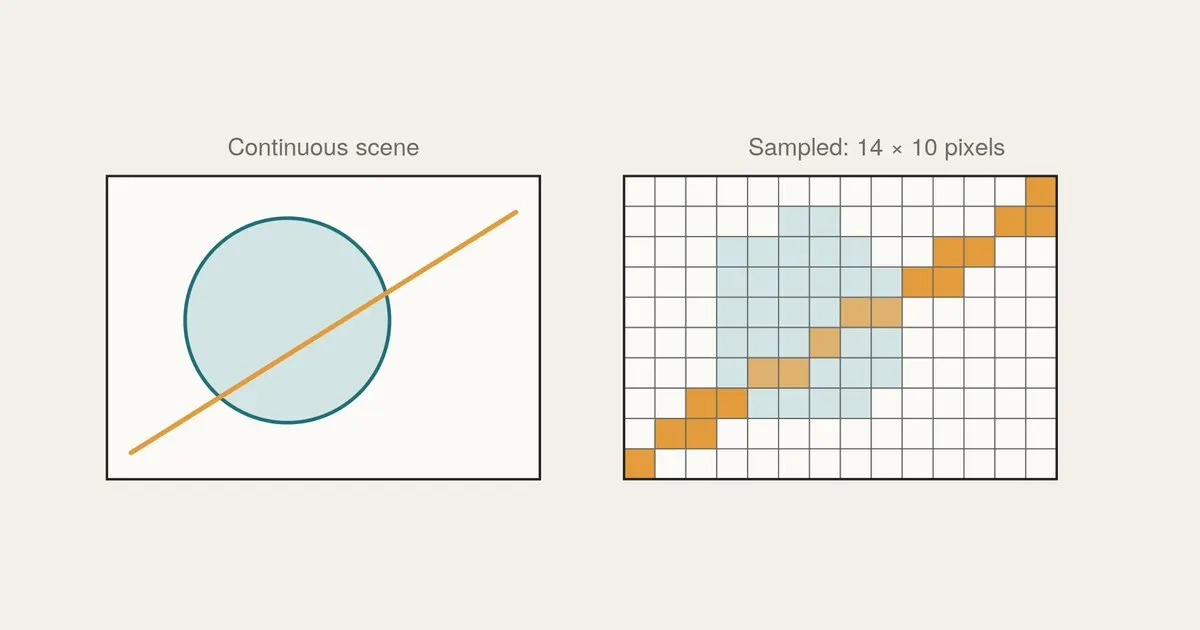
Pixels and Resolution: a practical CGI guide
An image is a grid of samples. Detail finer than two pixels cannot be stored and turns into aliasing; several samples per pixel fix it.
Read →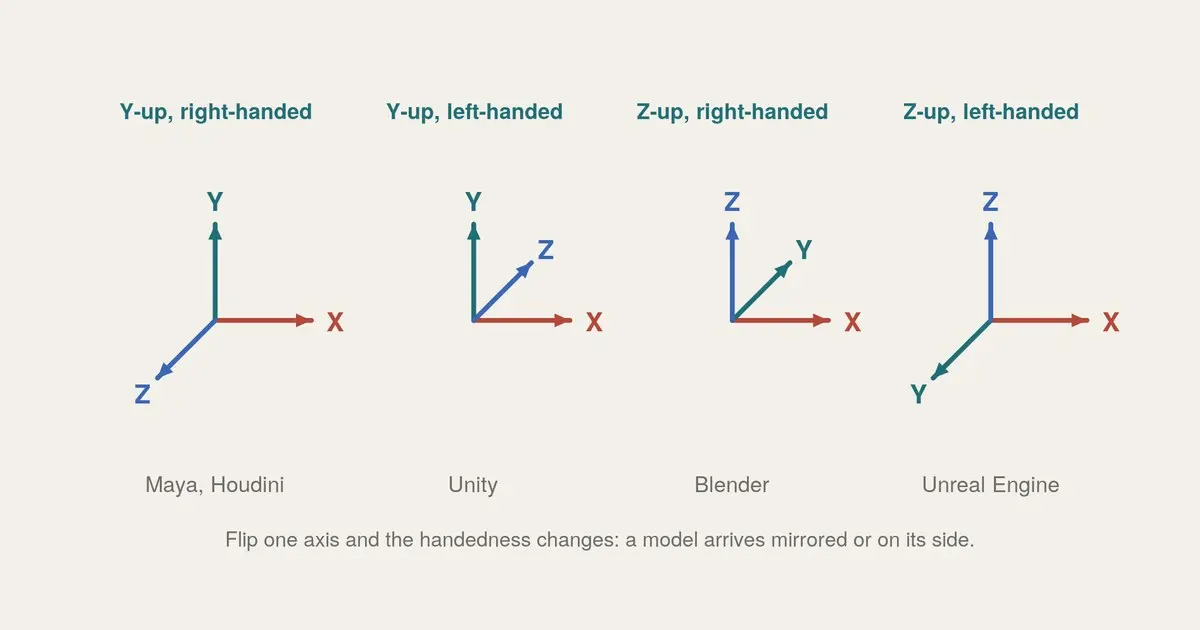
Space and Coordinates: a practical CGI guide
Work in real units: 1 unit = 1 meter. Gravity (9.81 m/s²), light falloff and depth of field only behave correctly at real scale.
Read →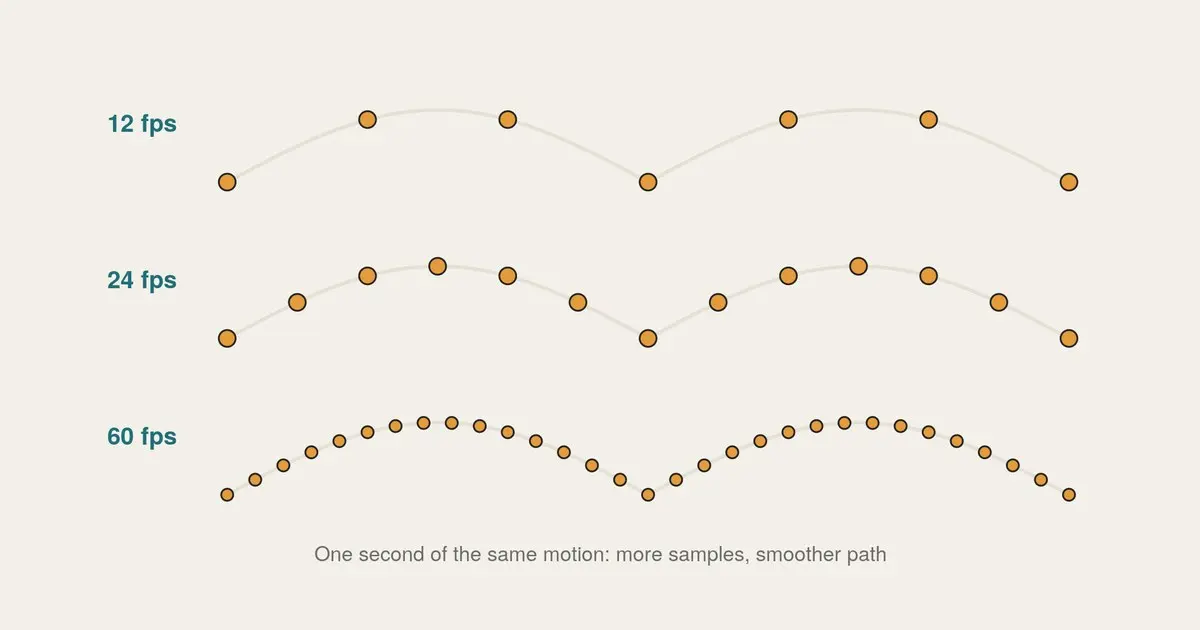
Time: a practical CGI guide
Frame time = 1 ÷ fps: 41.7 ms at 24 fps, 40 ms at 25 fps, 33.3 ms at 30 fps.
Read →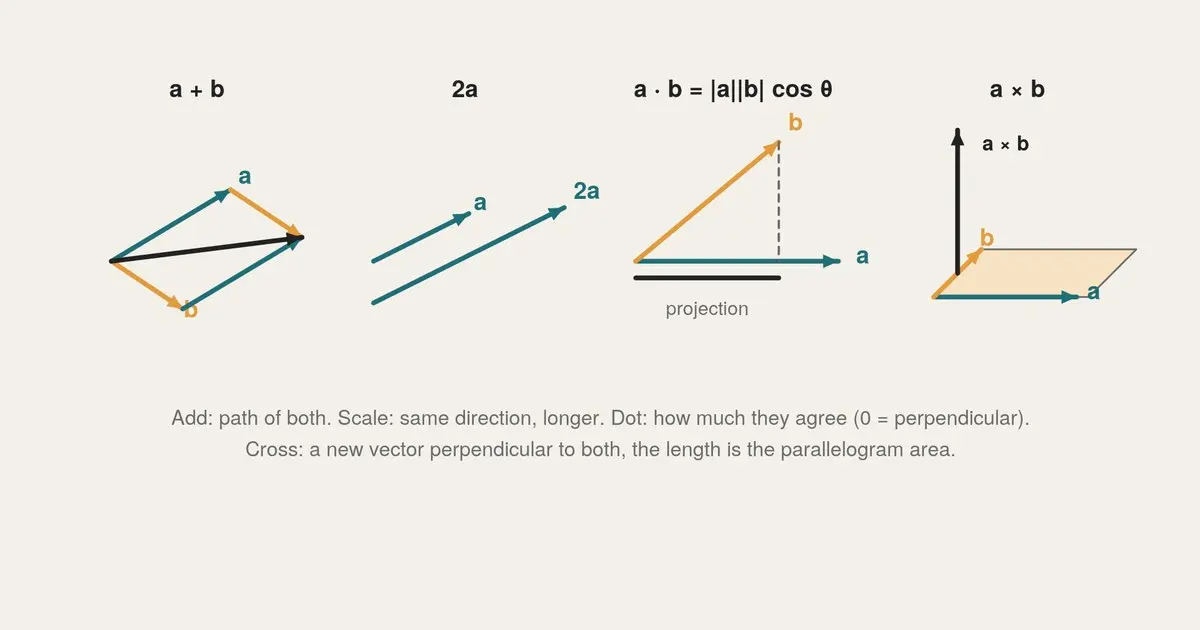
Transforms: a practical CGI guide
Every object has a transform: position, rotation and scale, stored as a 4 × 4 matrix. The order of operations changes the result.
Read →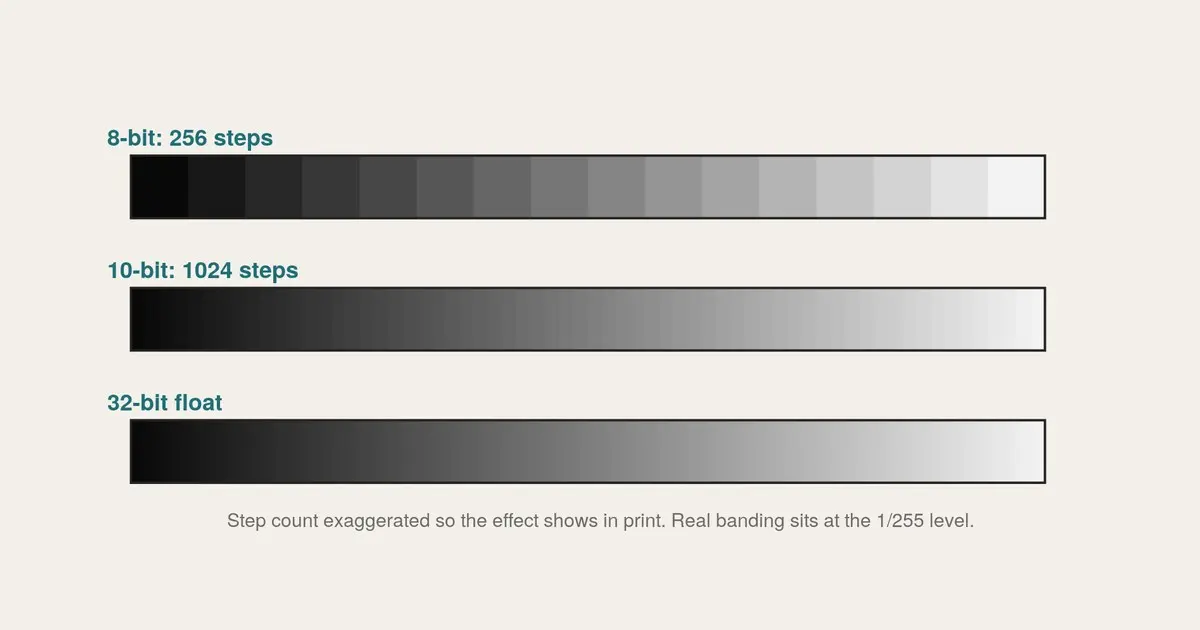
Color as a Number: a practical CGI guide
Light adds up only in linear values. Render and composite in linear float; encode only for display and delivery.
Read →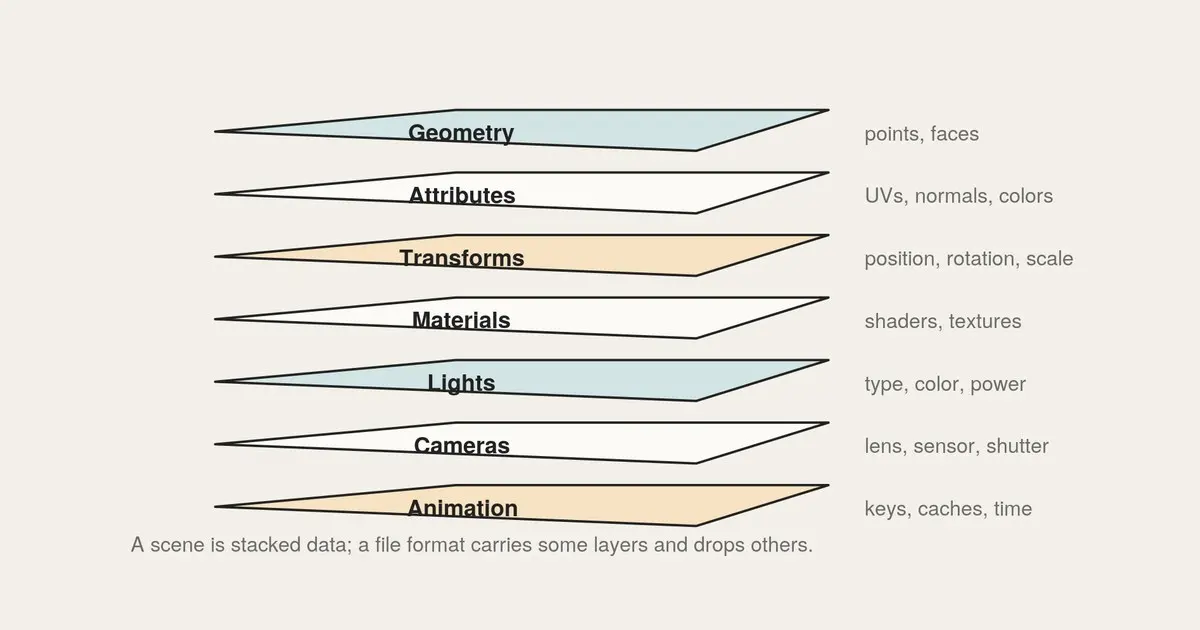
Scene Data and File Formats: a practical CGI guide
A scene is geometry, transforms, materials, lights, cameras and animation. Each exchange format carries only part of it.
Read →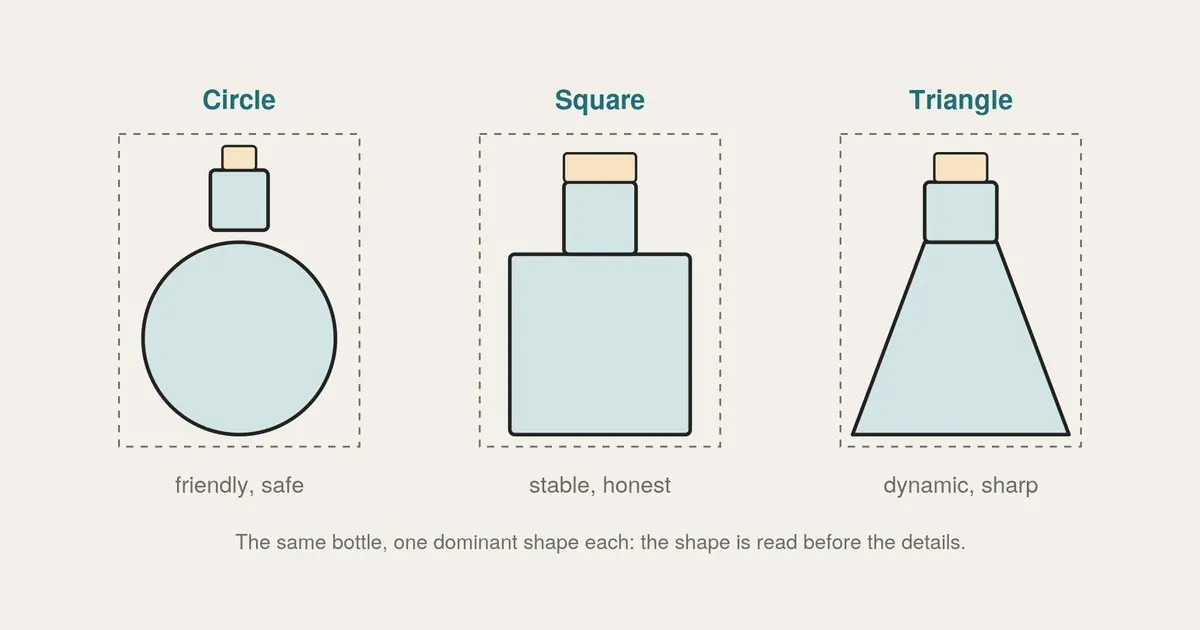
Design and Composition: a practical CGI guide
Every image needs one focal point. Build hierarchy with contrast, size, sharpness and position.
Read →
Drawing and Form: a practical CGI guide
Drawing is a way to decide quickly: ten small thumbnails beat one careful drawing.
Read →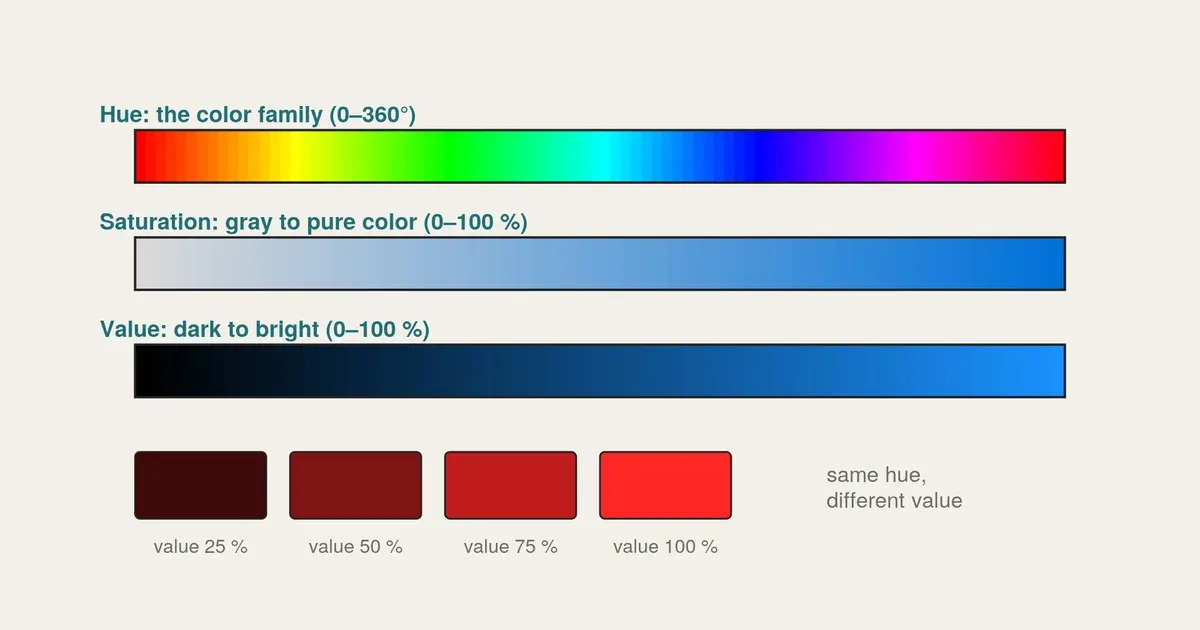
Color in the Image: a practical CGI guide
Color has three properties: hue, saturation and value. Value carries the form; hue and saturation carry the mood.
Read →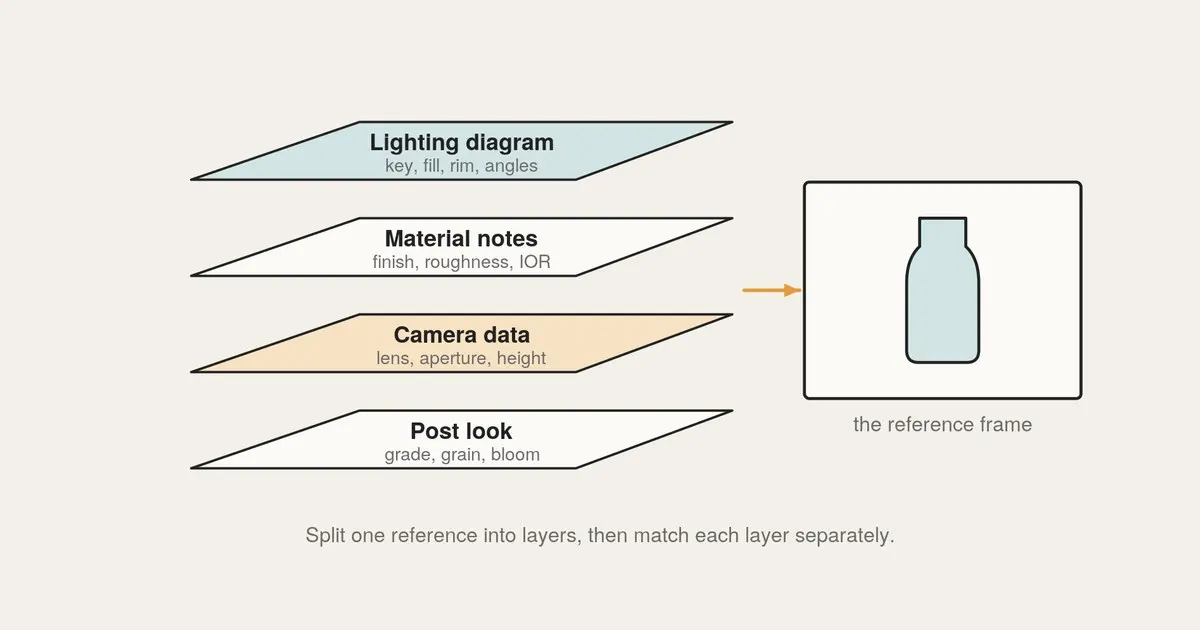
Reference and Visual Research: a practical CGI guide
Reference is evidence, not decoration: it answers how something really looks.
Read →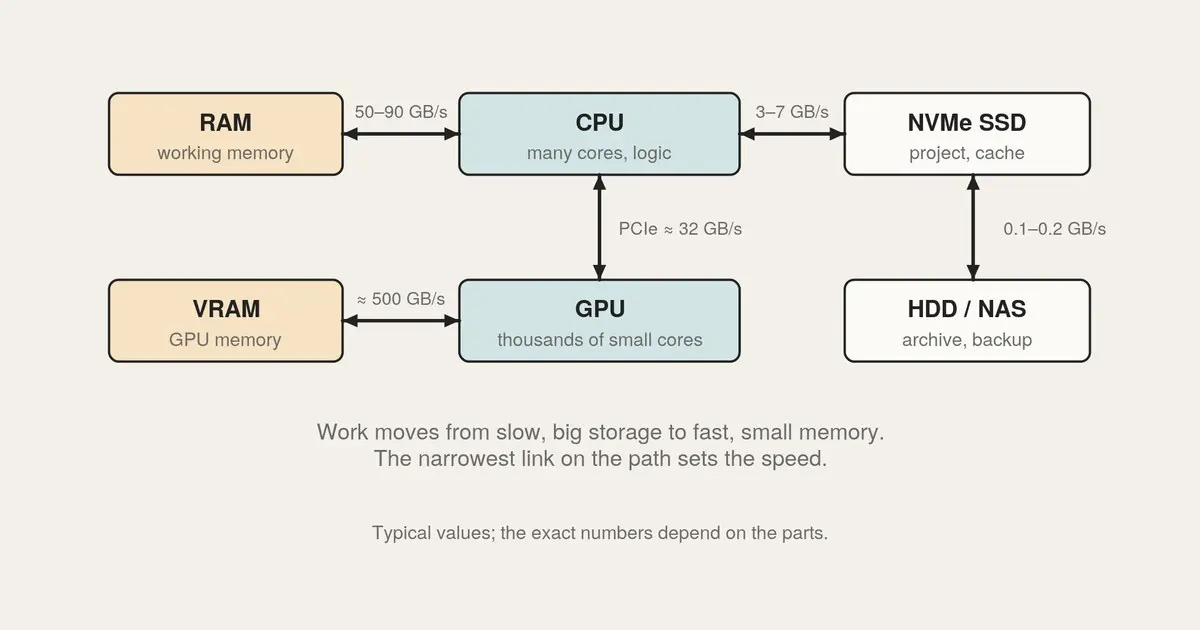
Hardware: a practical CGI guide
CPU, GPU, RAM, VRAM and storage each limit different work; find your bottleneck before buying.
Read →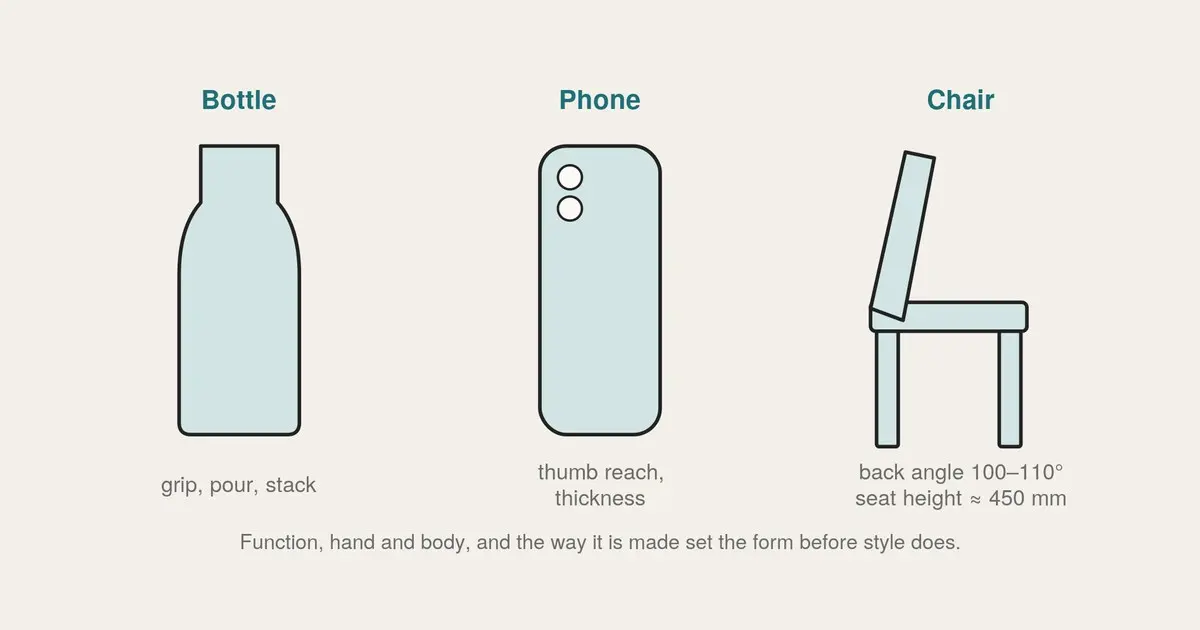
Product Form and Anatomy: a practical CGI guide
Product form follows function, manufacturing and brand. Study color, material and finish (CMF) together.
Read →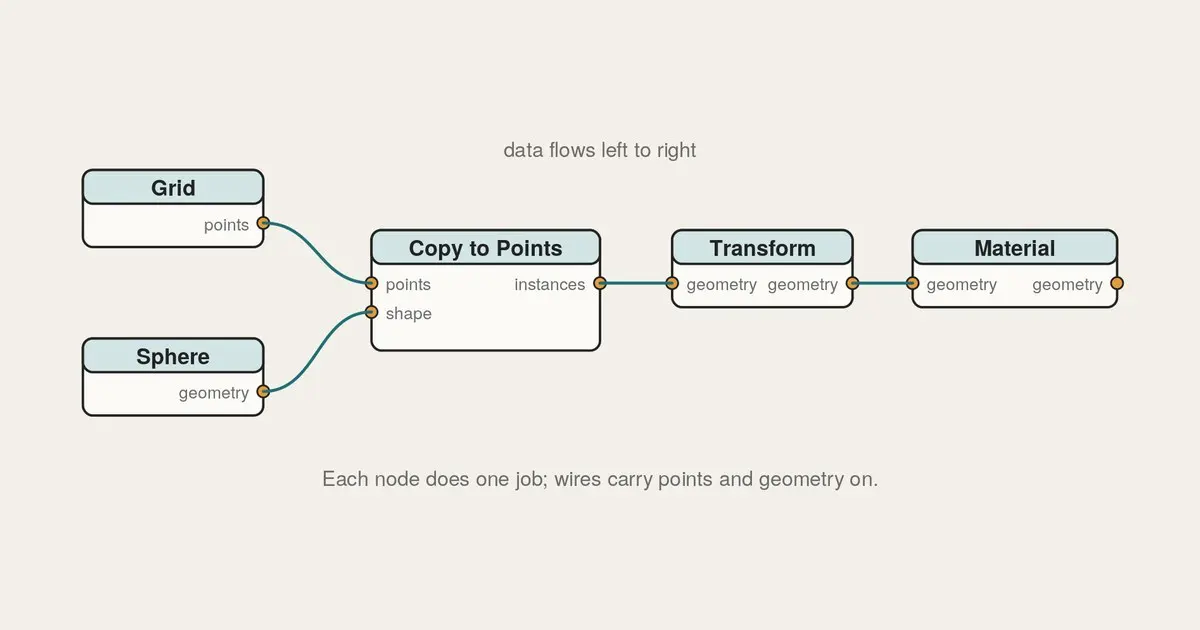
Code for the Artist: a practical CGI guide
Any task can be written as data plus steps: variables, conditions and loops.
Read →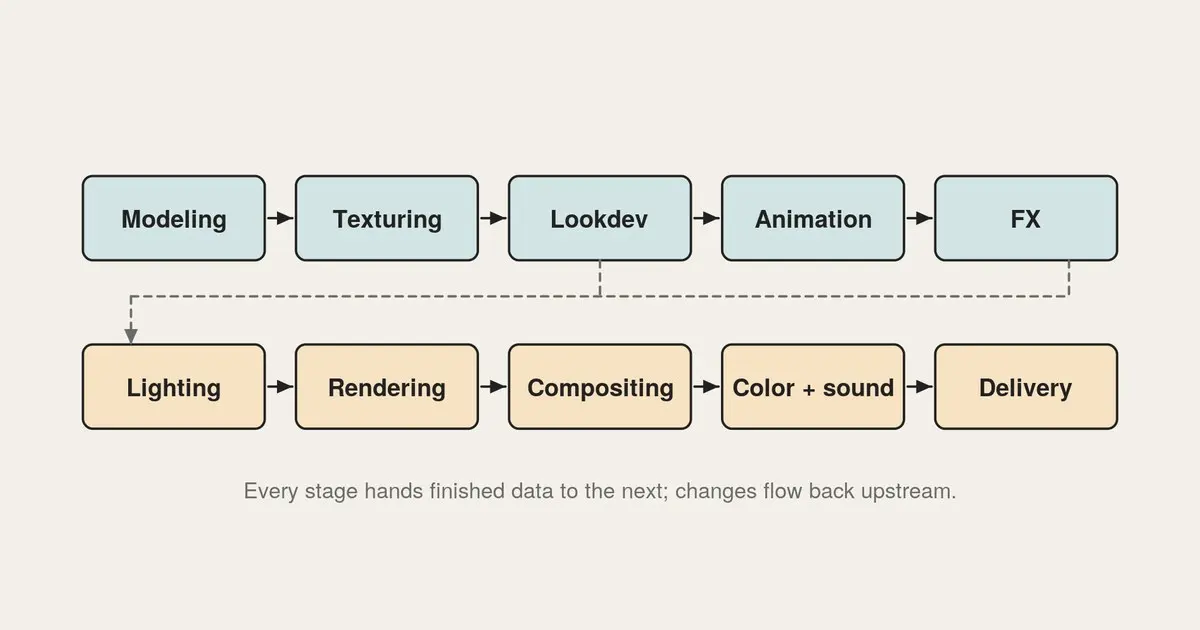
The Software Map: a practical CGI guide
Learn the categories of tools, not just the programs: programs change, categories do not.
Read →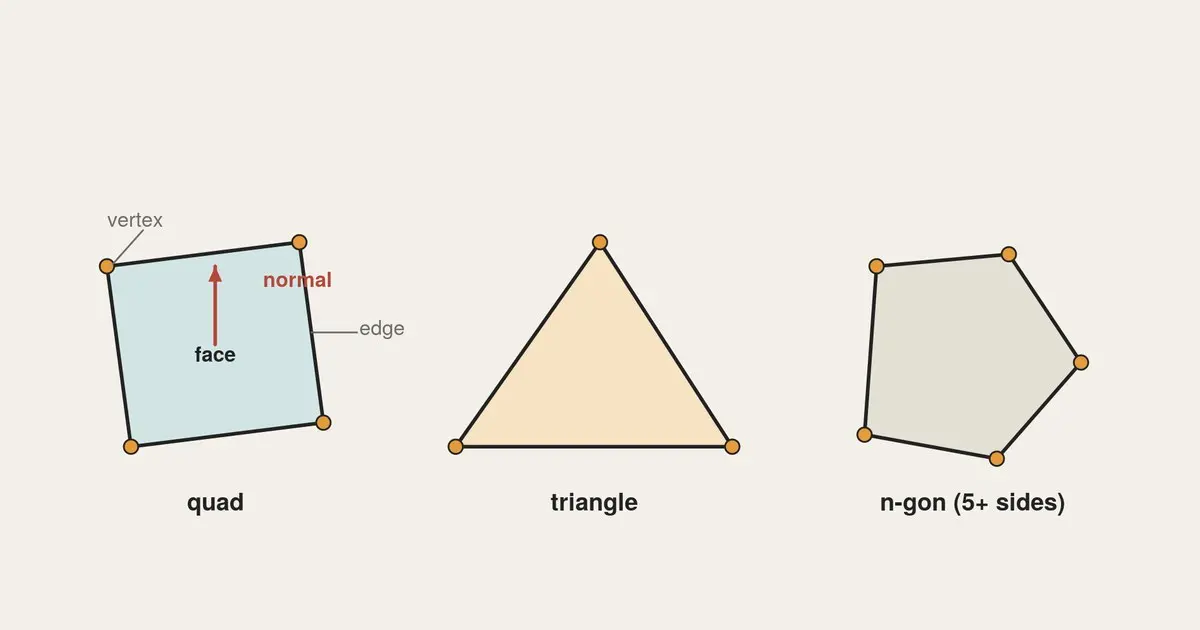
Polygons and Topology: a practical CGI guide
A mesh is built from vertices, edges and faces. Quads subdivide cleanly; triangles are fine on flat, rigid parts.
Read →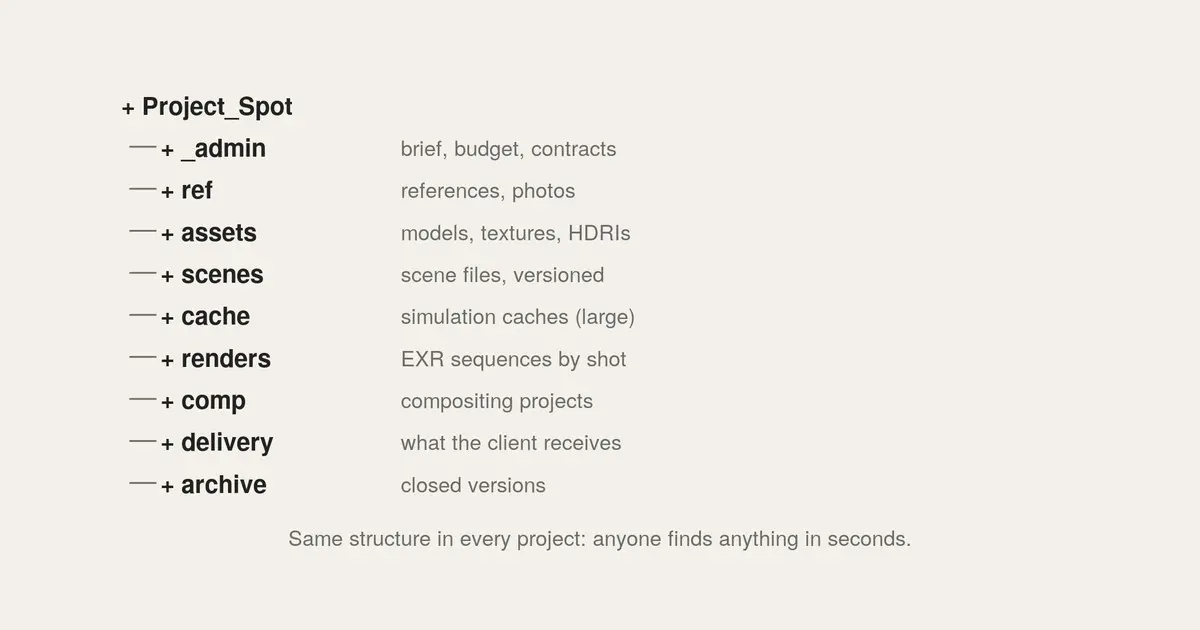
Project Organization: a practical CGI guide
Use the same folder structure for every project, from 00_admin to 09_archive.
Read →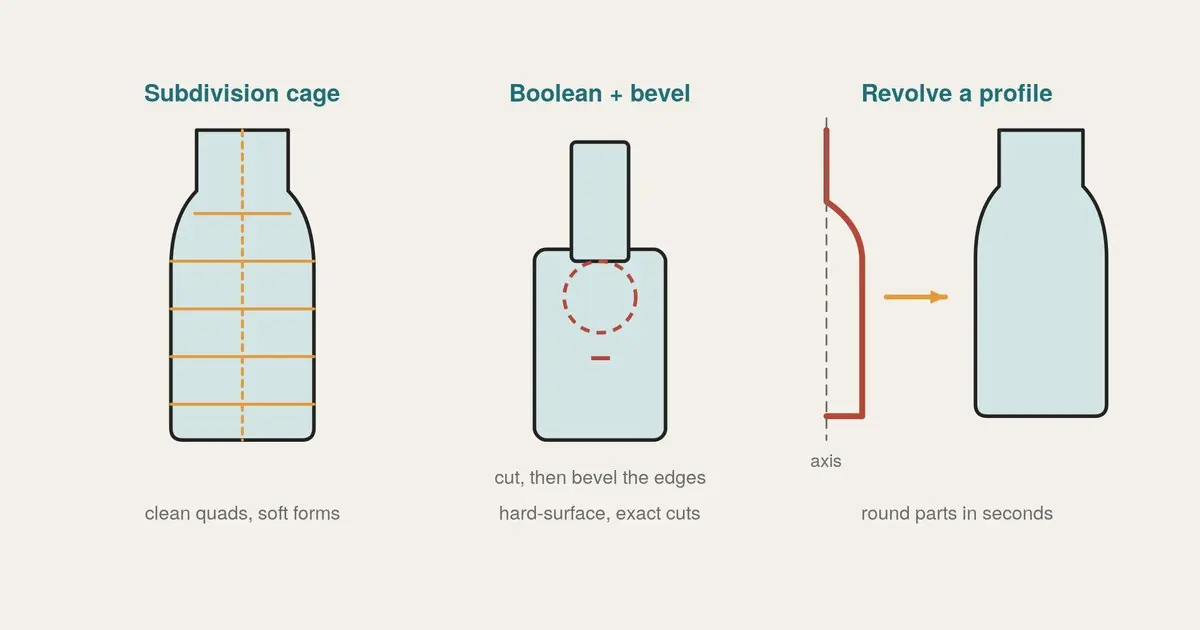
Hard Surface and Product: a practical CGI guide
No real edge is perfectly sharp: a bevel of 0.2–1 mm catches a highlight and makes the object read as real.
Read →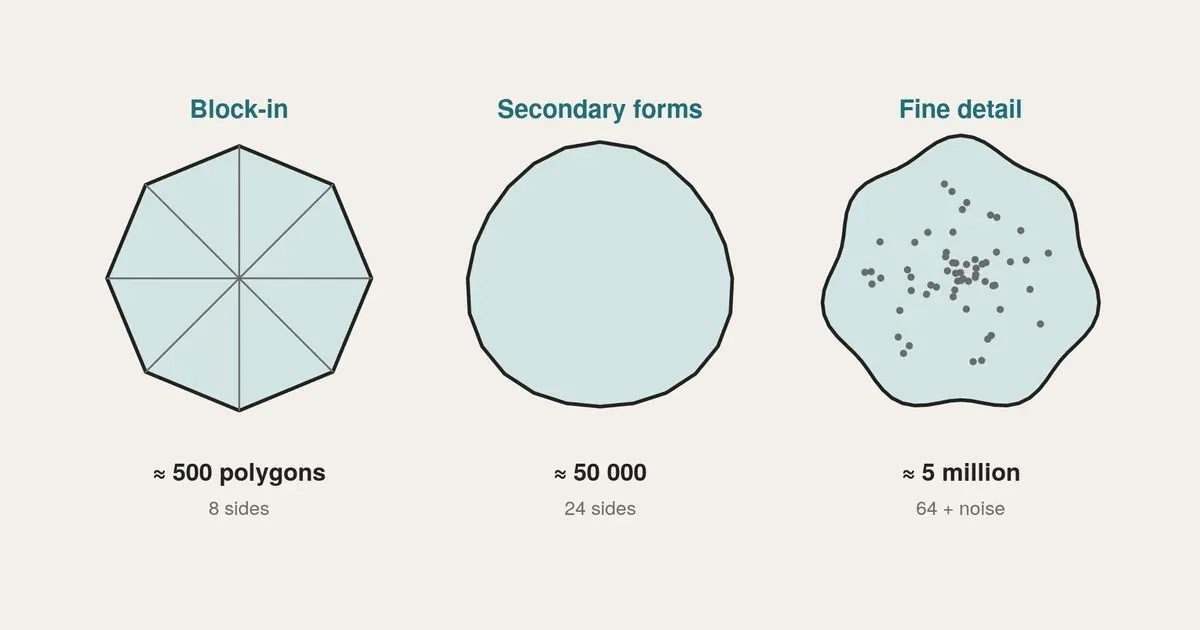
Sculpting and Retopology: a practical CGI guide
Sculpt for organic detail; retopologize for animation, UVs and clean shading.
Read →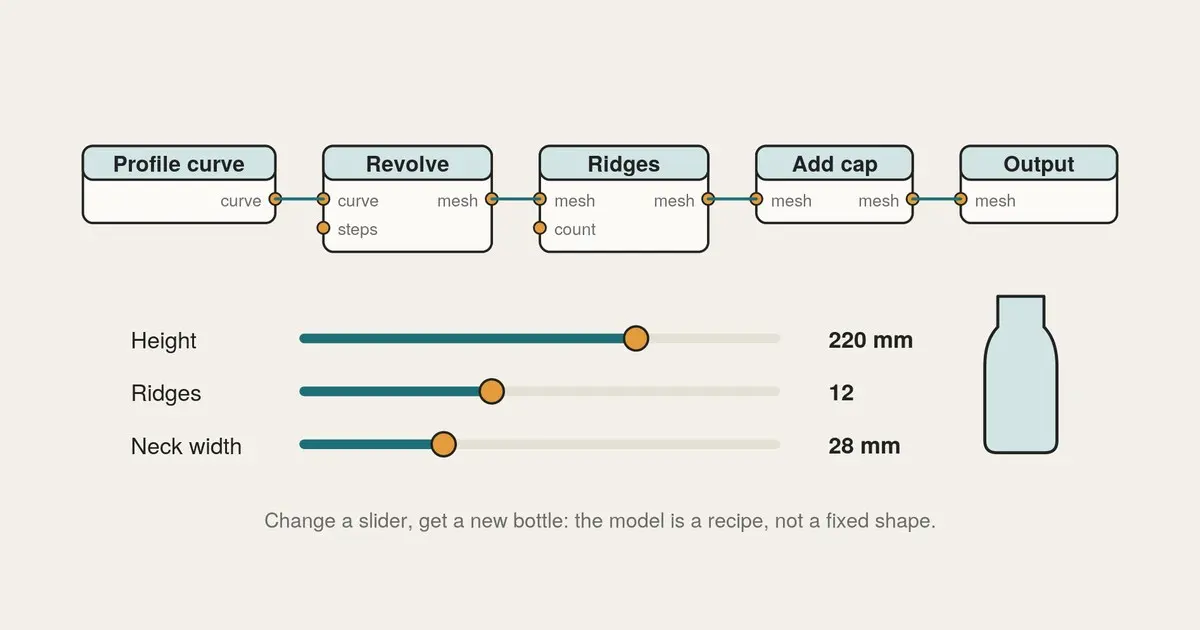
Procedural Modeling: Introduction: a practical CGI guide
A handmade model is an answer; a procedural model is a recipe that changes with a number.
Read →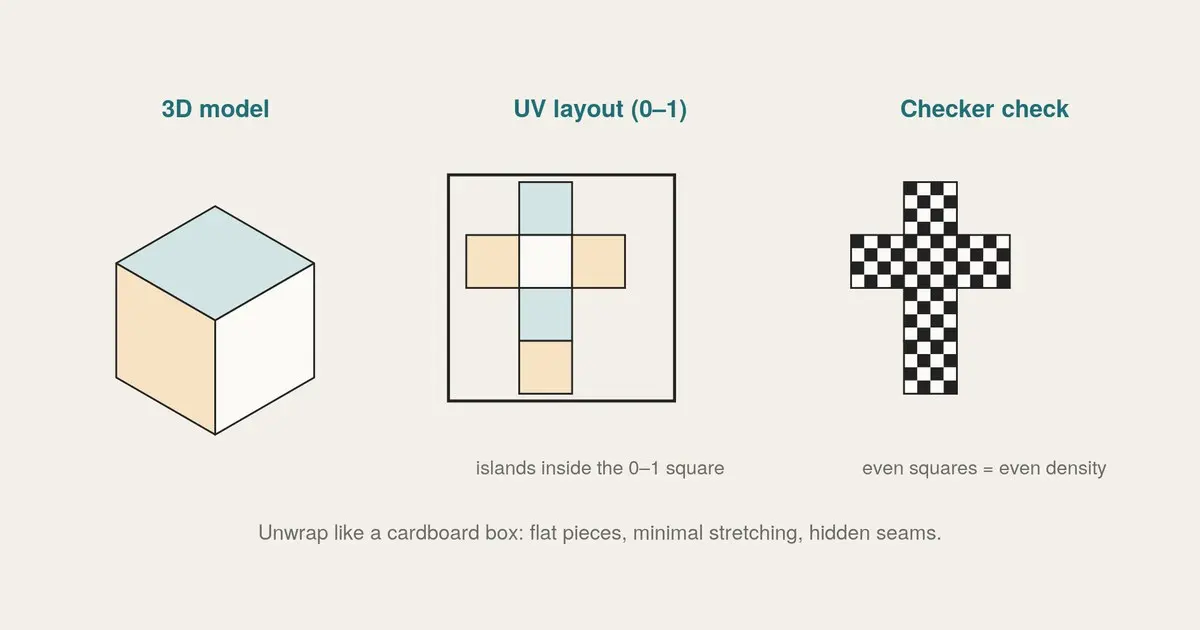
UV: a practical CGI guide
UV mapping unfolds a 3D surface onto a flat image. Hide seams where the camera rarely looks.
Read →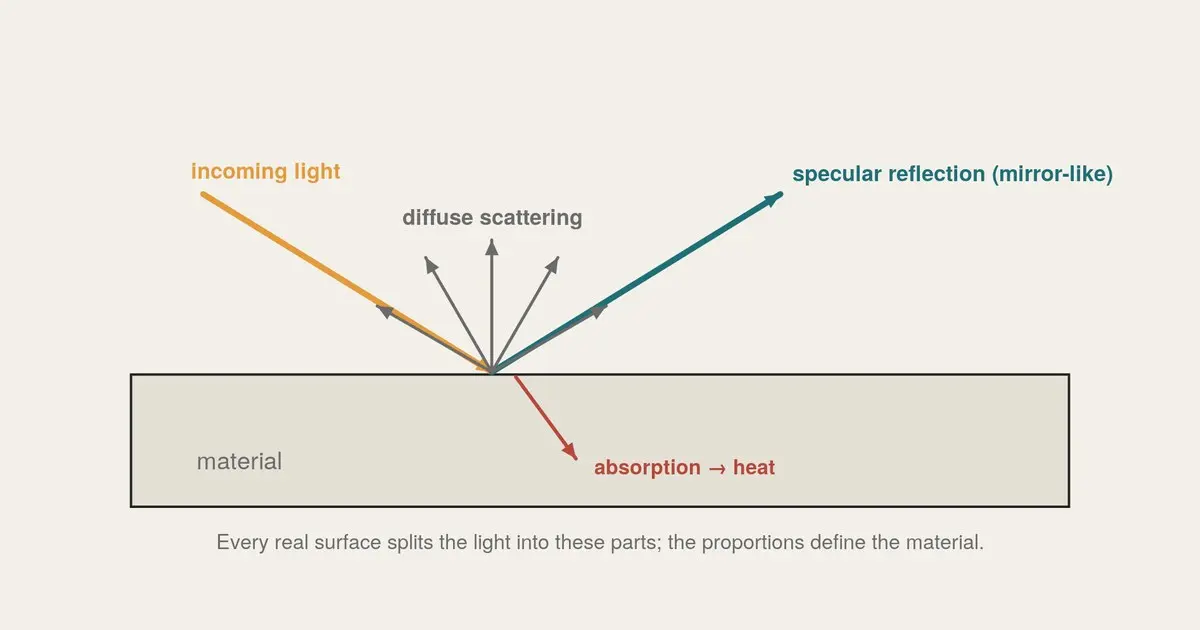
PBR: a practical CGI guide
A surface reflects, scatters, absorbs or transmits light, and never returns more than it receives.
Read →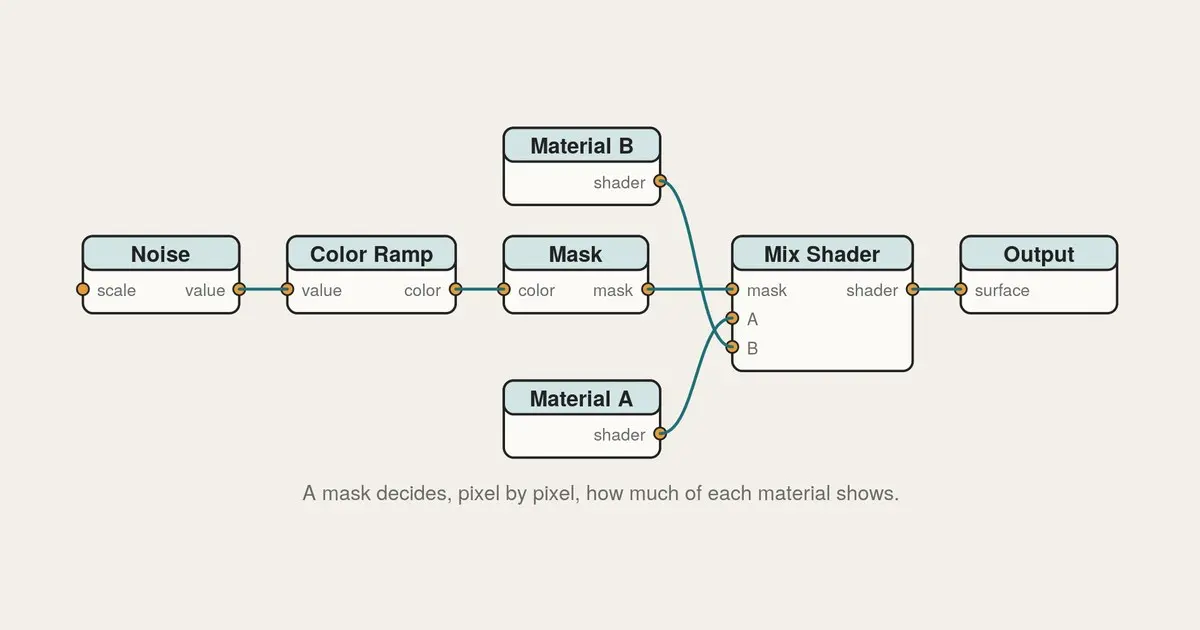
Shading Networks: a practical CGI guide
A shader network combines inputs, math, textures and masks into one material.
Read →
Product Look Development: a practical CGI guide
Judge every material in one neutral rig: an 18 % gray sphere, a chrome sphere, a color checker and a neutral HDRI.
Read →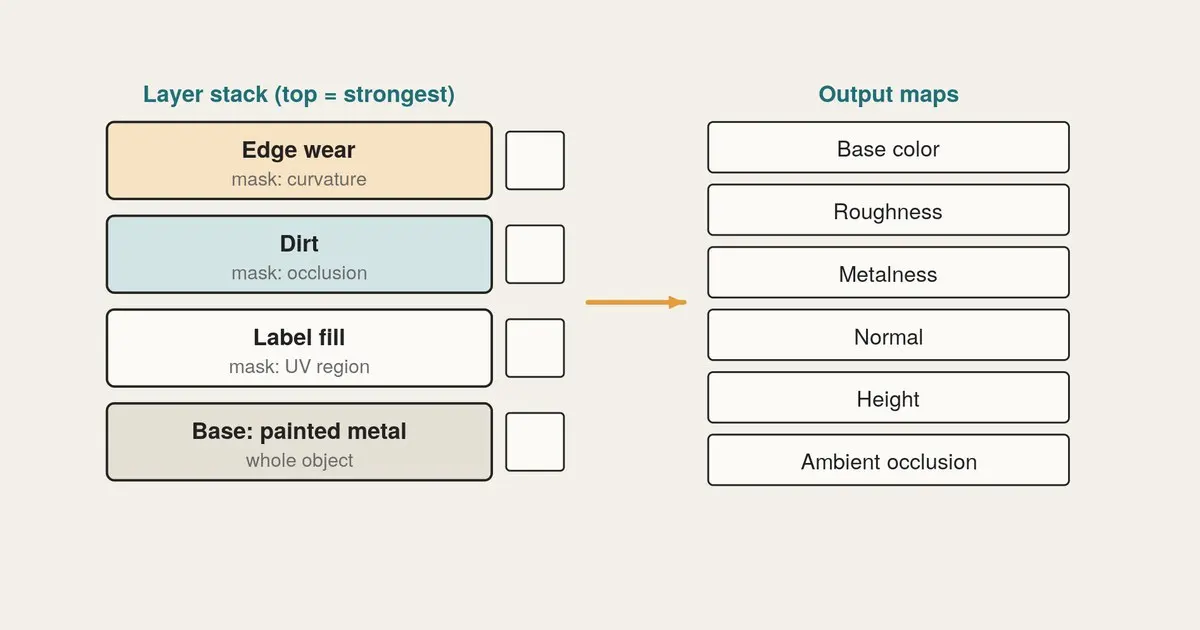
Texturing and Baking: a practical CGI guide
Each map has a role: base color is a color (sRGB); roughness, metalness, normal and height are data (Non-Color).
Read →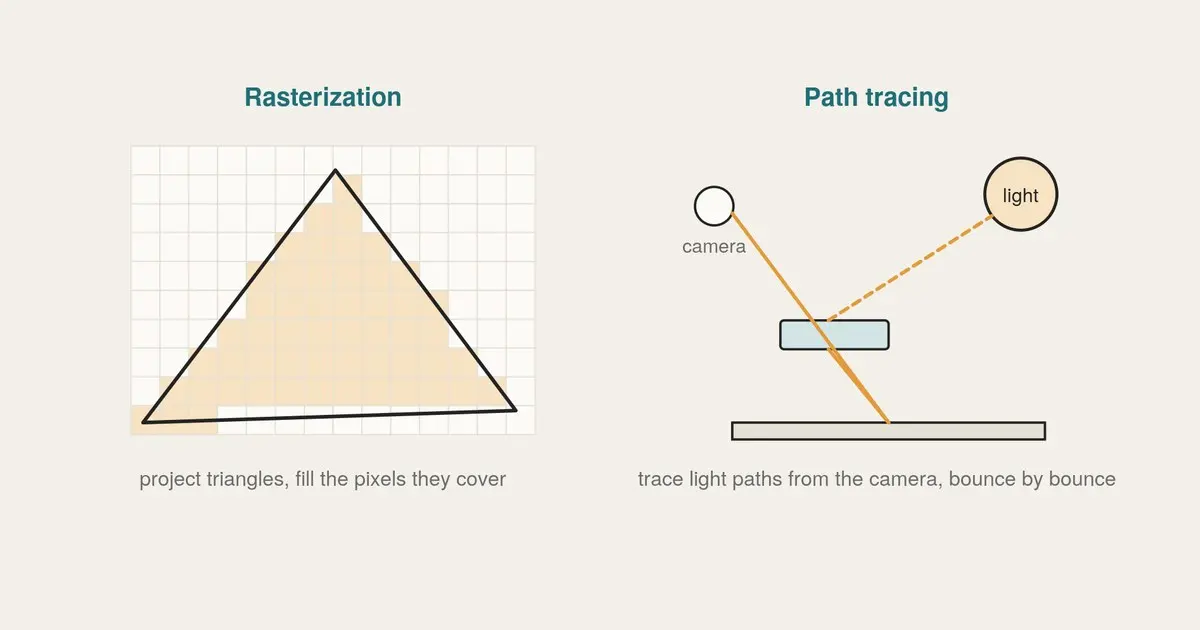
How Rendering Works: a practical CGI guide
Rasterization is fast and approximate; path tracing follows light paths and is physically accurate.
Read →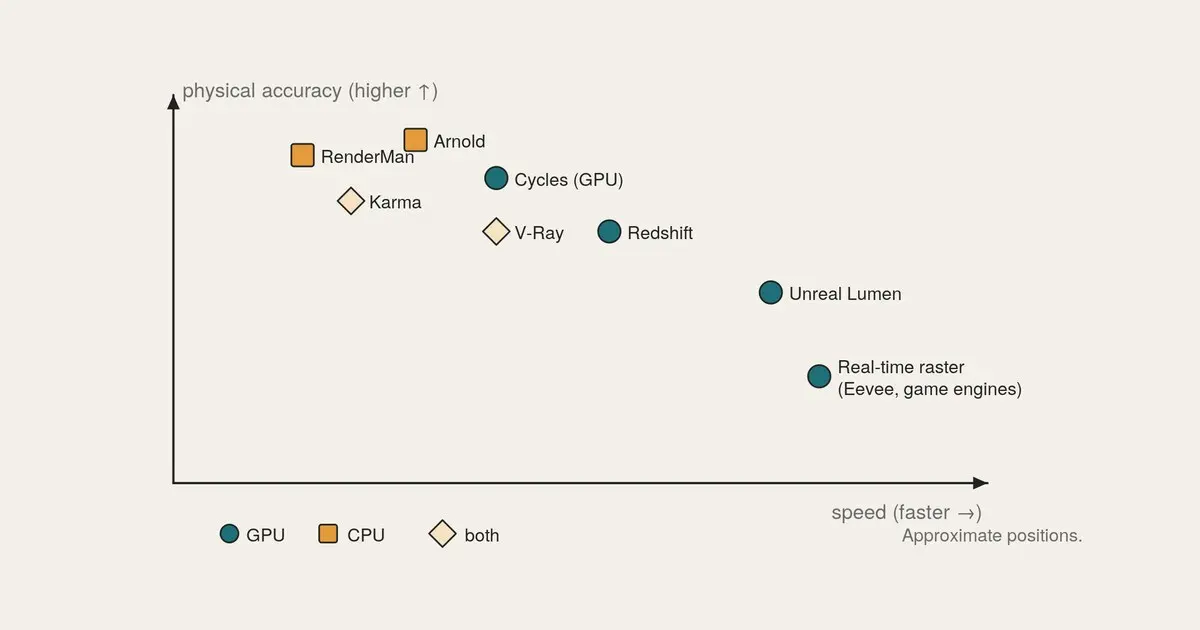
Render Engines: a practical CGI guide
Engines differ in method (path tracing, real-time), hardware (CPU, GPU) and pipeline fit.
Read →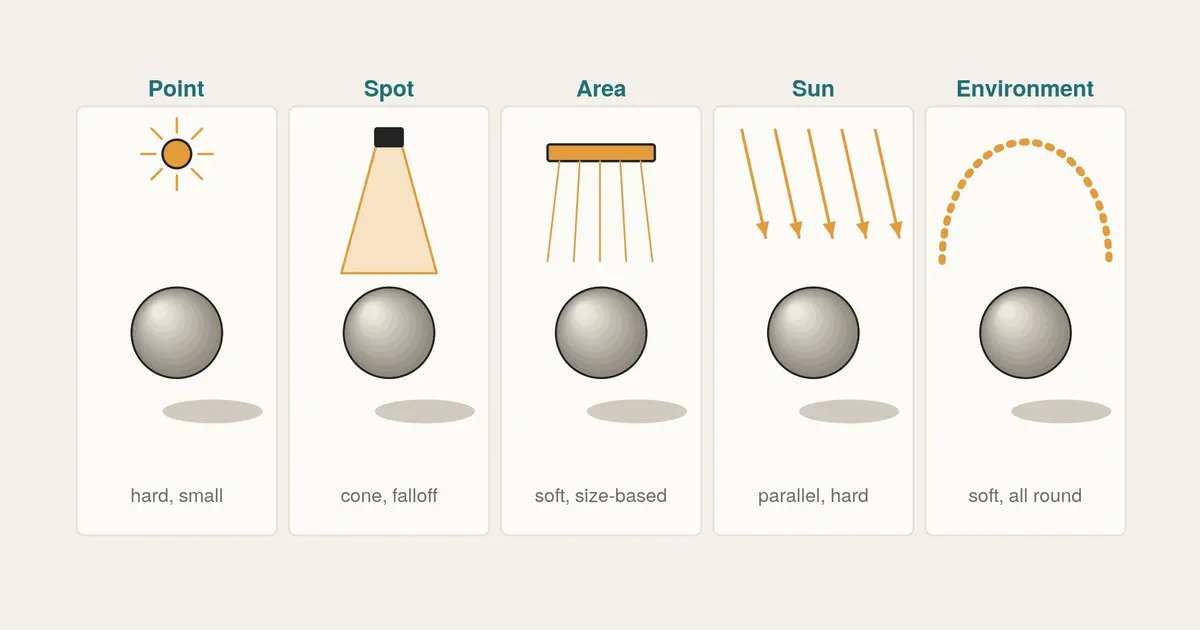
CG Lighting: a practical CGI guide
Softness depends on the light's size as seen from the subject.
Read →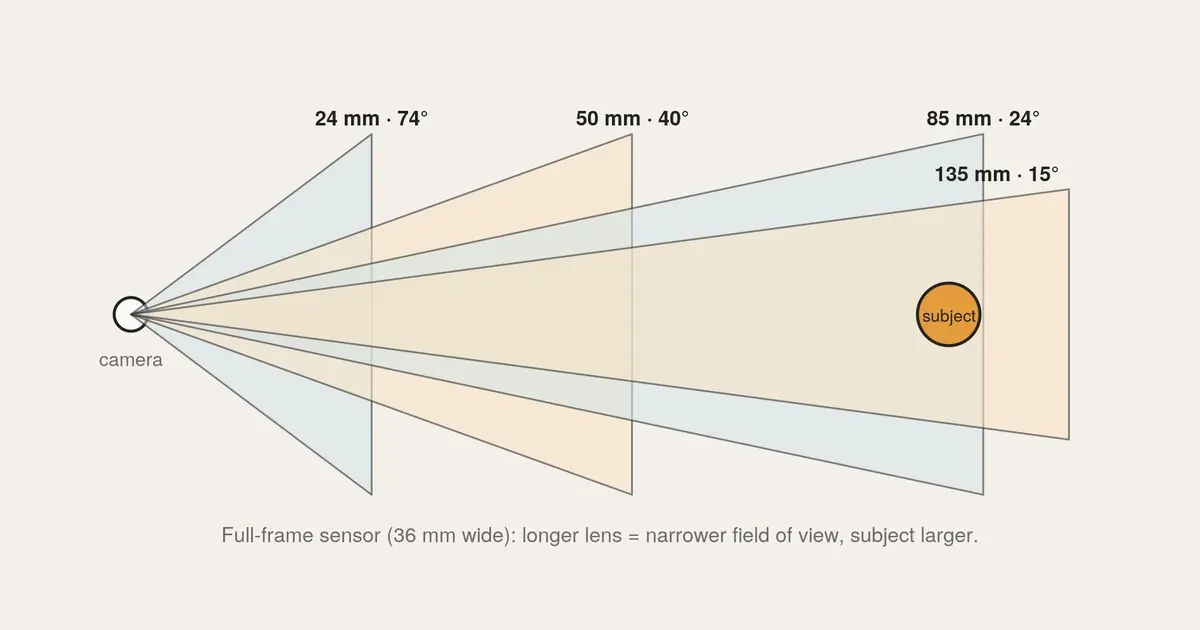
The Virtual Camera: a practical CGI guide
Field of view = 2 · atan(sensor width ÷ (2 · focal length)). On 36 mm: 24 mm ≈ 74°, 50 mm ≈ 40°, 85 mm ≈ 24°.
Read →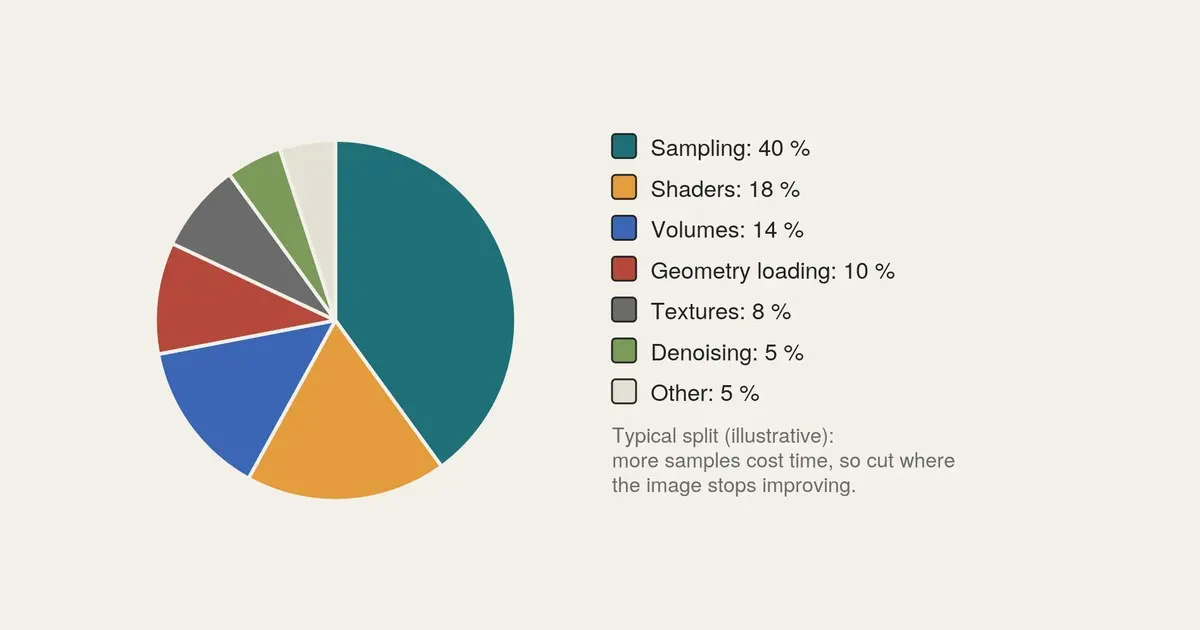
Passes and Optimization: a practical CGI guide
Render passes (AOVs) split the image into light components that add back to the beauty.
Read →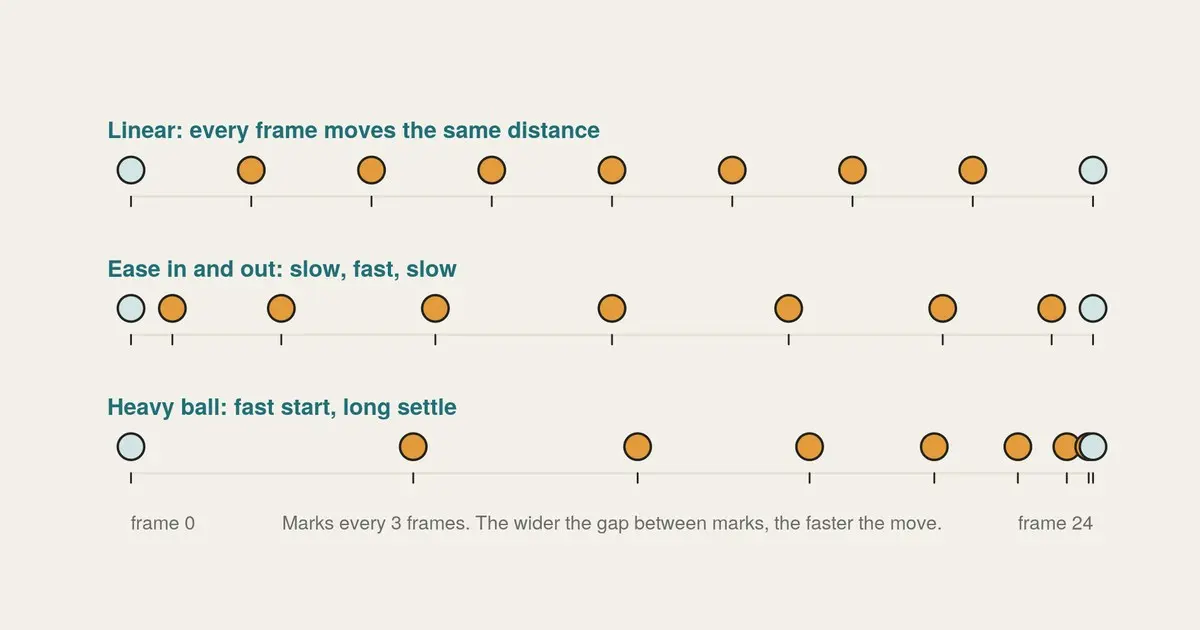
Principles of Animation: a practical CGI guide
Timing is how many frames an action takes; spacing is how far it moves on each frame.
Read →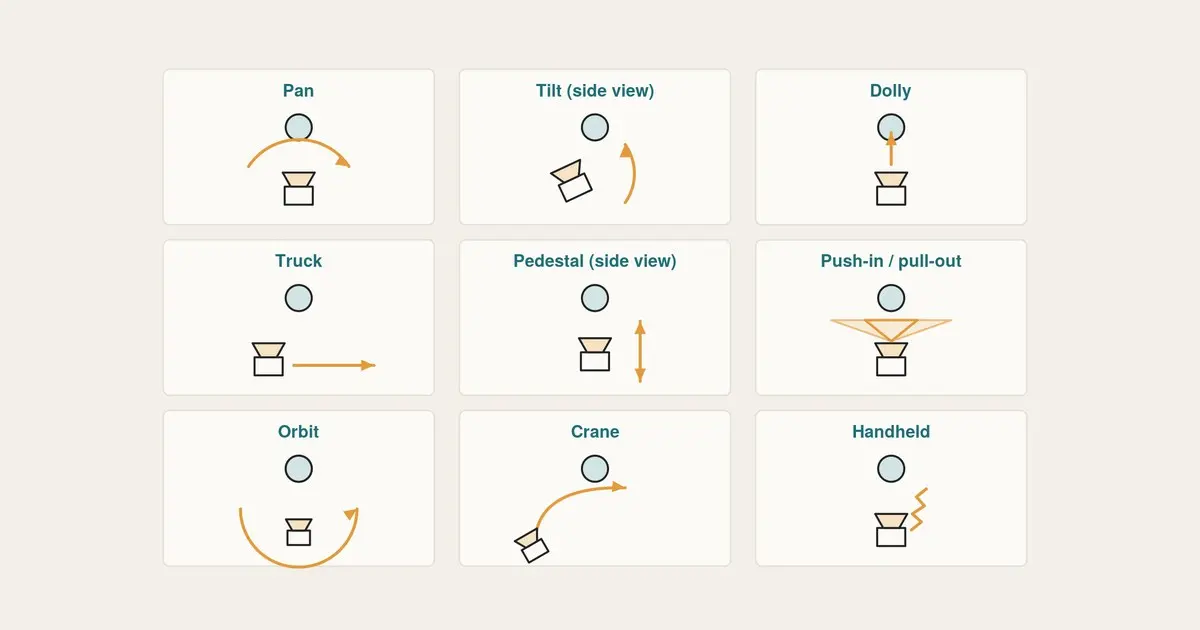
Camera Animation: a practical CGI guide
Each camera move has a meaning: a push-in focuses, a pull-out reveals, an orbit shows form.
Read →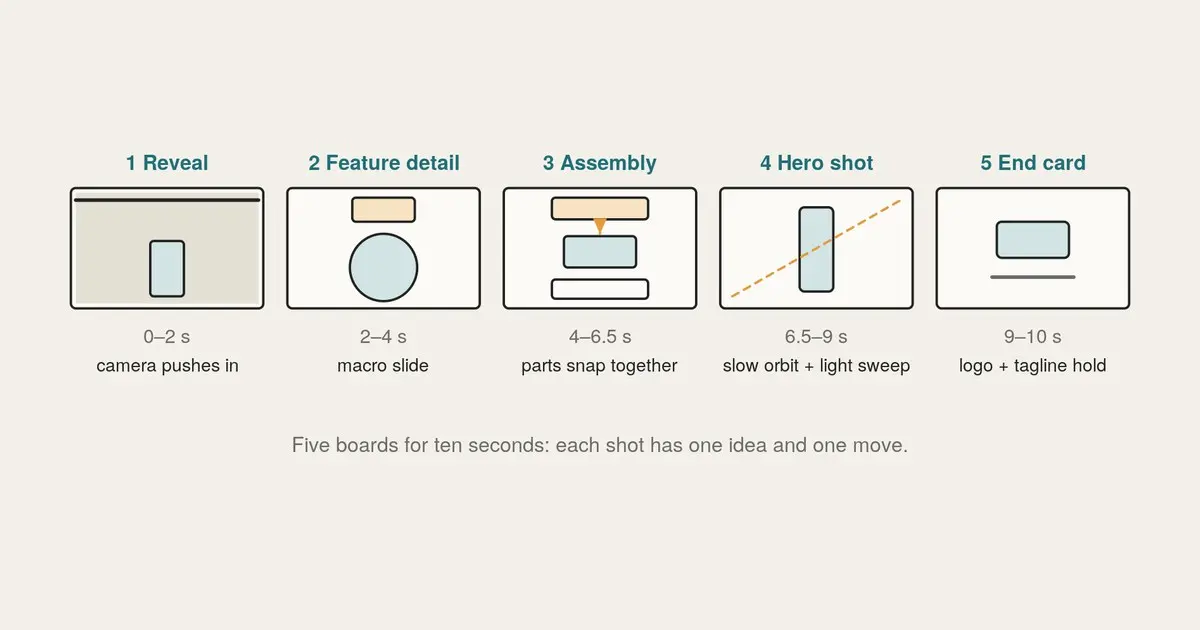
Product Animation: a practical CGI guide
Standard product shots: reveal, hero, detail, turntable and packshot.
Read →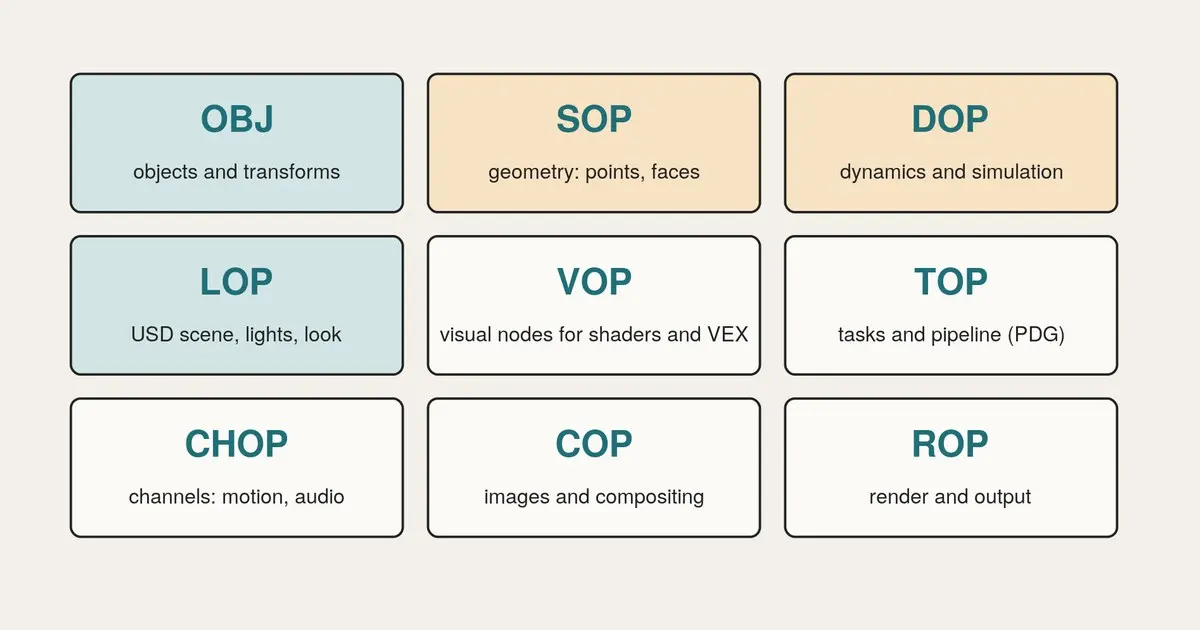
Houdini Architecture: a practical CGI guide
Houdini works in contexts: objects, geometry (SOP), simulation (DOP), scenes (LOP/Solaris), compositing (COP) and tasks (TOP).
Read →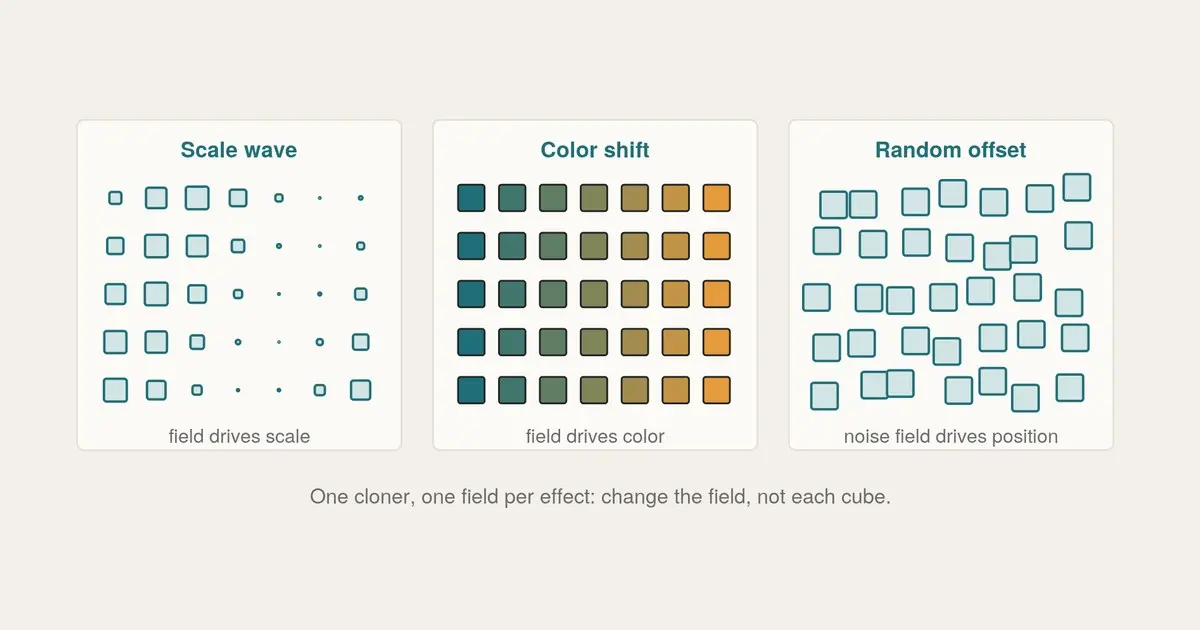
Motion Design: a practical CGI guide
Motion design uses clones and effectors: one rule moves many objects.
Read →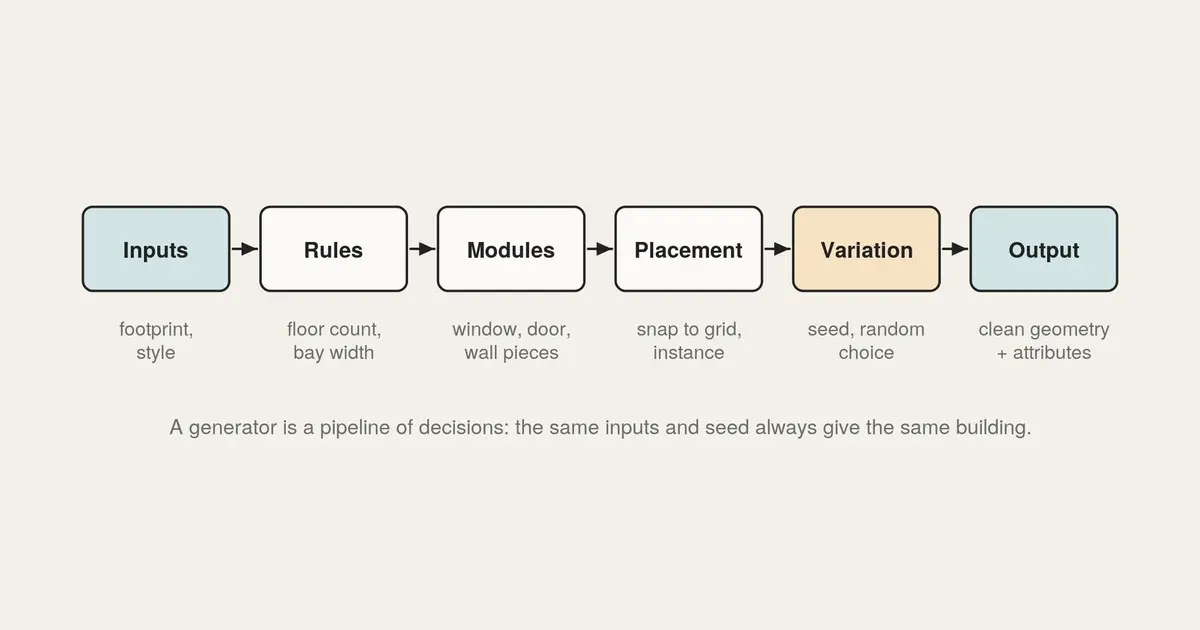
Procedural Systems: a practical CGI guide
A generator is inputs → rules → modules → placement → variation → output.
Read →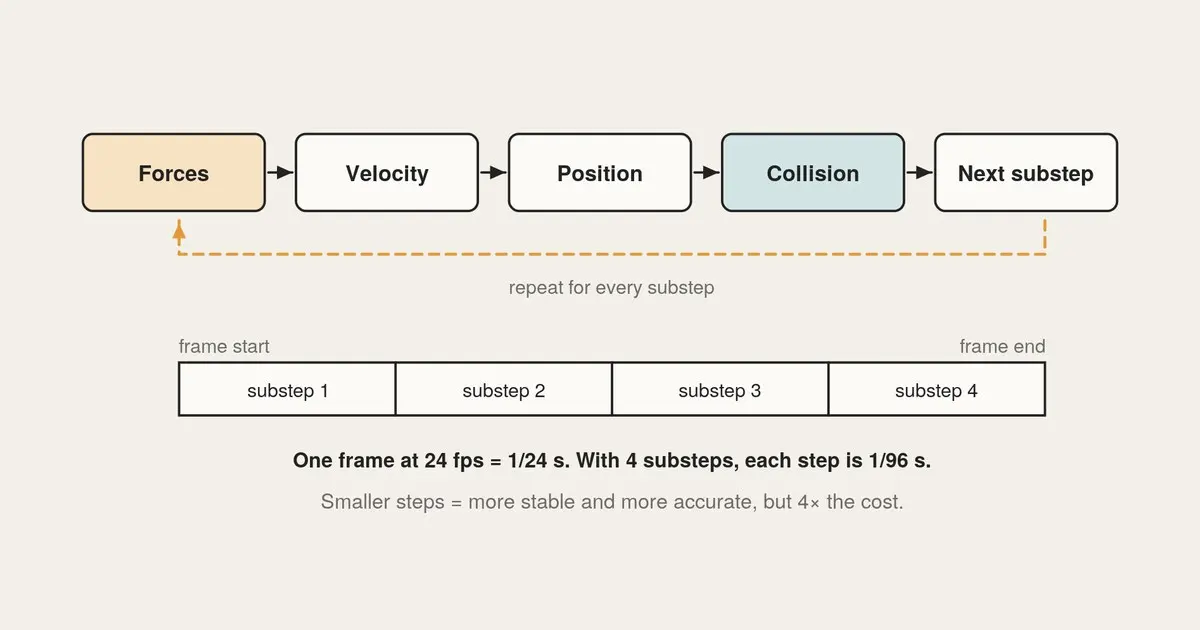
Rigid Bodies and Particles: a practical CGI guide
A simulation is a state, forces and a time step; substeps add accuracy and cost.
Read →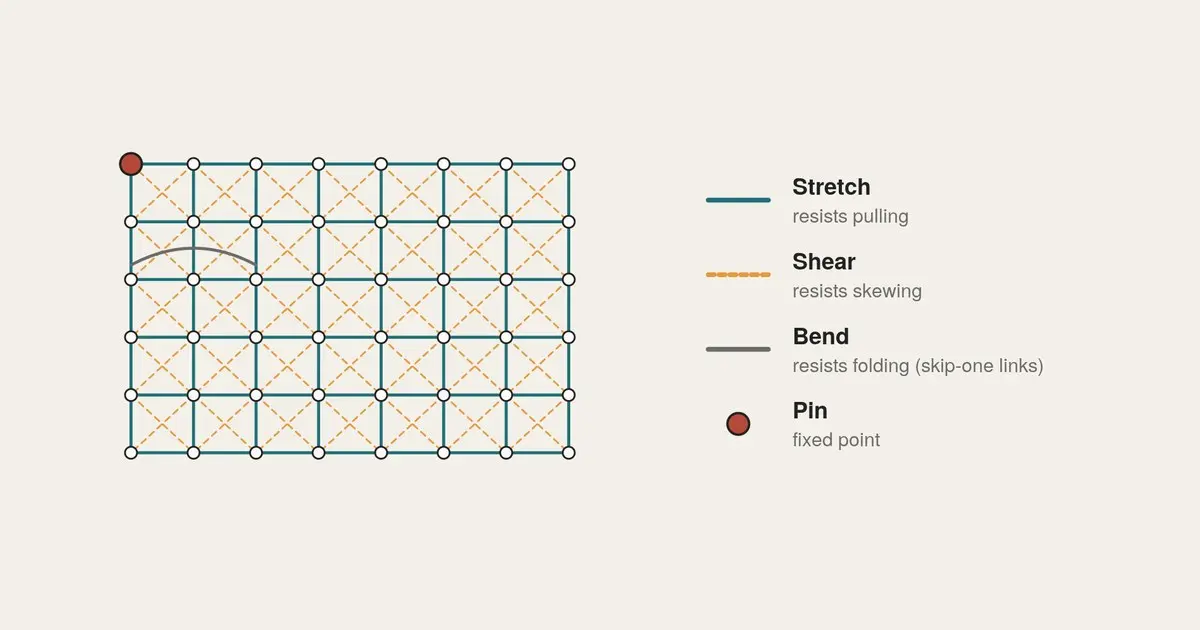
Cloth and Soft Bodies: a practical CGI guide
Cloth and soft bodies are points held together by constraints (distance, bend, pressure).
Read →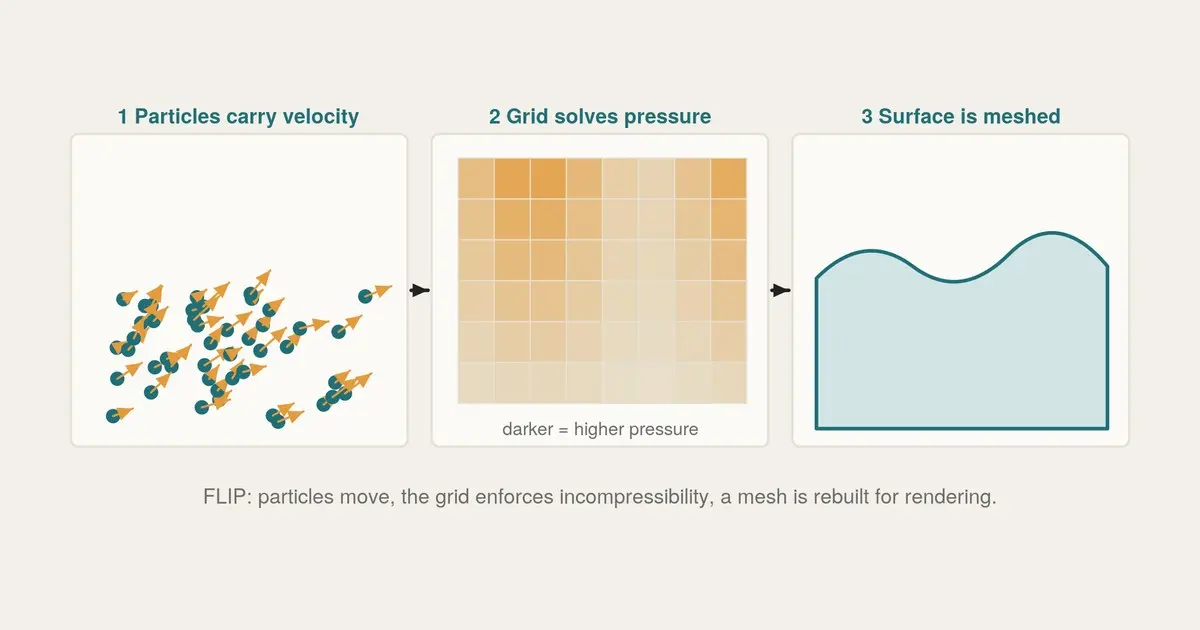
Fluids, Smoke, Fire and Volumes: a practical CGI guide
Liquids (FLIP) use particles plus a grid; particle separation sets the detail.
Read →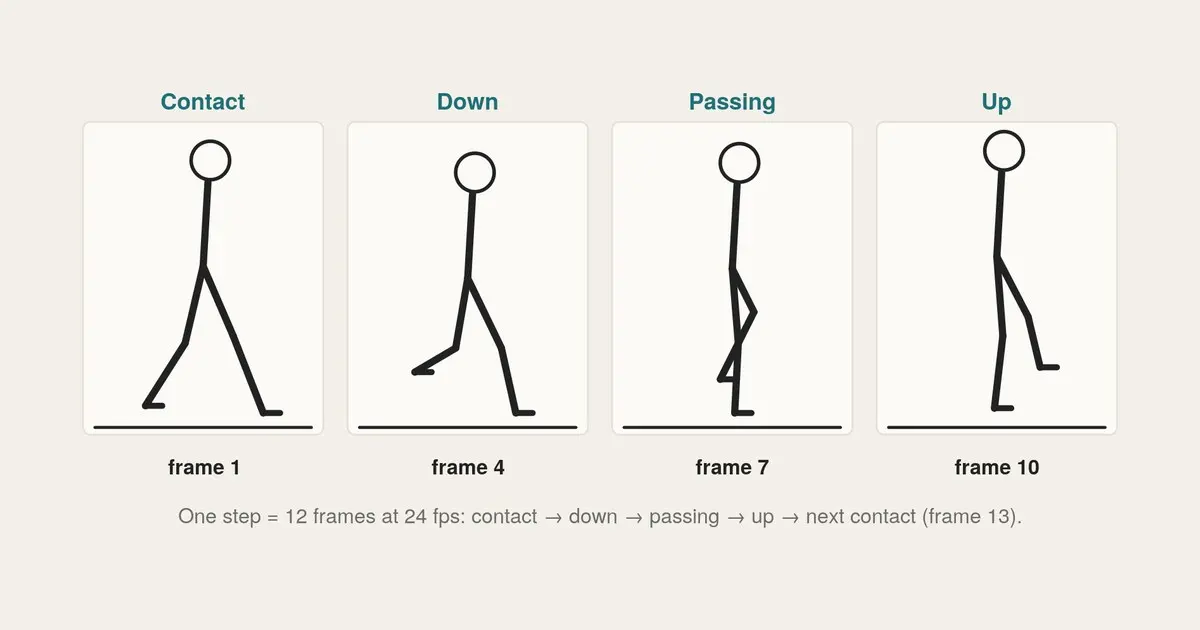
Character Animation: a practical CGI guide
Weight comes from balance: the center of mass must sit over the support or the character falls.
Read →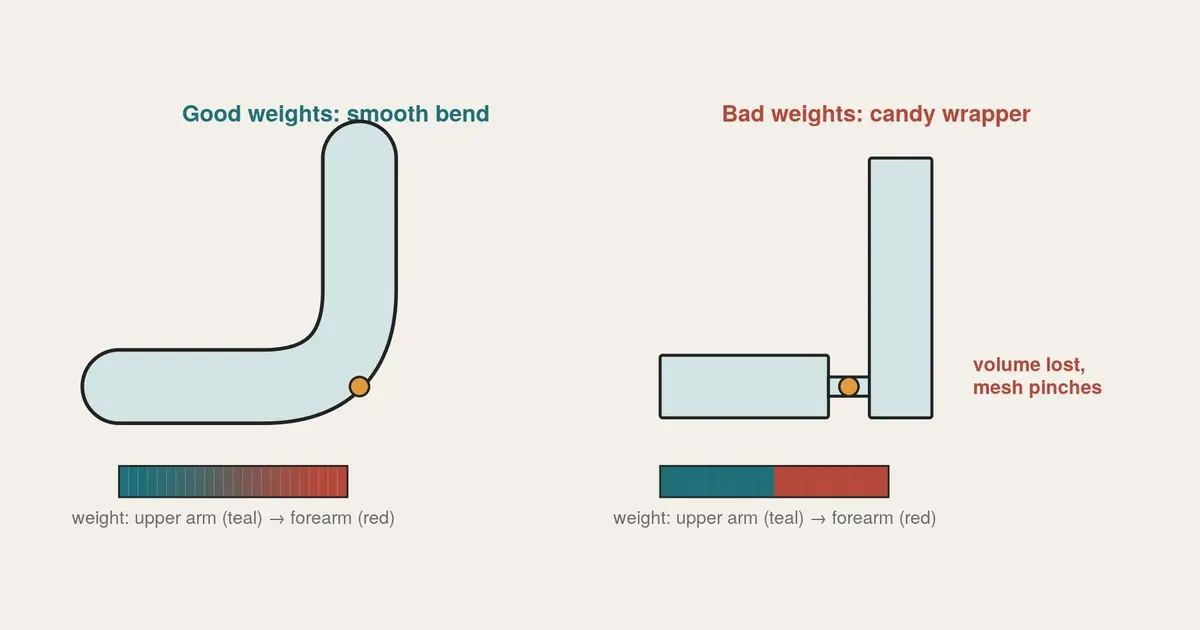
Rigging: a practical CGI guide
A rig is joints, controls and deformation.
Read →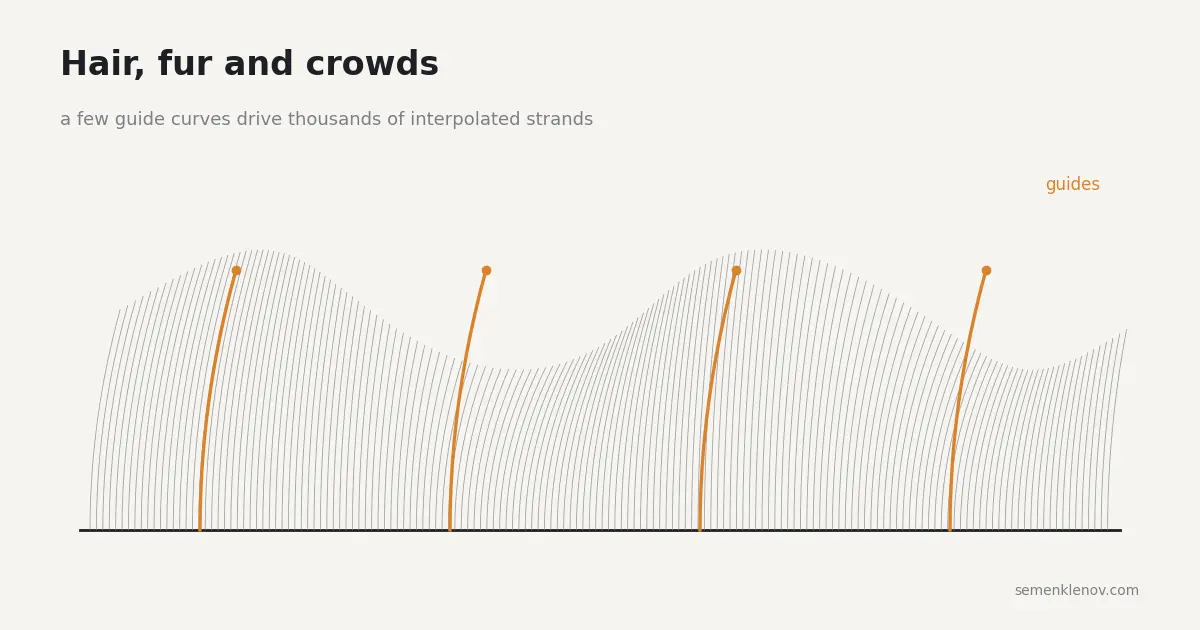
Hair, Fur and Crowds: a practical CGI guide
A human head has about 100,000–150,000 hairs; a few hundred to a few thousand guides drive them.
Read →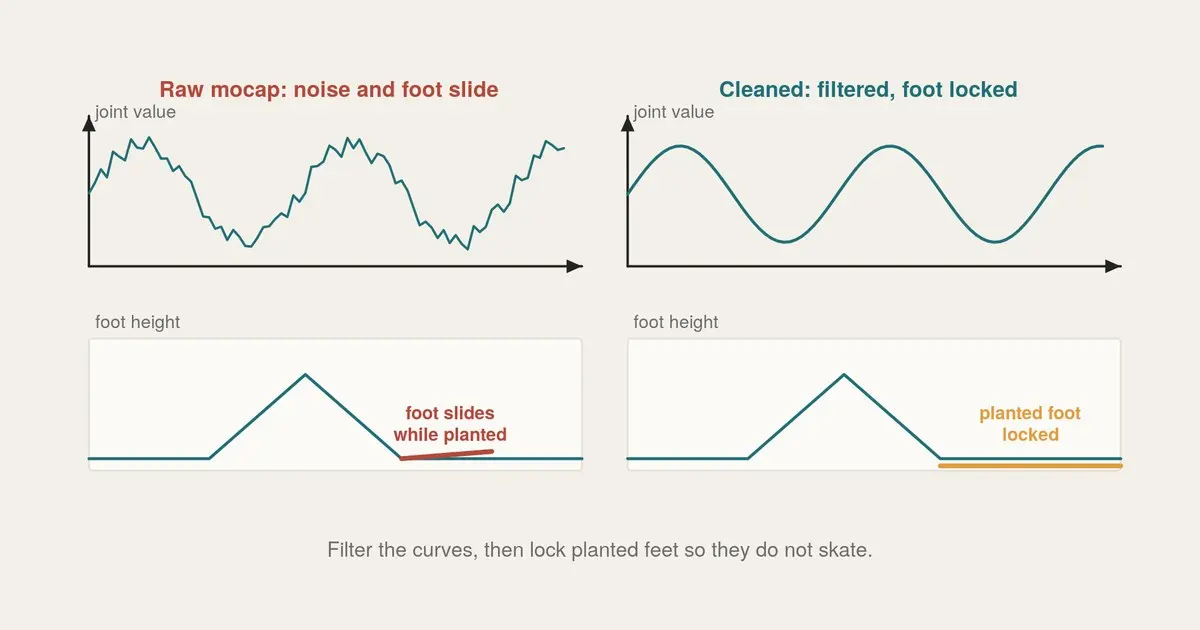
Motion Capture and AI Animation: a practical CGI guide
Motion can be captured optically, with inertial suits or from video by AI, usually at 60–120 Hz.
Read →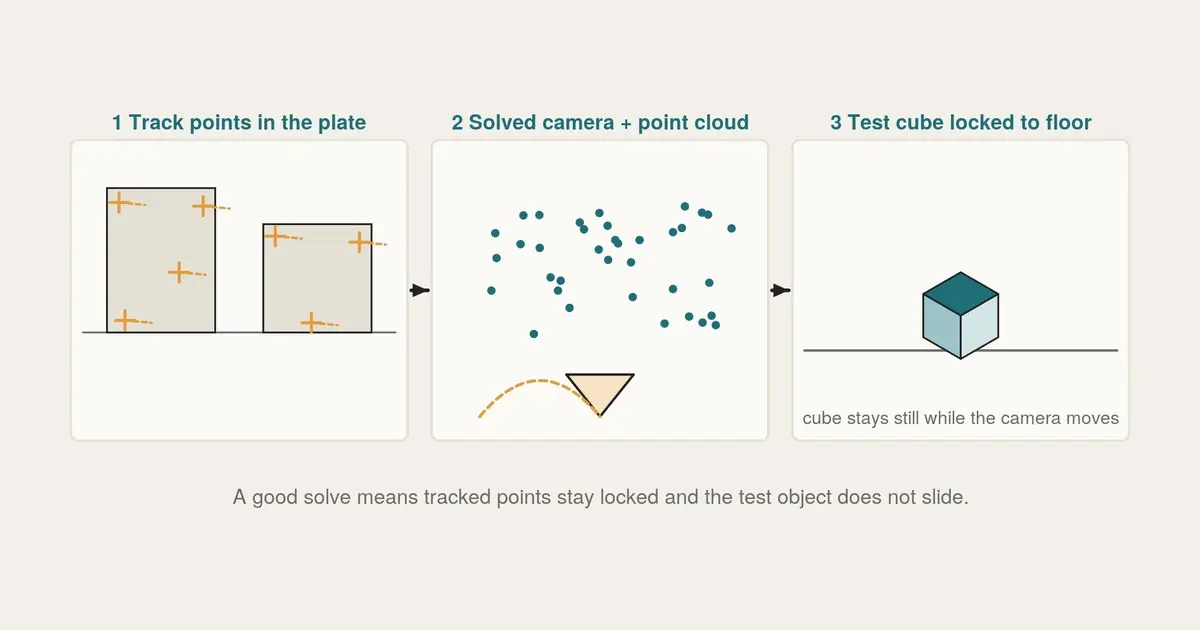
CG in Live Action: a practical CGI guide
On set, capture HDRI (5–9 exposures, 2–3 stops apart), a gray and a chrome ball, measurements and lens data.
Read →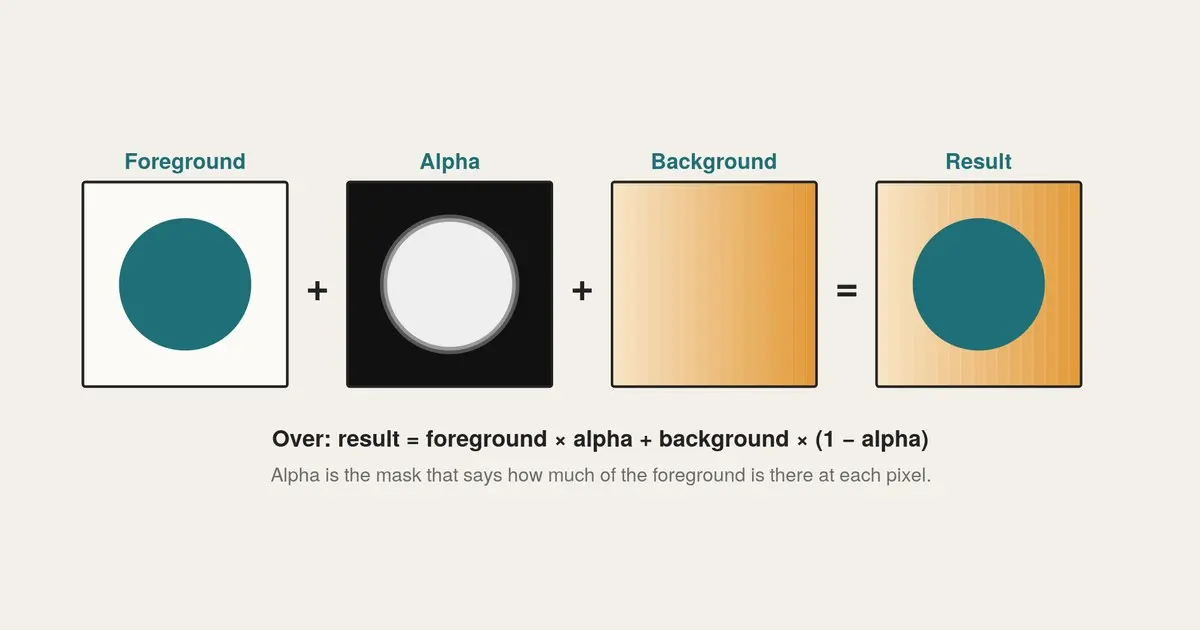
Compositing Theory: a practical CGI guide
The over operation: result = foreground + background × (1 − foreground alpha) for premultiplied images.
Read →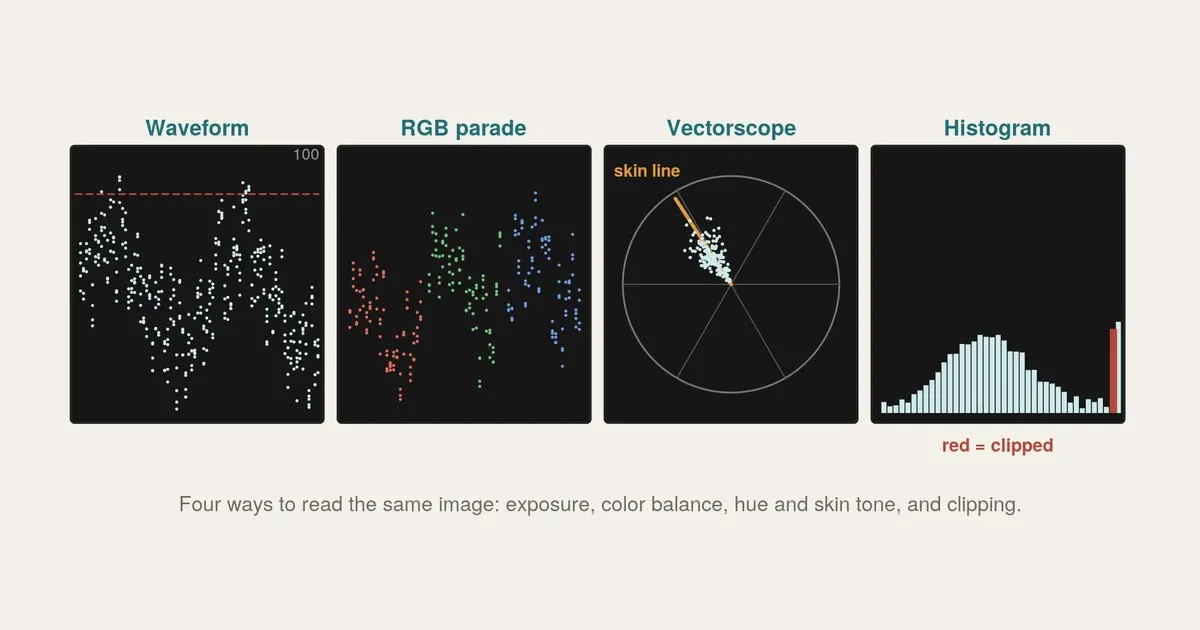
Color Grading and Finishing: a practical CGI guide
Correct first (primary), then shape the look (secondary).
Read →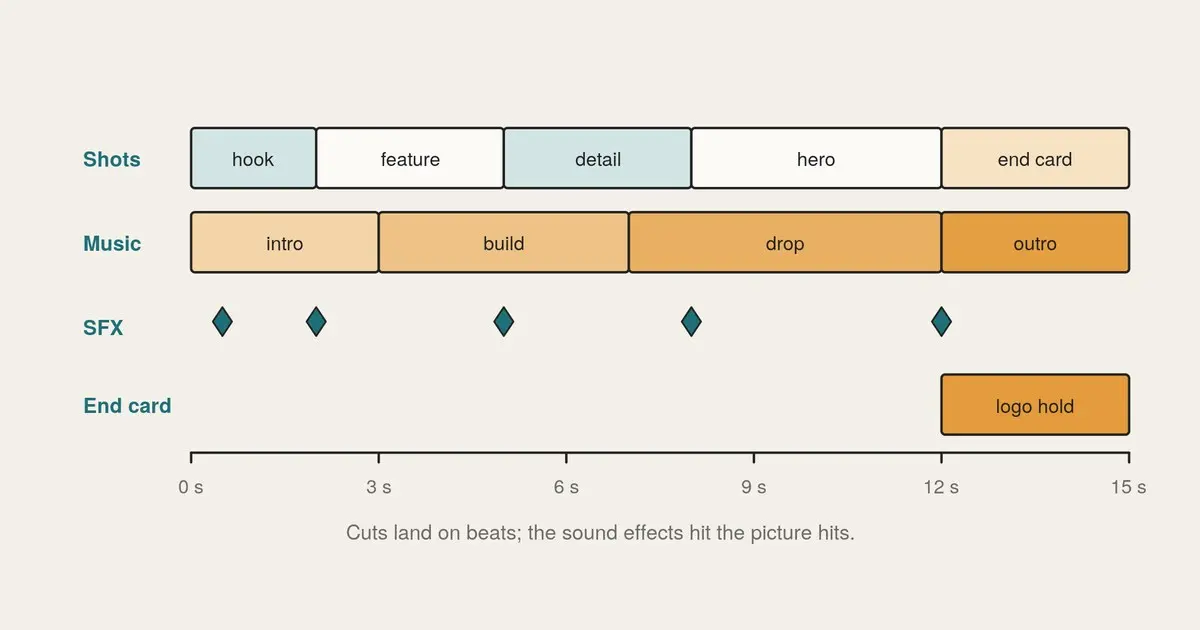
Editing and Sound for Advertising: a practical CGI guide
Shots in ads are typically 1–3 seconds; hold the packshot for 1.5–2 seconds.
Read →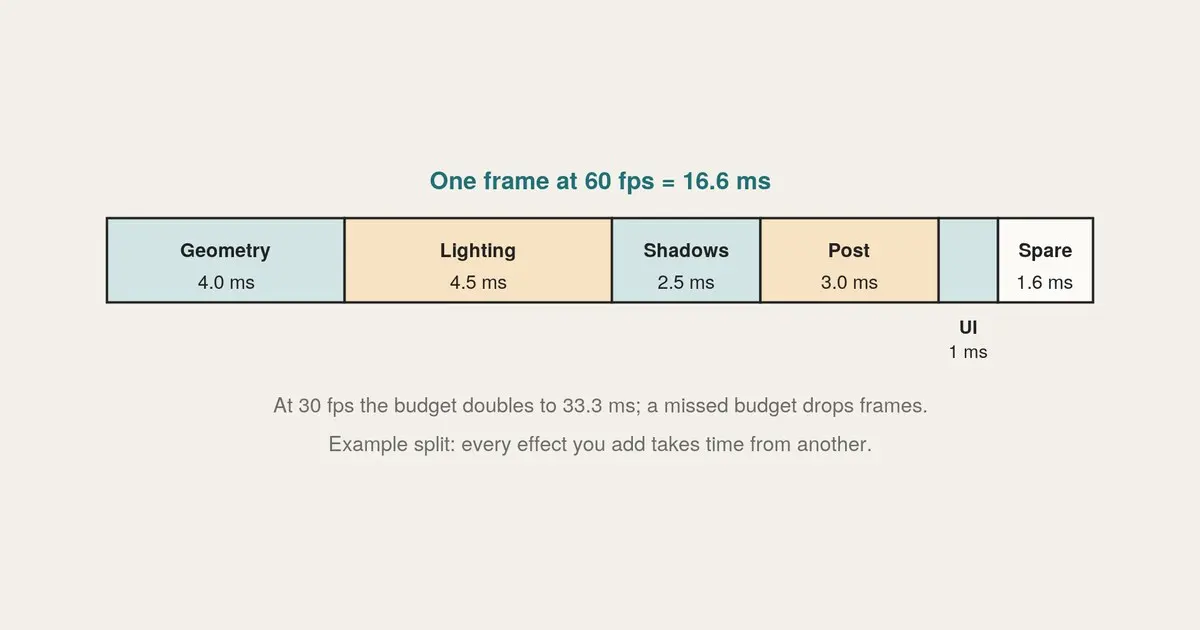
Unreal Engine for Advertising: a practical CGI guide
A real-time engine renders each frame in milliseconds: about 16.7 ms at 60 fps.
Read →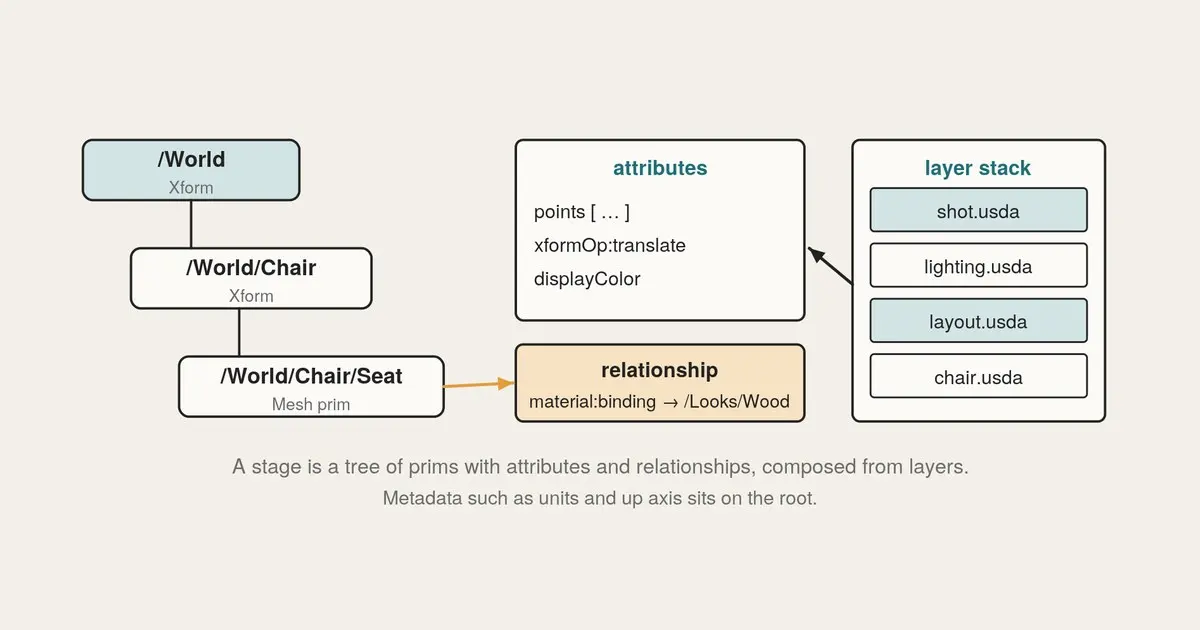
USD and Solaris: a practical CGI guide
USD describes a scene as layers that override each other without destroying the original.
Read →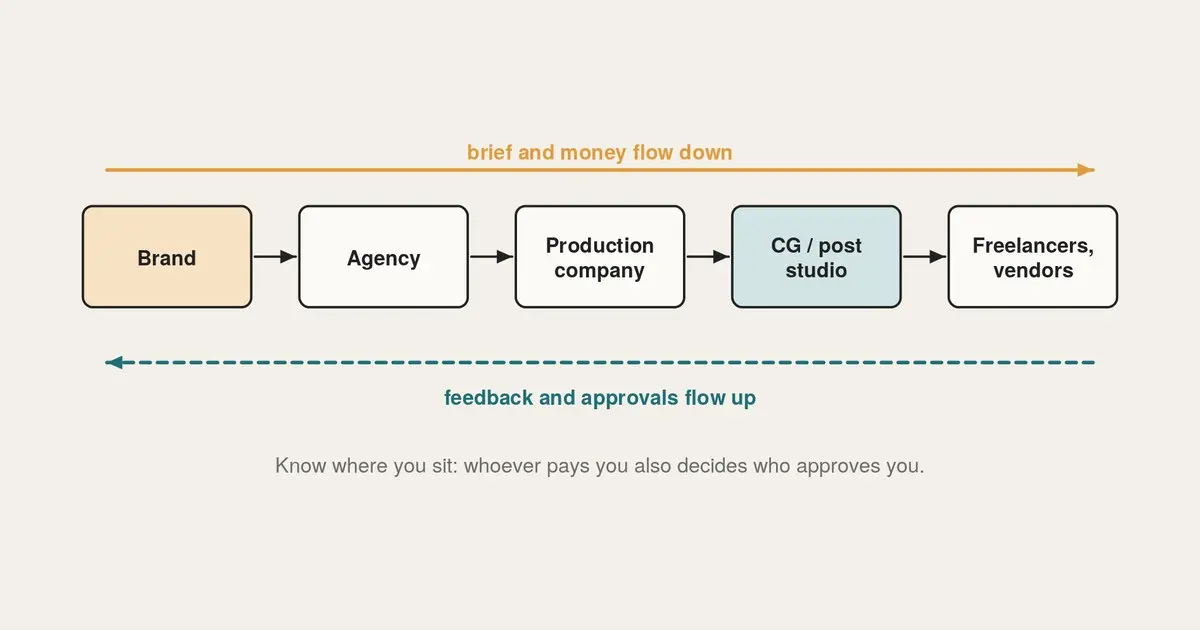
How Advertising Is Made: a practical CGI guide
Advertising involves the brand, the agency, the production company and the CG studio, each with its own goal.
Read →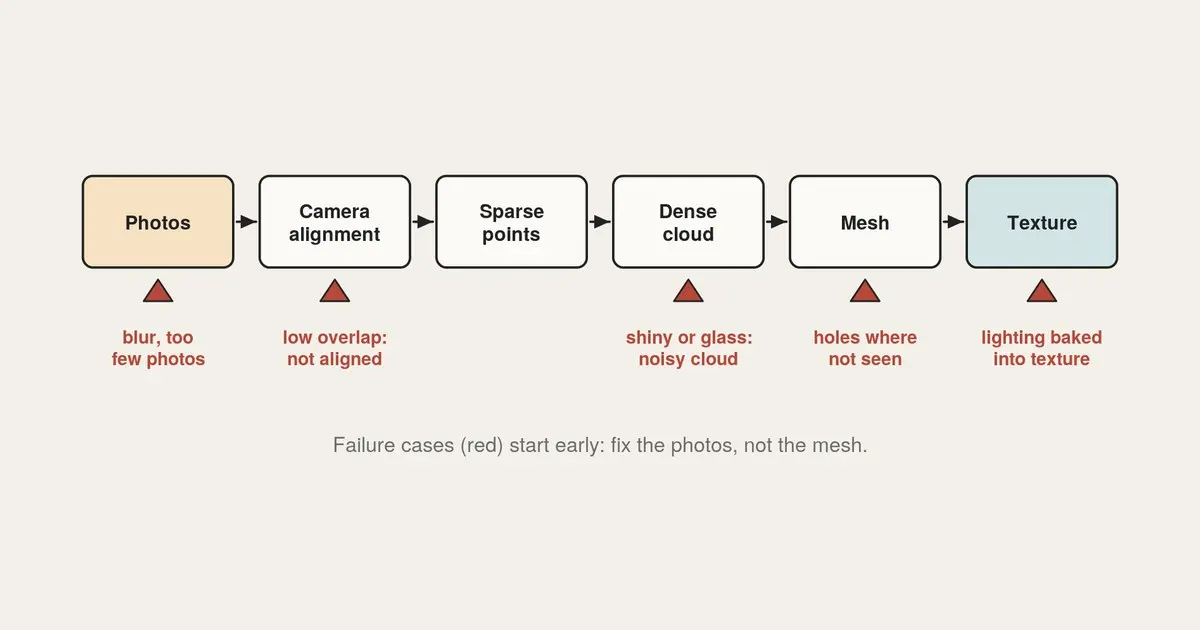
Scanning and Neural Methods: a practical CGI guide
Photogrammetry needs 60–80 % overlap between photos, soft even light and no reflections.
Read →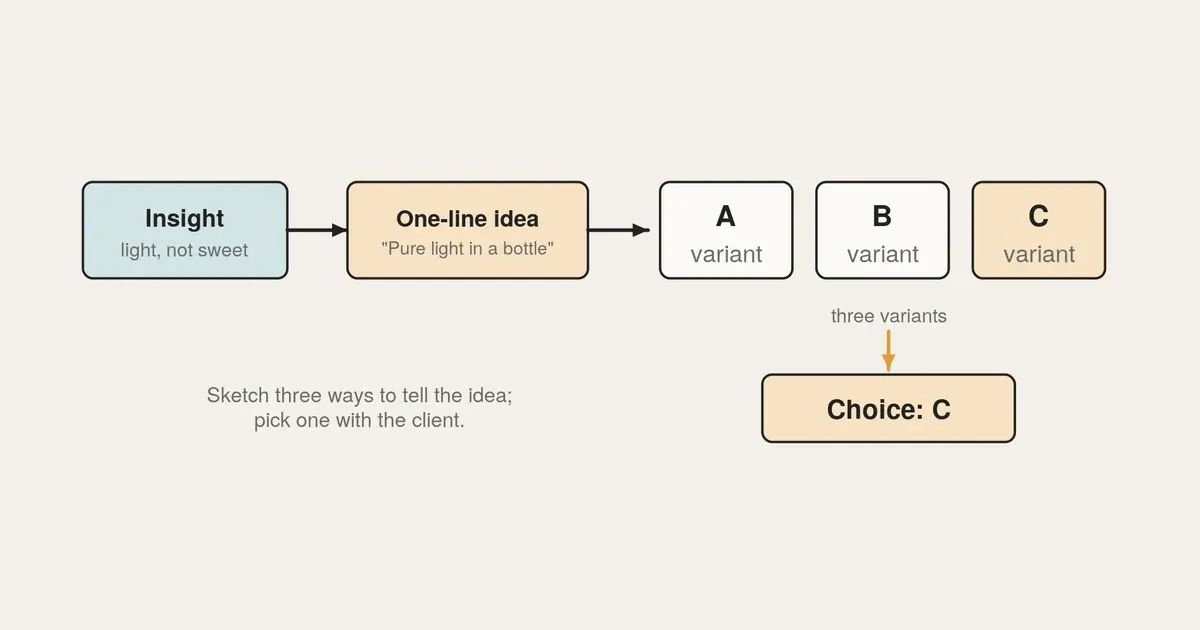
From Brief to Treatment: a practical CGI guide
A good idea can be told in one sentence and in ten seconds.
Read →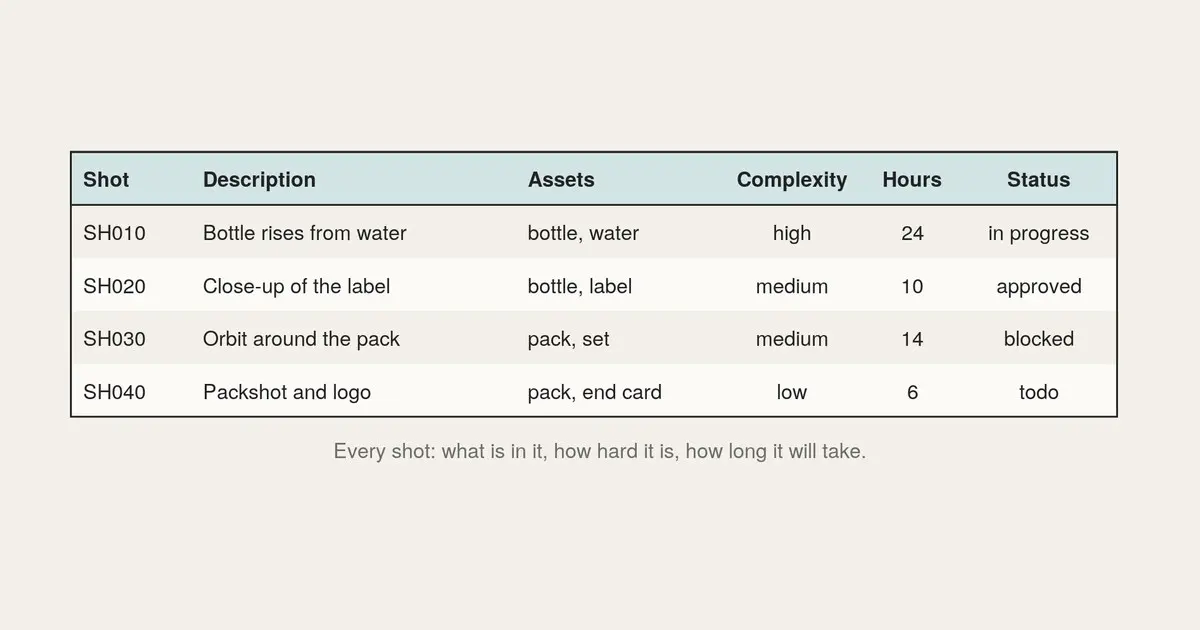
Producing the Film: a practical CGI guide
Break the film into shots and tasks, then estimate hours for each.
Read →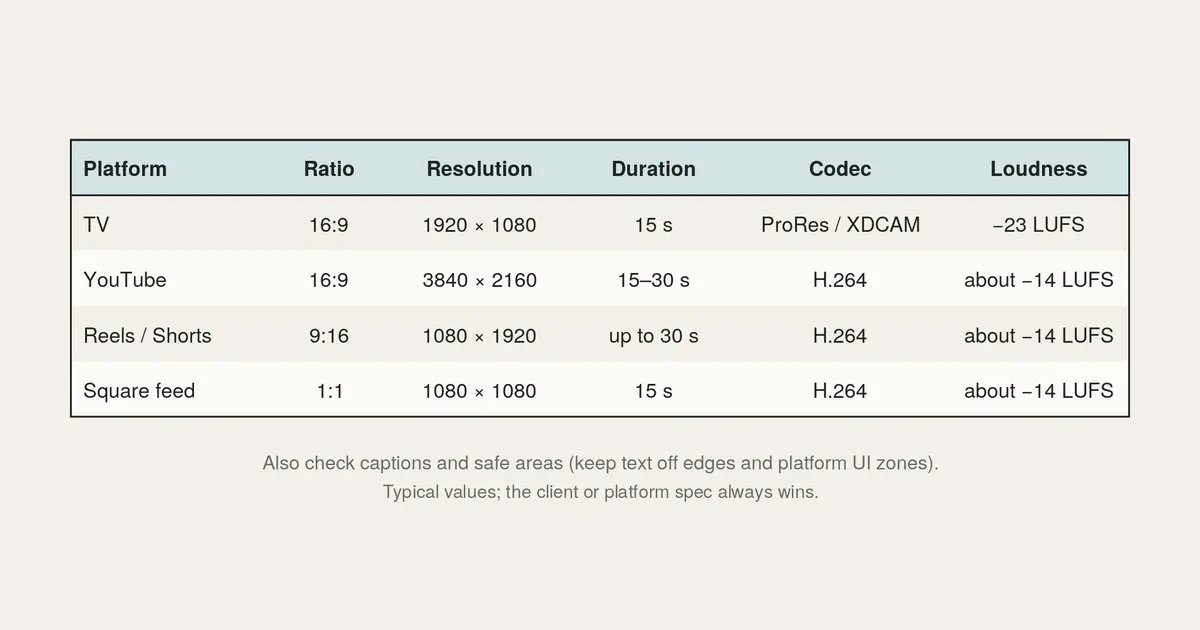
Delivery and Law: a practical CGI guide
Deliver every frame and duration the platforms need: 16:9, 1:1, 4:5, 9:16; 6, 15 and 30 seconds.
Read →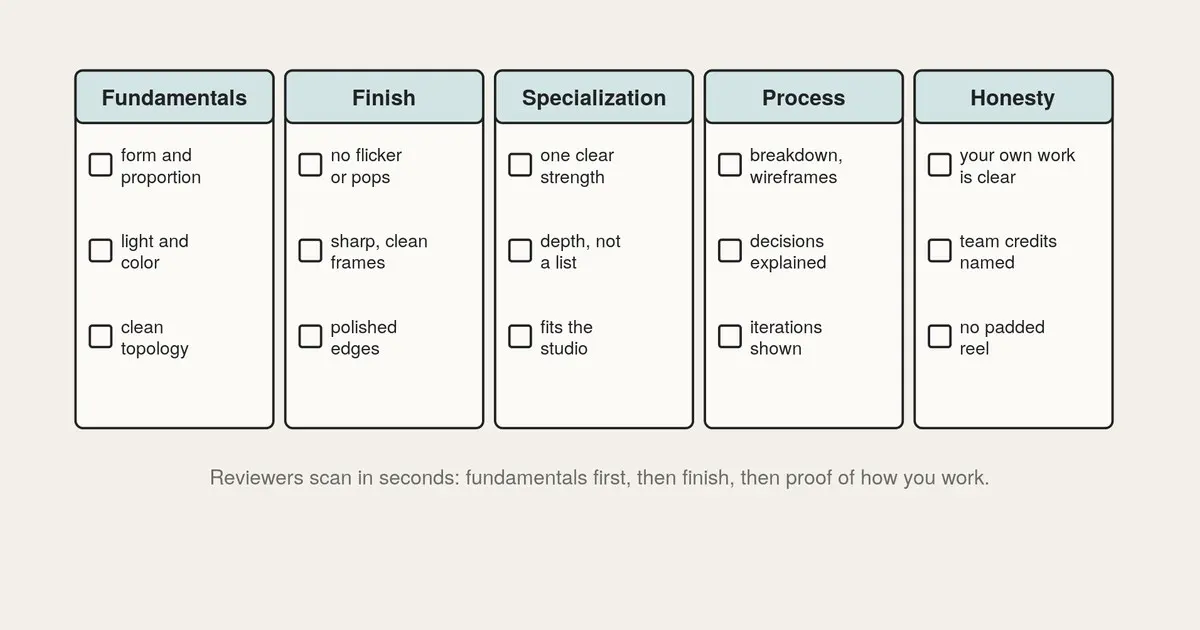
Portfolio and Showreel: a practical CGI guide
Show five to eight excellent pieces, not everything.
Read →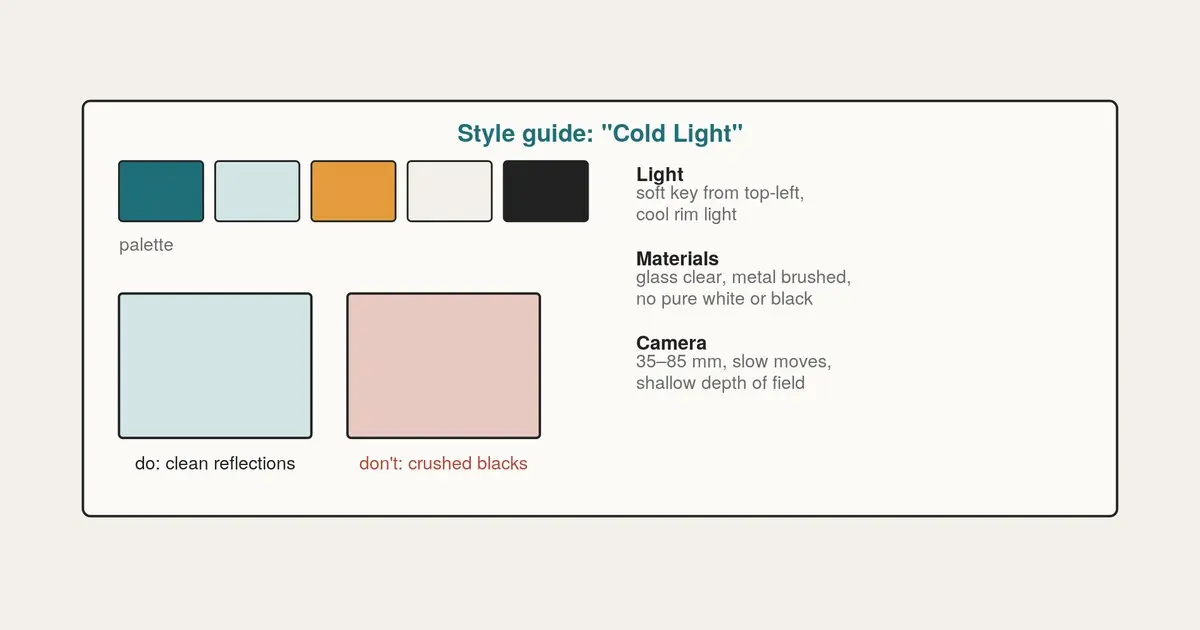
Art Direction and Team: a practical CGI guide
A style guide with do and do-not examples keeps a team's work consistent.
Read →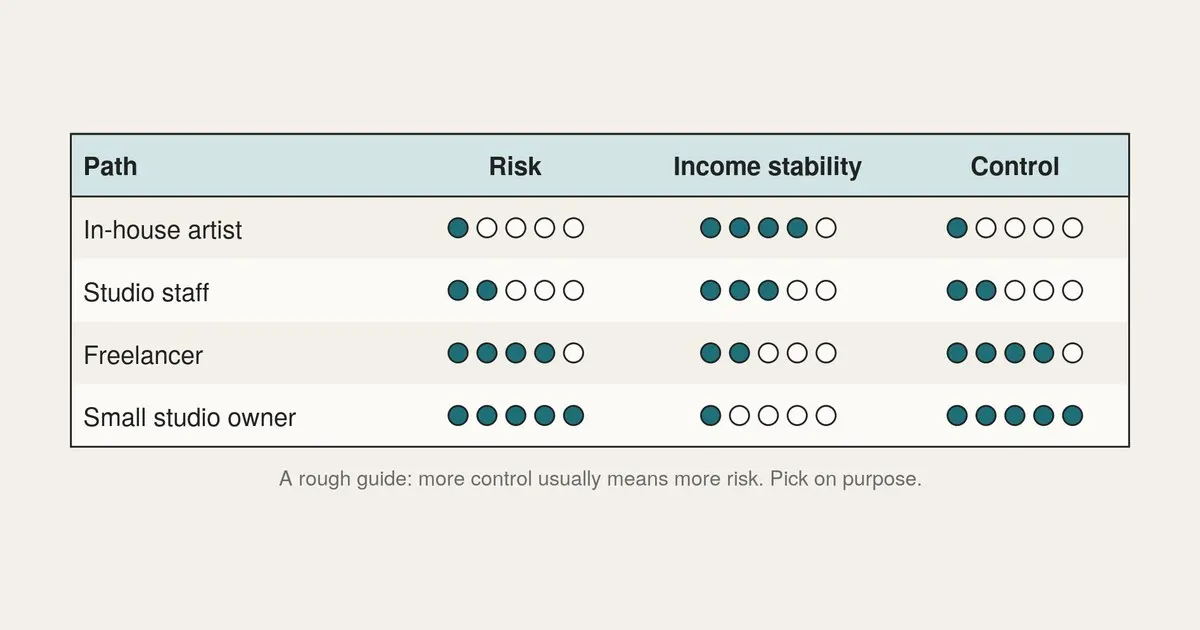
Freelance and Studio: a practical CGI guide
Rate = (desired income + business costs) ÷ (1 − tax rate) ÷ billable hours.
Read →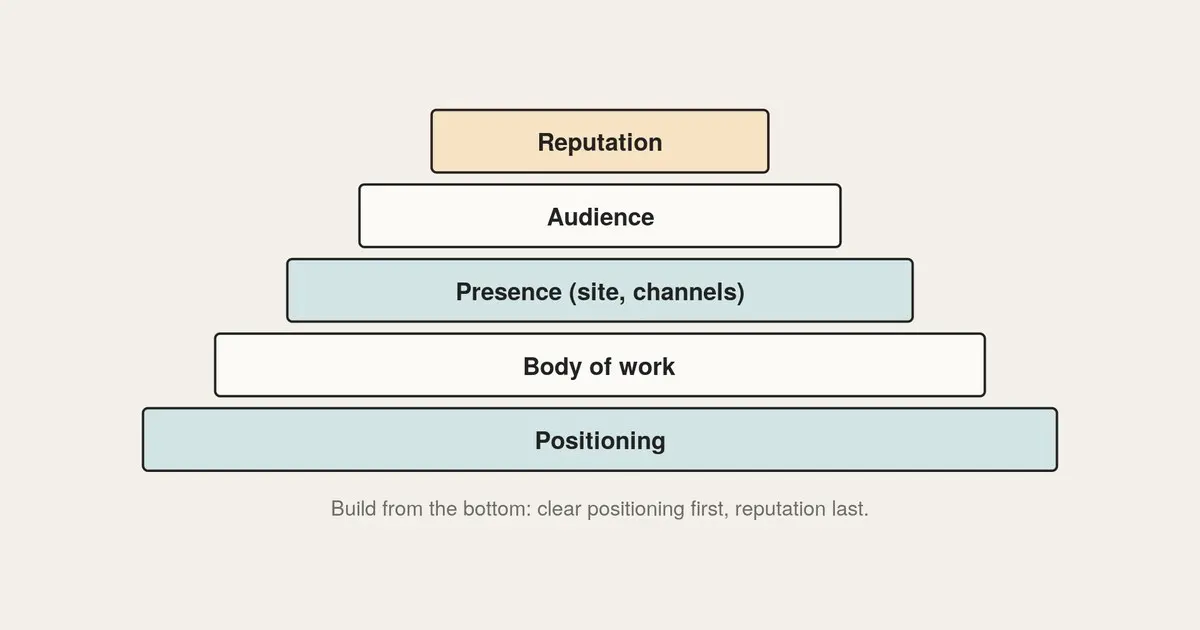
Personal Brand: a practical CGI guide
Your position fits in one sentence: what you do, for whom, with what edge.
Read →
Ultimatum: working with light as a drama of space
An AI and 3D motion design project in a sports environment: how a floodlight became a character, and why every key decision was still made by hand.
Read →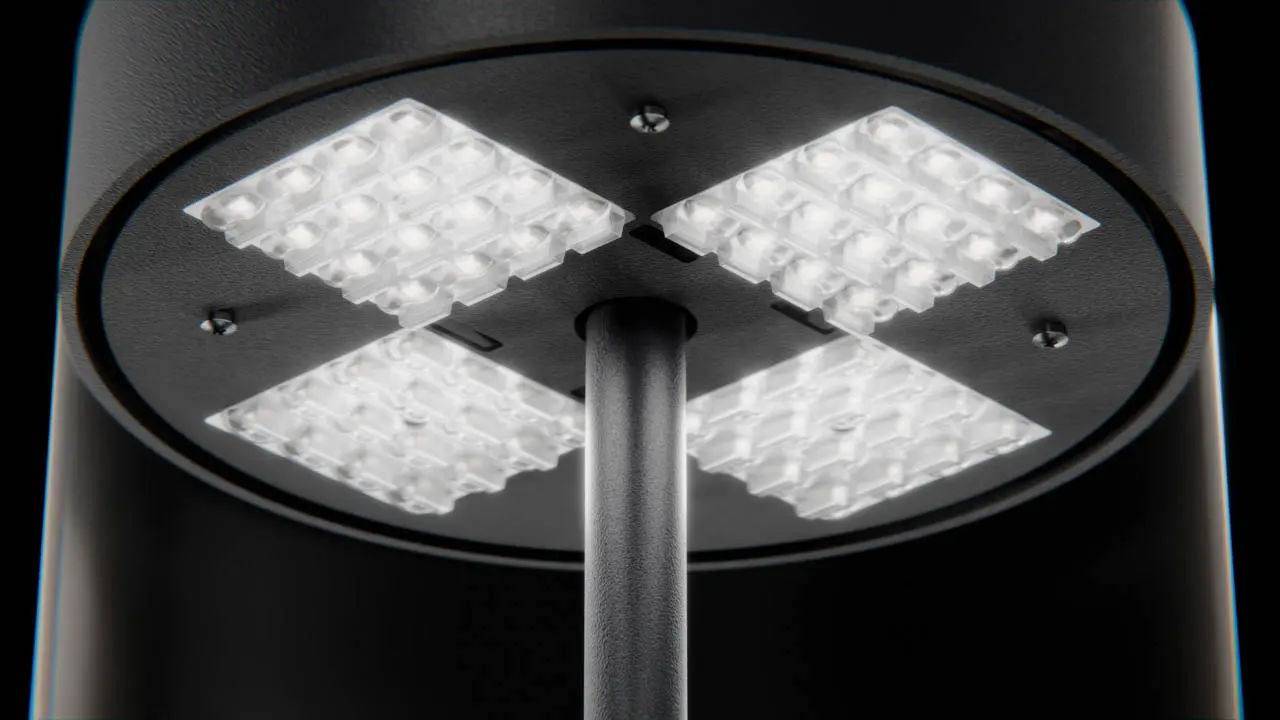
Technical and artistic principles of photorealism
How light becomes the object of research in luminaire visualisation: micro-geometry, physically correct materials, 8K, 16-bit colour, EXR and render passes.
Read →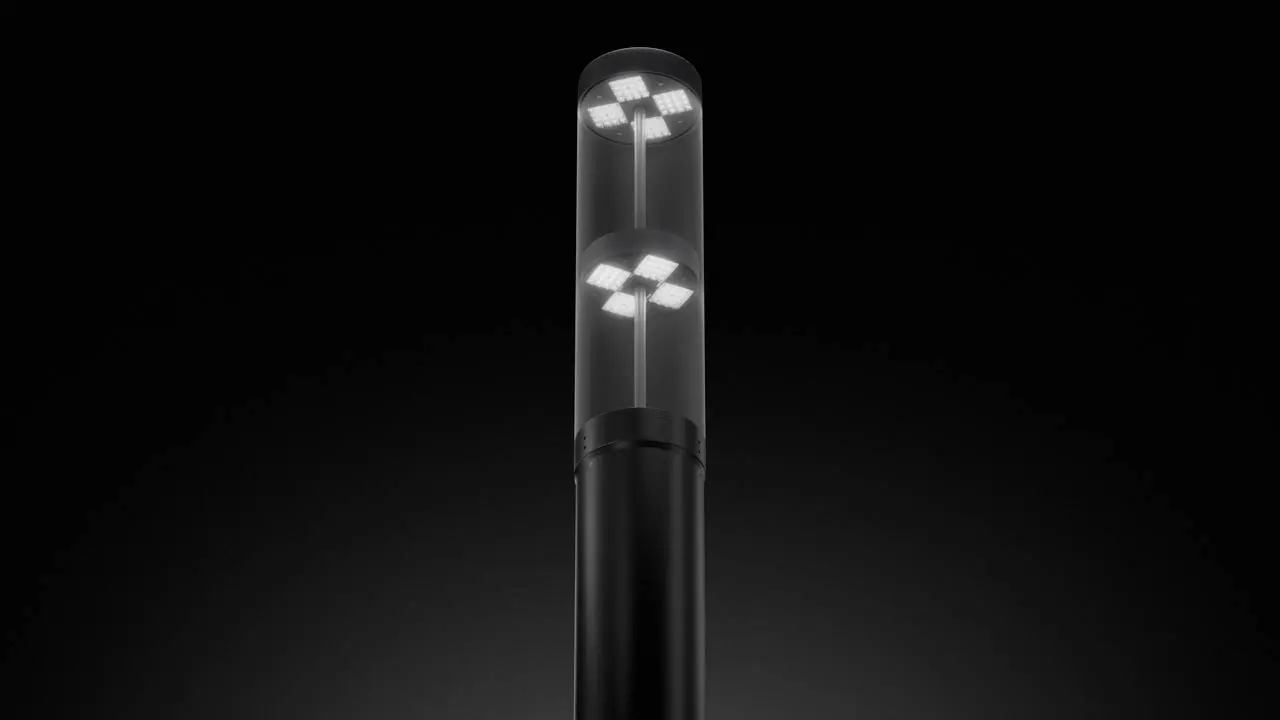
How premium product 3D motion design is made
3D motion design for a premium luminaire with a lens system: a realistic style, Blender, hand-made PBR materials, area light plus HDRI.
Read →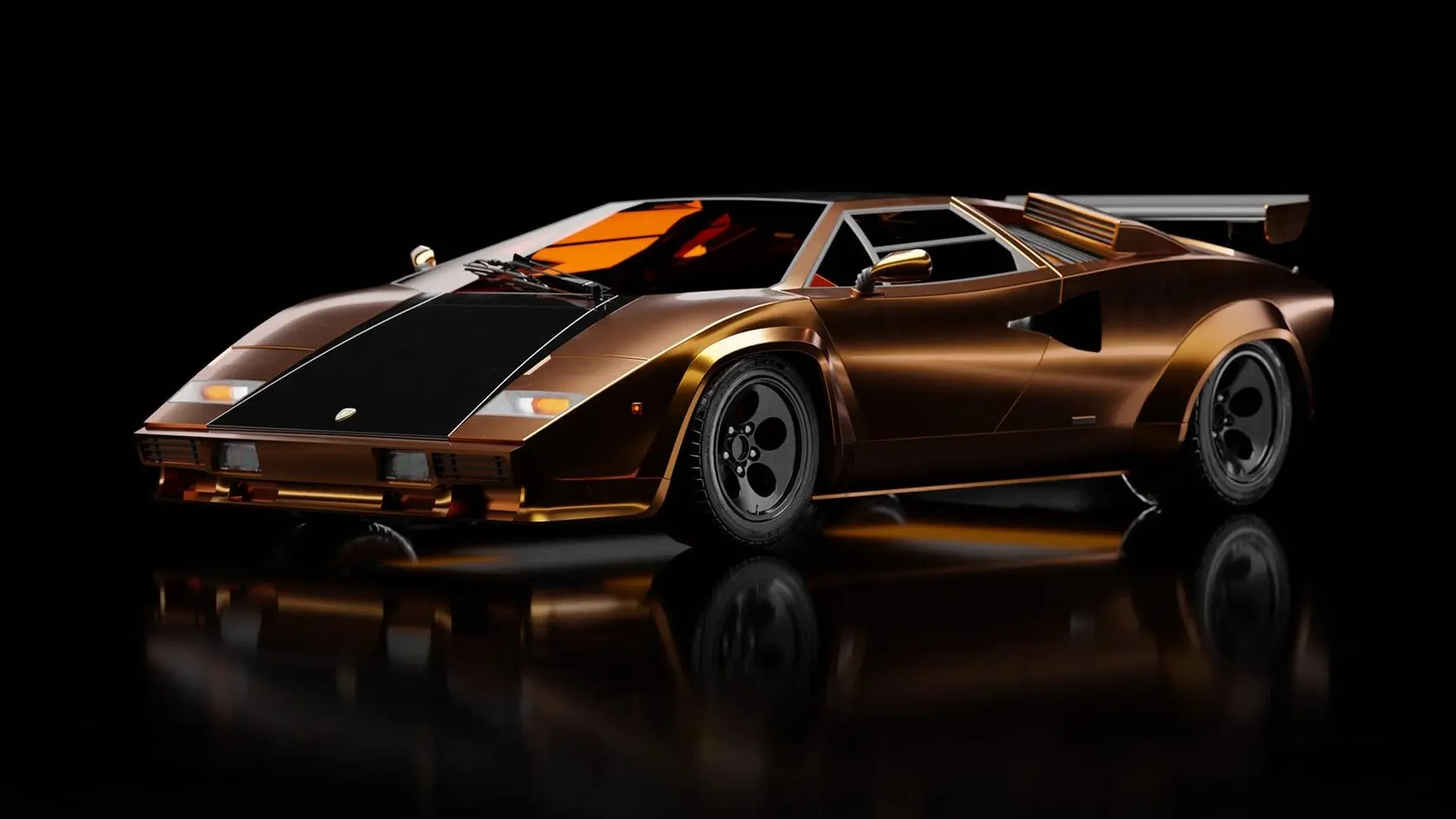
Developing a game model from blueprints to Unreal Engine
A Lamborghini Countach rebuilt as a mid-poly real-time model: modelling from blueprints, about 300,000 polygons, two 4K texture sets and Substance Painter materials.
Read →
Digital Nomad: how to survive between the physical and digital worlds
More than a year living as a digital nomad: which skills really matter, why pipeline beats talent, and why a visual must be clear.
Read →